



Aluminum Dihydrogen Phosphate ADP Aluminum Phosphate Monobasic CAS 13530-50-2
- CAS: 13530-50-2
- Synonyms: Aluminum phosphate monobasic; Aluminium dihydrogen phosphate; Phosphoric acid aluminum salt (3:1)
- EINECS No.: 236-875-2
- Molecular Formula: AlH6O12P3
- Grade: Industrial grade
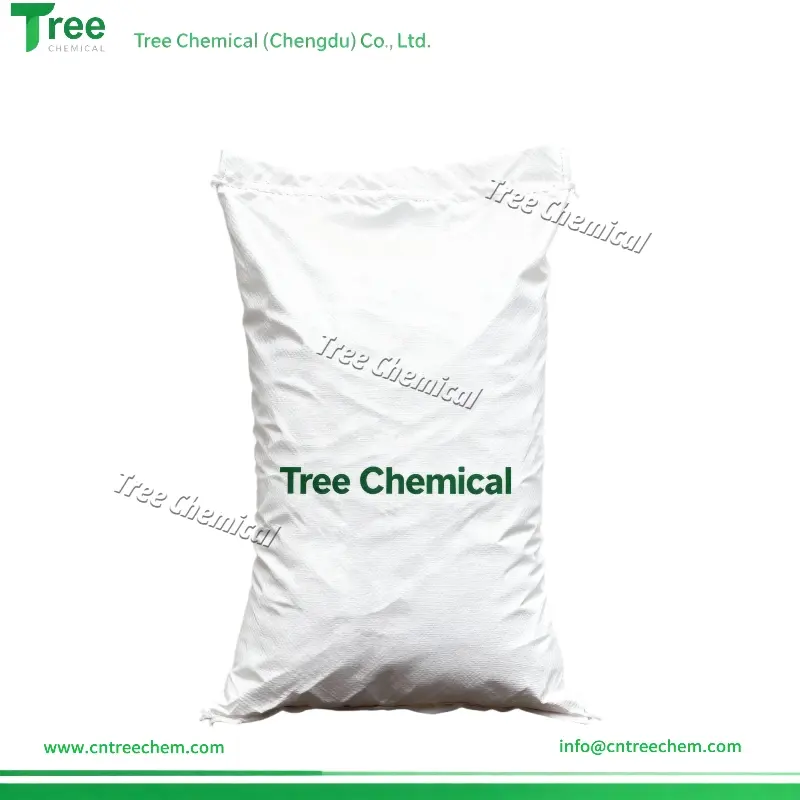
- Packaging: 25 kg bag
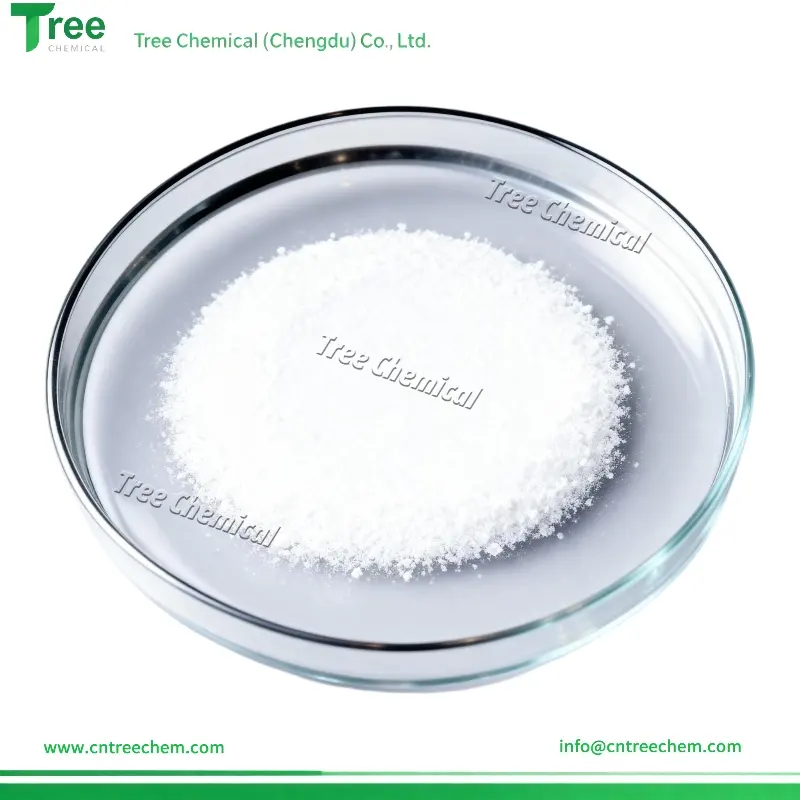
Tree Chem can manufacture Aluminum Dihydrogen Phosphate CAS 13530-50-2 for customers looking to purchase a reliable solid phosphate binder for high-temperature and anti-corrosion applications. The product is supplied as a white powder with controlled phosphorus and aluminum content, suitable for refractory systems and specialty coatings.
Solid Aluminum Dihydrogen Phosphate provides strong bonding performance, excellent thermal stability, and chemical resistance, making it suitable for refractory bricks, ceramic bonding, acid-resistant cements, and industrial protective coatings. Contact: info@cntreechem.com
Specification
Basic Information
| Item | Value |
| Product Name | Aluminum Dihydrogen Phosphate |
| Synonyms | Aluminum phosphate monobasic; Aluminium dihydrogen phosphate; Phosphoric acid aluminum salt (3:1); Aluminum dihydrogen phosphate solid |
| CAS | 13530-50-2 |
| EINECS | 236-875-2 |
| Molecular Formula | AlH6O12P3 |
| Molecular Weight | 317.94 |
Technical Specification
| Parameter | Industrial Grade |
| Appearance | White powder |
| P₂O₅ (%) | 65 ± 2 |
| Al₂O₃ (%) | 16 ± 1 |
| Fe₂O₃ (%) | ≤ 0.02 |
| pH (10 g/L) | 1.4 – 2.6 |
Applications
High-Temperature Binder for Refractory Castables and Monolithics
- Aluminum dihydrogen phosphate is widely used as a chemical binder in phosphate-bonded refractories because it develops strong inorganic bonding after curing and heat treatment. In high-alumina castables, it helps build early strength during low-temperature curing and then converts into phosphate ceramic phases at higher temperature, which supports service stability in severe thermal environments.
- In practical refractory castable design, aluminum dihydrogen phosphate improves workability-to-strength balance when used as a solution binder with controlled water addition. It is selected when formulators need high compressive strength after curing, good refractoriness under load, and strong thermal shock resistance without relying only on cement hydration chemistry.
- Aluminum dihydrogen phosphate is also used in refractory spray repair materials and quick-maintenance products. These systems emphasize pumpability/sprayability, controlled setting, and rapid development of bond strength so that damaged linings can be repaired efficiently and returned to service with reduced downtime.
Phosphate-Bonded Refractory Bricks, Plastics, and Joint Systems
- In phosphate-bonded refractory bricks, aluminum dihydrogen phosphate enables chemical bonding and curing routes that reduce dependence on high-temperature firing for strength development. This supports brick production where strong room-temperature and medium-temperature strength is required, followed by further strengthening after controlled drying and heat exposure.
- For refractory plastics, aluminum dihydrogen phosphate contributes to maintaining plasticity during forming while still enabling strong bonding after staged curing. These formulations often combine aggregates, refractory powders, plasticizers, dispersants, and setting-control components so installers can shape or ram the material and then lock in strength during curing.
- Aluminum dihydrogen phosphate is also used in refractory joint mortars and sealing materials. In lining installation, the binder helps provide adhesion, gap filling, and resistance to washout and thermal cycling, supporting long-term integrity in furnaces, kilns, and high-temperature process equipment.
Ceramic Glazes, Ceramic Bodies, Porous Ceramics, and Fiber Insulation
- In ceramic glaze systems, aluminum dihydrogen phosphate is used as an adhesion promoter and durability enhancer. It helps strengthen glaze-to-body bonding and supports improved chemical resistance and hardness, which matters for tiles, structural ceramics, and specialty ceramic coatings exposed to thermal or chemical stress.
- In advanced ceramic bodies, aluminum dihydrogen phosphate is used at low dosage as a sintering aid and strength enhancer. It supports densification and microstructure development under high-temperature firing schedules, improving final density and mechanical performance for alumina-based ceramics and other engineered ceramic systems.
- For porous ceramics, aluminum dihydrogen phosphate functions as a binder that helps form strong skeleton structures even at relatively moderate firing temperatures. By combining it with pore formers and water-resistance modifiers, manufacturers can tune porosity and compressive strength for filtration, catalyst supports, and lightweight thermal components.
- In ceramic fiber and insulation materials, aluminum dihydrogen phosphate serves as an inorganic binder that improves green strength, cured strength, and high-temperature stability. This supports boards, blankets, and shaped insulation parts where thermal conductivity, dimensional stability, and service temperature limits are critical.
High-Temperature Coatings and Surface Protection for Metals and Equipment
- Aluminum dihydrogen phosphate is used in high-temperature resistant coatings because it forms ceramic-like phosphate networks that remain stable under extreme heat. These coatings protect substrates from oxidation and thermal shock and are commonly reinforced with metal powders or ceramic fillers to improve heat resistance and coating integrity.
- In anti-corrosion coating systems, aluminum dihydrogen phosphate supports barrier formation and strong adhesion on metal surfaces. When combined with corrosion-inhibiting components and sacrificial powders, it helps deliver long salt-spray resistance and durable protection for marine and industrial environments.
- It is also used in high-emissivity thermal-control coatings where radiative performance is required. By pairing aluminum dihydrogen phosphate binders with emissivity enhancers and glass-forming components, coatings can achieve strong thermal radiation behavior for thermal management applications at elevated temperature.
Electrical Insulation Coatings and High-Temperature Electrical Systems
- Aluminum dihydrogen phosphate is used in electrical insulation coatings for silicon steel and electrical steels because it can form thin, stable, insulating layers with strong adhesion and good thermal endurance. Such coatings support high resistivity and dielectric strength while maintaining performance across wide temperature ranges.
- For heating elements and high-temperature electrical equipment, aluminum dihydrogen phosphate-based coatings provide insulation resistance and thermal cycling durability. These formulations often integrate ceramic fibers and glass formers so the cured coating resists cracking and maintains insulation performance during repeated heat-up and cool-down cycles.
- The binder is also used in high-temperature electronic substrate coatings where electrical insulation must coexist with thermal conductivity and mechanical stability. By combining aluminum dihydrogen phosphate with alumina, boron nitride, or silicon carbide, systems can be engineered for demanding electronics environments.
High-Temperature Adhesives, Ceramic-to-Metal Bonding, and Thread Locking
- Aluminum dihydrogen phosphate is used in inorganic high-temperature structural adhesives because it can bond ceramics, metals, and glass where organic adhesives fail. These adhesives are selected for service at high temperature while maintaining bond strength and resisting thermal degradation.
- For ceramic-to-metal bonding, aluminum dihydrogen phosphate enables joining of dissimilar materials by creating inorganic interphases and allowing formulation tuning with metal powders and ceramic additives. This supports applications where thermal expansion matching, wear resistance, and joint durability are essential.
- It is also used in refractory-style sealants and heat-resistant thread-locking compounds. In these products, aluminum dihydrogen phosphate provides a hard, heat-stable bonding network that maintains locking performance at temperatures where conventional organic thread lockers cannot survive.
Catalysts, Catalyst Supports, and Chemical Processing
- Aluminum dihydrogen phosphate is used as a catalyst support material because it offers thermal stability and a structure that can be engineered for surface area and porosity. By using pore formers and controlled calcination, manufacturers can create shaped supports (pellets, spheres, extrudates) for industrial catalysis.
- It is also described as a strong acidic catalyst component for esterification and related transformations, offering high acidity compared with many conventional oxide catalysts. This enables esterification systems that aim for high conversion and practical operation while reducing reliance on highly corrosive liquid acids.
- In petroleum refining catalyst formulations, aluminum dihydrogen phosphate is used as a matrix/binder component to improve catalyst integrity and influence cracking performance. These roles emphasize mechanical strength, thermal stability, and the ability to maintain catalyst structure under severe process conditions.
Construction Materials: High-Strength Cement, UHPC, Fireproofing, and Acid-Resistant Systems
- Aluminum dihydrogen phosphate is used as a strength enhancer in cement-based systems where improved early and ultimate strength are targeted. It supports high-strength cement and specialty mixes by influencing binder chemistry and microstructure development under controlled water-to-cement ratios.
- In ultra-high performance concrete (UHPC), aluminum dihydrogen phosphate is used as an accelerator/strength enhancer within a tightly engineered mix of cement, silica fume, fine powders, fibers, and superplasticizer. The aim is to achieve very high compressive strength and durability with extremely low permeability.
- It is also used in fireproof coatings for structural steel, where the phosphate-bonded network and insulating fillers work together to delay temperature rise in steel during fire exposure. In acid-resistant mortars and construction materials for chemical environments, aluminum dihydrogen phosphate acts as an acid-resistant binder supporting durability against acidic attack.
Foundry, Glass, Textile Treatment, and Water Treatment
- In investment casting and foundry applications, aluminum dihydrogen phosphate is used as a binder for refractory molds. It supports mold strength, dimensional accuracy, and thermal stability needed for high-quality cast surfaces and tight tolerances.
- In glass manufacturing, aluminum dihydrogen phosphate is used as a batch additive that can improve clarity and durability while influencing melting behavior. These additions are designed to support better final glass properties and more controllable processing.
- For textile and fiber treatment, aluminum dihydrogen phosphate participates in flame-retardant finishing systems, typically in combination with synergists and binders that help promote char formation and durable performance after curing.
- In water treatment formulations, aluminum dihydrogen phosphate is used as a coagulant aid and process-support additive in clarification and removal systems. These systems focus on turbidity/color reduction and improved removal of contaminants under controlled pH operation.
Storage & Handling
- Store in tightly sealed containers in a dry, well-ventilated area.
- Avoid moisture, heat, and direct sunlight exposure.
- Keep away from strong alkalis and incompatible materials.
- Ensure equipment is clean and dry; use proper grounding where needed.
Usage Notice
- Avoid inhalation of dust; use appropriate personal protective equipment.
- Add gradually during formulation to prevent lump formation.
- Follow recommended handling procedures for acidic phosphate materials.
- Consult safety data sheet before industrial use.
- A high-alumina refractory castable formulation uses high-alumina bauxite aggregate and fines with 50% aluminum dihydrogen phosphate solution plus a small amount of high-alumina cement and controlled water addition, where aluminum dihydrogen phosphate functions as the chemical binder to deliver high cured strength and high-temperature stability.
- A phosphate-bonded high-alumina brick formulation uses high-alumina clinker with aluminum dihydrogen phosphate solution, a small amount of refractory clay, and controlled water, where aluminum dihydrogen phosphate functions as a chemical binder enabling press-forming and strength development through staged curing and drying.
- A refractory spray repair material formulation uses high-alumina aggregate, high-alumina fines, alumina micropowder, solid aluminum dihydrogen phosphate, silica micropowder, cement, and setting-control additives, where aluminum dihydrogen phosphate functions as the fast-bonding binder for spray application and rapid lining repair.
- A refractory plastic material formulation uses refractory aggregate and powder with soft clay, phosphoric acid, aluminum phosphate binder, dispersant, and inhibitor, where aluminum dihydrogen phosphate-related phosphate bonding functions to maintain workability during forming and then harden into a high-temperature stable structure after curing.
- A ceramic glaze formulation uses silica, alumina, alkali oxides, stabilizers, and 2–5% aluminum dihydrogen phosphate, where aluminum dihydrogen phosphate functions as an adhesion promoter and durability enhancer that improves glaze bonding and chemical resistance.
- A high-strength ceramic body formulation uses alumina powder, kaolin, bentonite, talc, dispersant, and a small dosage of aluminum dihydrogen phosphate, where aluminum dihydrogen phosphate functions as a sintering aid that supports densification and strength development during firing.
- A porous ceramic formulation uses fused corundum powder with aluminum dihydrogen phosphate binder, silica sol, pore former, and water-resistance enhancer, where aluminum dihydrogen phosphate functions as the inorganic binder enabling controlled porosity with practical compressive strength.
- A ceramic fiber insulation formulation uses alumina–silica fiber with aluminum dihydrogen phosphate binder and forming aids in water, where aluminum dihydrogen phosphate functions as the high-temperature binder that improves green strength and maintains integrity during heat exposure.
- A high-temperature resistant coating formulation uses aluminum dihydrogen phosphate solution with aluminum powder, curing agents, oxidation-resistance additives, and water, where aluminum dihydrogen phosphate functions as the ceramic-forming binder providing adhesion and heat/chemical resistance.
- A marine anti-corrosion coating formulation uses aluminum dihydrogen phosphate binder with curing agents, corrosion inhibitors, sacrificial metal powders, barrier enhancers, and water, where aluminum dihydrogen phosphate functions as the primary binder that supports adhesion and long-term corrosion protection.
- An electrical insulation coating for silicon steel uses aluminum dihydrogen phosphate with plasticizer, reinforcement, epoxy resin for flexibility, and water, where aluminum dihydrogen phosphate functions as the insulating binder delivering high resistivity and dielectric strength.
- A heating-element insulation coating uses aluminum dihydrogen phosphate with fiber reinforcement, glass formers, and water, where aluminum dihydrogen phosphate functions as the binder that forms a durable insulating layer after drying and high-temperature cure.
- A high-emissivity coating formulation uses aluminum dihydrogen phosphate binder with alumina filler, emissivity enhancers, and glass formers, where aluminum dihydrogen phosphate functions as the binder enabling stable high-emittance thermal-control performance at elevated temperature.
- A high-temperature structural adhesive formulation uses aluminum dihydrogen phosphate solution with alumina powder reinforcement and selected curing agents, where aluminum dihydrogen phosphate functions as the inorganic adhesive binder delivering heat-stable bonding strength.
- A ceramic-to-metal bonding adhesive formulation uses aluminum dihydrogen phosphate with metal powder for thermal expansion matching, ceramic additives for wear/thermal properties, and a small amount of green-strength polymer, where aluminum dihydrogen phosphate functions as the bonding matrix enabling durable ceramic–metal joints after curing.
- A refractory joint mortar formulation uses fine refractory aggregate with aluminum dihydrogen phosphate solution, a small amount of cement, and water, where aluminum dihydrogen phosphate functions as the sealing binder for strong joints and thermal-shock-resistant installation.
- A heat-resistant thread-locking compound formulation uses aluminum dihydrogen phosphate with fine alumina, silica reinforcement, optional metal powder, and a thickener, where aluminum dihydrogen phosphate functions as the high-temperature locking binder for permanent fastener retention.
- A catalyst support formulation uses aluminum dihydrogen phosphate with pore-forming agent and controlled acid treatment followed by drying and calcination, where aluminum dihydrogen phosphate functions as the thermally stable porous support matrix for shaped catalyst bodies.
- A supported esterification catalyst formulation uses an inorganic support with aluminum dihydrogen phosphate as the active acidic phase and dispersion aids, where aluminum dihydrogen phosphate functions as the strong-acidity catalyst component for high-conversion esterification.
- A fluid catalytic cracking catalyst additive formulation uses aluminum dihydrogen phosphate with zeolite, clays, alumina binders, and promoters, where aluminum dihydrogen phosphate functions as a matrix/binder component improving catalyst integrity and cracking performance.
- Aspirin synthesis catalysis uses salicylic acid and acetic anhydride with an aluminum dihydrogen phosphate-supported catalyst under controlled temperature and time, where aluminum dihydrogen phosphate functions as the acidic catalytic phase enabling efficient acetylation.
- A high-strength cement formulation uses Portland cement with 3–5% aluminum dihydrogen phosphate and controlled water ratio, where aluminum dihydrogen phosphate functions as a strength enhancer supporting high compressive strength development.
- A UHPC formulation uses cement, silica fume, quartz powders, steel fibers, superplasticizer, and 3–5 parts aluminum dihydrogen phosphate, where aluminum dihydrogen phosphate functions as an accelerator/strength enhancer contributing to ultra-high strength and durability.
- A fireproof coating for steel structures uses aluminum dihydrogen phosphate binder with insulating fillers and reinforcement fibers in water, where aluminum dihydrogen phosphate functions as the inorganic binder enabling fire-resistance performance through heat-stable bonding.
- An acid-resistant mortar formulation uses silica sand, wear-resistant fillers, aluminum dihydrogen phosphate binder, and setting-control components, where aluminum dihydrogen phosphate functions as the acid-resistant binder for construction in corrosive chemical environments.
- An investment casting mold binder formulation uses refractory fillers with aluminum dihydrogen phosphate and curing agent in water, where aluminum dihydrogen phosphate functions as the binder delivering mold strength, accuracy, and high-temperature resistance.
- A glass batch additive formulation uses standard glass raw materials with a small percentage of aluminum dihydrogen phosphate, where aluminum dihydrogen phosphate functions as a clarifying/property modifier that improves clarity and durability and can reduce melting temperature.
- A flame-retardant textile treatment formulation uses aluminum dihydrogen phosphate with synergists, char promoters, and binder in a pad-dry-cure process, where aluminum dihydrogen phosphate functions as a flame-retardant contributor supporting durable fire performance.
- A water treatment formulation uses aluminum dihydrogen phosphate with flocculant aids and clarification additives with pH adjustment, where aluminum dihydrogen phosphate functions as a coagulant aid improving turbidity/color removal and contaminant reduction.
Packaging
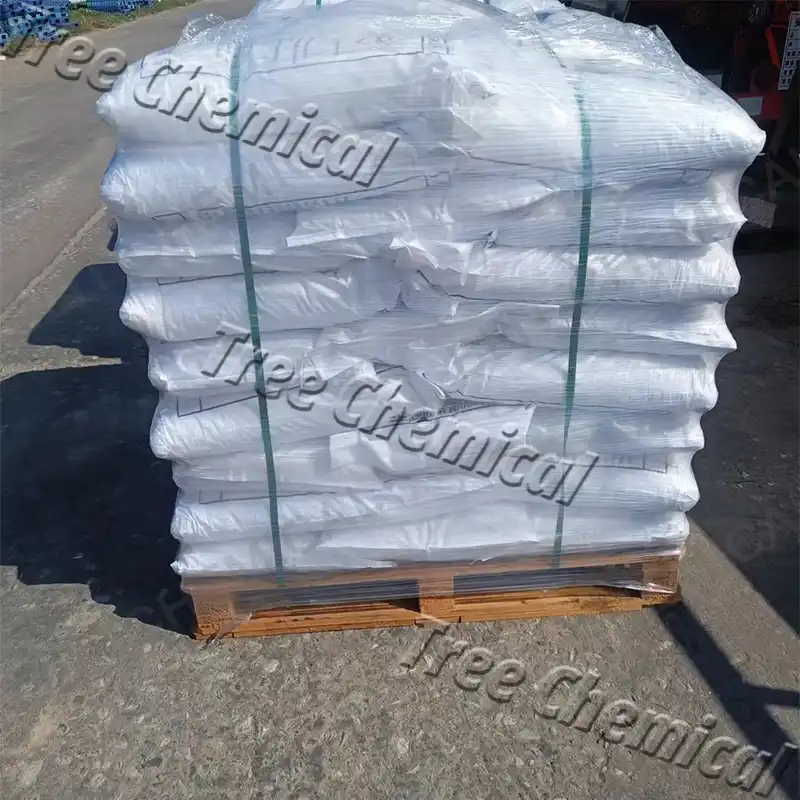
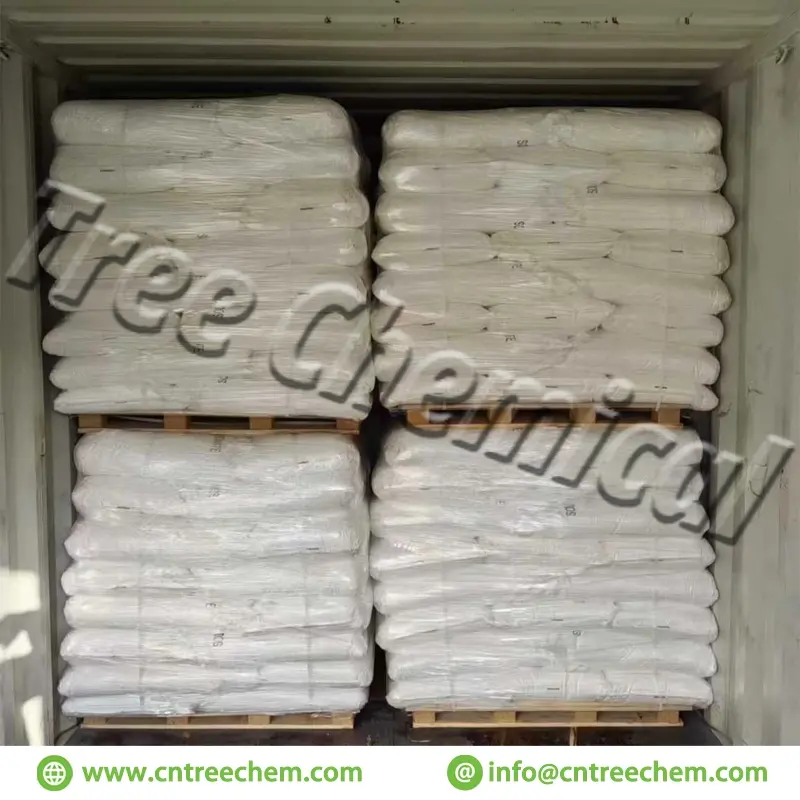
- Inner packaging: double bags lined with polyethylene film.
- Outer packaging: plastic woven bag.
- Net weight: 25 kg per bag.
- Other packaging options available upon request.


