



Zinc Bromide ZnBr₂ Zinc bromide anhydrous CAS 7699-45-8
- CAS: 7699-45-8
- Synonyms: Zinc bromide; Zinc bromide anhydrous; Zinc(II) bromide
- EINECS No.: 231-718-4
- Molecular Formula: Br₂Zn
- الدرجة: صناعية
- Packaging: Bag / Drum / IBC
Tree Chem manufacture Zinc Bromide CAS 7699-45-8 for customers looking to purchase a reliable bromide salt for oilfield fluids and chemical synthesis applications. The product can be supplied as high-purity solid powder or concentrated liquid solution depending on application requirements. Contact info@cntreechem.com.
Zinc Bromide is highly soluble in water and forms dense brine solutions. Because of its high density and chemical stability, it is widely used in clear brine drilling fluids and completion fluids in the oil and gas industry. In addition, it functions as a catalyst component and reagent in organic synthesis and specialty chemical manufacturing.
مواصفة
معلومات اساسية
| غرض | قيمة |
| اسم المنتج | Zinc Bromide |
| المرادفات | Zinc bromide; Zinc bromide anhydrous; ZnBr₂; Zinc dibromide; Zinc(II) bromide |
| CAS | 7699-45-8 |
| EINECS | 231-718-4 |
| الصيغة الجزيئية | Br₂Zn |
| الوزن الجزيئي | 225.2 |
المواصفات الفنية
| المعلمة | صلب | سائل |
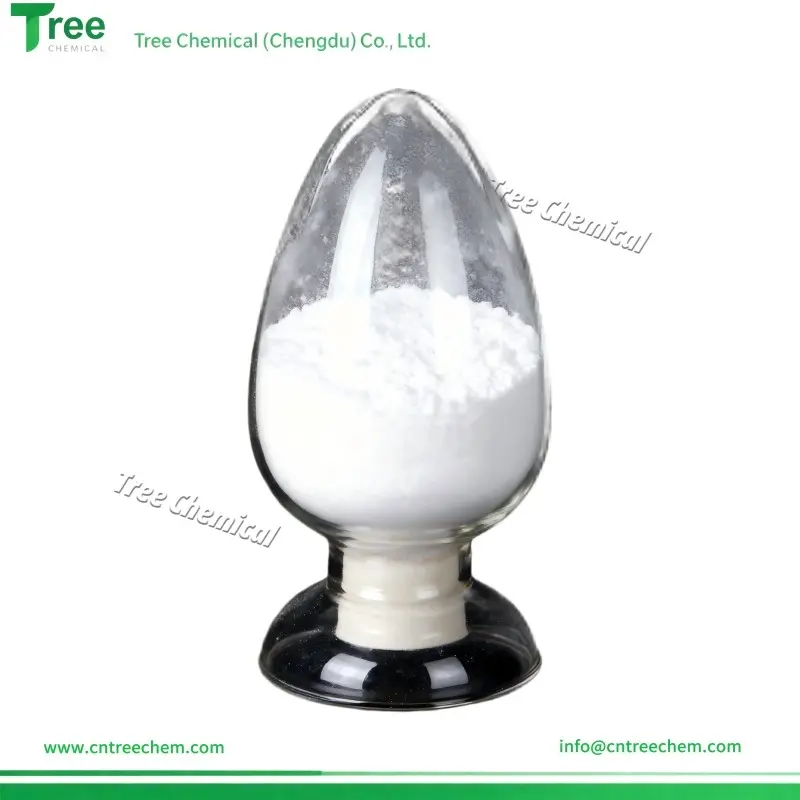
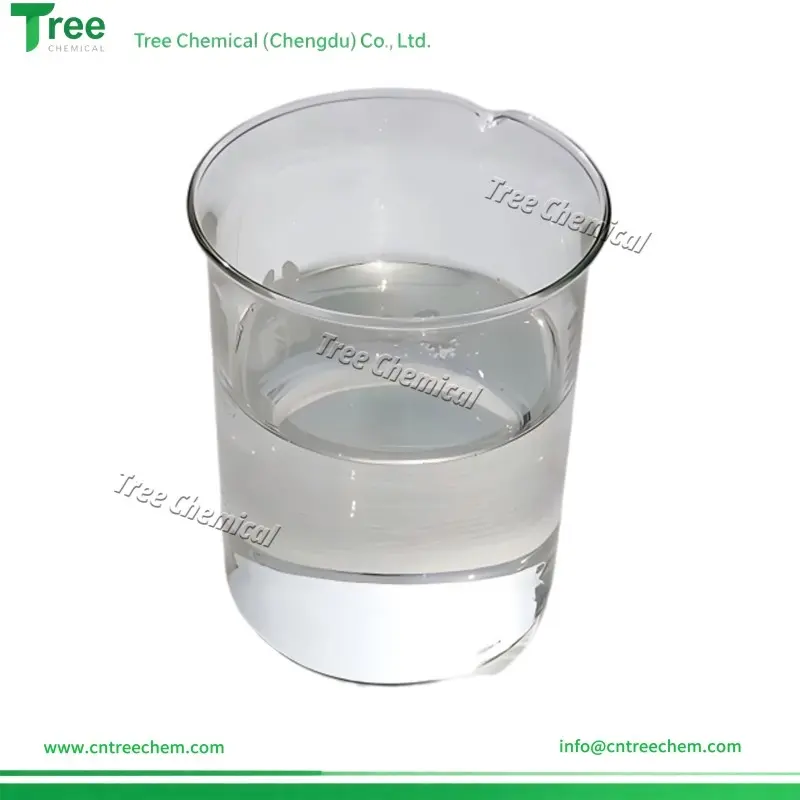
| مظهر | White granular powder | Light yellow transparent liquid |
| ZnBr₂ (Assay) | ≥98.0% | ≥70.0% |
| Chloride | ≤1.0% | ≤0.5% |
| Sulfate | ≤0.02% | ≤0.01% |
| الرقم الهيدروجيني (محلول 5%) | 4 – 6 | 2 – 5 |
| Lead | ≤100 ppm | ≤100 ppm |
| Water Insoluble | ≤0.3% | ≤0.3% |
| Density (20°C) | — | ≥2.3 g/cm³ |
| Nitrate | No reaction | No reaction |
التطبيقات
High-Density Clear Brine Fluids for Oil and Gas Operations
- Zinc bromide is one of the most important high-density inorganic bromide salts used in the oil and gas industry, especially in clear brine systems for completion, workover, and stimulation fluids. Its major value comes from its ability to produce very dense solids-free brines, which allows operators to control well pressure without introducing suspended solids that could damage the formation.
- In deep and high-pressure wells, zinc bromide is selected because solution density can be adjusted to very high levels while still maintaining a clear fluid profile. This makes it suitable for operations where formation protection, pressure balance, and equipment compatibility are all critical.
- Another important advantage is that zinc bromide brines are often blended with calcium bromide and, in some cases, calcium chloride to fine-tune density, crystallization point, and fluid cost. This flexibility allows formulators to match the fluid system to different downhole temperature and pressure environments rather than relying on a single fixed-density brine.
- Because the fluid contains no weighting solids, zinc bromide-based brines are especially attractive where reservoir damage must be minimized. In practical field use, this supports cleaner wellbore conditions, better post-treatment cleanup, and more reliable well productivity after completion or workover.
Drilling, Completion, and Well Stimulation Systems
- Zinc bromide is widely used in advanced drilling and completion fluids for high-pressure and high-temperature wells. In these systems, it serves as the main density contributor, enabling the fluid to maintain hydrostatic control in severe downhole environments while remaining compatible with sensitive formations.
- In completion operations, the salt is valued because it helps produce brines that can be filtered cleanly and used directly in contact with producing zones. This is important in reservoirs where solids invasion would harm permeability or reduce hydrocarbon recovery.
- For well stimulation fluids, zinc bromide is used in acidizing and related treatment systems where dense, clear, and reactive-compatible fluids are required. It supports acid delivery into the formation while helping manage pressure and maintain fluid placement efficiency.
- In workover and intervention service, zinc bromide fluids are selected for their combination of density, clarity, and adjustability. This allows operators to tailor the fluid package to different well conditions, including ultra-deep wells and operations where fluid density must remain stable over a wide temperature range.
Pharmaceutical Synthesis and Fine Chemical Manufacturing
- Zinc bromide is used in pharmaceutical and fine chemical synthesis as a brominating reagent, Lewis acid catalyst, and reaction promoter. Its chemical reactivity makes it useful in routes where bromination, acylation, rearrangement, or glycosidation steps are required.
- In pharmaceutical intermediate preparation, zinc bromide is used in building antiviral-related intermediates, quinoline derivatives, sedative-related compounds, and other functionalized molecules. Its role is typically tied to enabling clean reaction progress under controlled solvent and stoichiometric conditions.
- As a Lewis acid, zinc bromide supports a wide range of organic synthesis transformations. It is described in reactions such as β-hydroxy ketone formation, oxidative bromination, Friedel-Crafts acylation, and glycosidation. In these applications, the value of zinc bromide lies in its ability to activate substrates and promote conversion without requiring more aggressive or less selective catalytic systems.
- Zinc bromide is also used in research-scale organozinc chemistry and advanced synthesis development. In these cases, high-purity grades are important because reproducibility, side-product control, and downstream purification all depend heavily on reagent quality.
Topical, Antimicrobial, and Research-Oriented Chemical Uses
- Zinc bromide has also been investigated in topical and antiseptic-oriented formulations because of its antimicrobial activity. In these systems, it is used at relatively low levels in gel-like or semi-liquid bases designed to deliver antimicrobial performance against common microorganisms.
- Its use in this area is more specialized than its major oilfield role, but it highlights the broader functional range of the compound. In such formulations, zinc bromide contributes antimicrobial action while the surrounding gel base provides skin feel, viscosity control, and application stability.
- In laboratory and research settings, extra-pure zinc bromide is important for chemical investigation, screening studies, and synthesis of advanced intermediates. This includes organozinc reagent work, mechanistic studies, and route exploration for specialty molecules.
Zinc-Bromine Flow Batteries and Energy Storage
- Zinc bromide is a core active material in zinc-bromine flow batteries, which are increasingly important in stationary and grid-scale energy storage. In these battery systems, zinc bromide provides both the zinc and bromine electroactive species, making it central to the charge-storage mechanism.
- One major advantage of zinc-bromine battery chemistry is the balance between energy density, safety, and long cycle life. Zinc bromide electrolytes are used in both standard and enhanced formulations that include conductive salts, bromine complexing agents, stabilizers, dendrite inhibitors, and pH control systems.
- In large-scale energy storage, zinc bromide-based systems are attractive because they can support many cycles and are suitable for renewable energy integration and backup power applications. In this context, the material is not just a salt additive but the main electrochemical working component of the system.
- Zinc bromide is also used in advanced electrolyte development for semi-solid, gel, and modified battery systems. These newer concepts focus on improving bromine management, suppressing zinc dendrite growth, and increasing operational stability.
- For microbattery and miniaturized power applications, zinc bromide is used in smaller electrochemical architectures designed for portable devices and low-footprint electronics. This shows that its battery relevance spans from large energy-storage systems to compact device-level applications.
Semiconductor, Electronics, and X-Ray Detection Materials
- Zinc bromide is used in electronics both as a functional inorganic material and as a precursor/component in advanced device structures. In semiconductor-related applications, it is described as a doping or conductivity-enhancing agent used in processing routes for electronic components.
- Its role in this area is linked to improving conductivity and device performance in selected electronic materials and structures. The use case is highly technical and typically requires controlled purity and process conditions.
- A particularly important advanced application is in zinc bromide-based hybrid materials for X-ray detection. In these systems, zinc bromide-containing structures serve as active radiation-absorbing layers in direct X-ray detectors, where high sensitivity, low detection limits, and low operating voltage are key performance requirements.
- This places zinc bromide in a growing advanced-materials category beyond traditional inorganic salts. Instead of acting only as a bulk chemical, it becomes part of a semiconducting or hybrid detection material designed for high-value electronics and imaging technologies.
- Zinc bromide is also used in conductive coatings and flexible films, where it contributes conductivity within a polymer matrix. These applications emphasize film uniformity, flexibility, and stable electrical behavior across repeated use or bending cycles.
Photography, Imaging, and Photothermographic Materials
- Zinc bromide has historical and niche modern uses in photographic and imaging systems. In traditional photographic chemistry, it has been used in emulsion and collodion-based formulations as a sensitizing bromide source involved in forming light-sensitive systems.
- In photothermographic materials, zinc bromide appears as part of multi-component halide systems designed to support infrared sensitivity, shelf-life stability, and controlled development behavior. These formulations rely on zinc bromide as part of the chemistry that tunes sensitivity and image-forming performance.
- Its broader imaging relevance now extends into digital and direct-conversion detector technologies, especially in specialized X-ray applications. This gives zinc bromide an unusual profile: it has both legacy relevance in older imaging chemistry and emerging value in advanced imaging devices.
Flame Retardants for Polymers, Textiles, and Composites
- Zinc bromide is used as a flame retardant additive because bromide ions can interfere with combustion reactions and reduce flame propagation. In polymer systems, it is incorporated into resins and plastics to improve fire resistance and reduce heat release during burning.
- In these formulations, zinc bromide often works with synergists such as antimony trioxide or other flame-retardant partners. The goal is to improve flame resistance without excessively compromising processing or physical properties of the base polymer.
- Zinc bromide is also used in textile flame-retardant treatment systems. Here, it is applied through aqueous finishing processes together with synergists, char promoters, and binders to improve flame resistance of treated fabrics.
- In composite materials, zinc bromide-related flame-retardant strategies are used in structural systems where fire performance, smoke reduction, and thermal resistance are critical. These applications are relevant to higher-performance sectors where both structural function and fire safety matter.
Radiation Shielding and Medical Imaging
- Because zinc bromide solutions are dense and contain heavy bromide ions, they are used in radiation shielding applications. Dense aqueous zinc bromide systems can absorb radiation effectively while still allowing light transmission when used in liquid-filled shielding window designs.
- This gives zinc bromide an advantage in certain shielding concepts where lower cost, transparency, and replaceability are desired compared with solid heavy-metal shielding materials. Such systems are relevant in nuclear facilities, hot cells, and laboratory shielding structures.
- Zinc bromide is also described in contrast-agent and radiopaque formulation concepts for medical imaging. In these uses, its density and radiographic response support enhancement of imaging contrast under controlled formulation conditions.
- Research and laboratory shielding uses also benefit from zinc bromide’s density and radiation absorption properties, especially in specialty setups requiring adaptable or liquid-based shielding media.
Water Treatment and Industrial Water Systems
- Zinc bromide has limited but specialized applications in water treatment, especially in microbial control and certain industrial water systems. In these applications, it is used at very low concentrations in treatment programs designed to reduce microbial growth, biofilm formation, or fouling.
- Its use is more selective than common water-treatment chemicals, but it appears in industrial cooling water, wastewater disinfection, and some specialized process-water concepts. The effectiveness depends heavily on concentration, pH, system design, and compatibility with the overall treatment program.
- Zinc bromide is also referenced in industrial water systems such as cooling circuits, boiler-related environments, reverse osmosis support concepts, and heavy-metal removal systems. These uses reflect its broader chemical utility rather than large-volume mainstream water-treatment use.
Safety, Handling, and Storage Considerations
- Zinc bromide requires careful handling because it is corrosive, irritating, and harmful to aquatic systems. It can cause severe eye and skin damage, may irritate the respiratory tract, and requires full attention to protective equipment and ventilation during handling.
- Because it is highly soluble and readily forms acidic solutions, zinc bromide must be stored in compatible containers such as HDPE or glass rather than ordinary metal packaging. Proper storage conditions include cool, dry, well-ventilated areas with tightly sealed containers and humidity control to preserve quality and reduce risk.
- In routine use, dust generation should be minimized, and spill response should be managed with inert absorbents and regulated hazardous-waste disposal. Storage and use programs must also consider shelf life, caking behavior in solids, and light/heat protection for solutions.
التخزين والمناولة
- Store in sealed containers in a cool and dry place
- Avoid moisture exposure due to hygroscopic properties
- يُحفظ بعيداً عن عوامل الأكسدة القوية
- Ensure containers and equipment remain clean and dry
- Follow industrial chemical safety procedures during handling
إشعار الاستخدام
- A high-density clear brine formulation uses zinc bromide at about 50–55% with calcium bromide at about 17–25% and water as balance, where zinc bromide functions as the primary density agent providing solids-free pressure control for completion and workover fluids.
- A zinc–calcium bromide mixed brine formulation uses zinc bromide at about 5–40% with calcium bromide at about 30–50%, optional calcium chloride, and water as carrier, where zinc bromide functions as the adjustable density component for deep-well clear brine systems.
- An advanced drilling/completion fluid formulation uses zinc bromide solution with calcium bromide solution, pH control agent, corrosion inhibitor, and rheology modifier, where zinc bromide functions as the main high-density brine component for HPHT well control.
- A well stimulation fluid formulation uses zinc bromide at about 15–20% with hydrochloric acid, iron control agent, corrosion inhibitor, surfactant, and water, where zinc bromide functions as the density-control component enabling effective acid placement and formation compatibility.
- An antiviral intermediate synthesis formulation uses a nucleoside-related precursor with zinc bromide at about 0.8–1.2 molar equivalent in DMF or DMSO, where zinc bromide functions as a brominating or activating reagent in pharmaceutical intermediate manufacture.
- A Lewis-acid-catalyzed organic synthesis formulation uses zinc bromide at catalytic loading in reactions such as Friedel-Crafts acylation, β-hydroxy ketone synthesis, oxidative bromination, or glycosidation, where zinc bromide functions as the Lewis acid catalyst promoting conversion and selectivity.
- A topical antiseptic gel formulation uses zinc bromide at about 0.5–2.0% with aloe vera gel, carbomer, triethanolamine, and purified water, where zinc bromide functions as the antimicrobial active in a gel-based topical system.
- A zinc-bromine flow battery electrolyte formulation uses zinc bromide at about 4–7 M with bromine complexing agent, conductive salt, and pH adjustment to acidic range, where zinc bromide functions as the core electroactive material in the battery electrolyte.
- An enhanced zinc-bromine battery electrolyte formulation uses zinc bromide at about 15–20% with bromine complexing agent, conductive support salt, zinc dendrite inhibitor, gelator, and pH stabilizer, where zinc bromide functions as the main active electrolyte component for improved cycle performance.
- A microbattery electrolyte formulation uses zinc bromide at about 2–3 M with conductive salt, organic additive, and pH buffer, where zinc bromide functions as the compact electroactive electrolyte for miniaturized battery devices.
- A semiconductor doping formulation uses zinc bromide at low concentration in the deposition or diffusion stage, where zinc bromide functions as a doping source that improves conductivity in semiconductor devices.
- A zinc bromide hybrid X-ray detector material formulation combines zinc bromide with suitable organic cation components to form a solution-processable hybrid active layer, where zinc bromide functions as the radiation-absorbing inorganic component in direct X-ray detection.
- A conductive coating formulation uses zinc bromide at about 5–15% with polymer binder, solvent, and plasticizer, where zinc bromide functions as the conductivity-enhancing component in flexible electronic films.
- A collodion or photographic emulsion formulation uses zinc bromide with alcohol, silver nitrate, water, and acidulant, where zinc bromide functions as the bromide sensitizer in light-sensitive photographic chemistry.
- A photothermographic formulation uses zinc bromide with additional bromides, silver salt, reducing agent, and polymer binder, where zinc bromide functions as a sensitizing halide component in thermographic imaging materials.
- A polymer flame-retardant formulation uses zinc bromide at about 5–15% with antimony trioxide and polymer resin, where zinc bromide functions as the primary flame-retardant additive interrupting combustion chemistry.
- A textile flame-retardant formulation uses zinc bromide at about 10–20% with ammonium polyphosphate, boric acid, binder, and water in a pad-dry-cure process, where zinc bromide functions as the flame-retardant active contributing to durable fabric fire resistance.
- A radiation shielding window formulation uses zinc bromide solution at about 50% in a double-pane glass configuration, where zinc bromide functions as the dense liquid radiation absorber for gamma and neutron shielding.
- An X-ray contrast medium formulation uses zinc bromide at about 30–50% with sodium citrate, pH buffer, and water for injection, where zinc bromide functions as the radiopaque component for medical imaging enhancement.
- A microbial-control water treatment formulation uses zinc bromide at about 0.1–0.5 mg/L with supporting halides and pH control, where zinc bromide functions as a specialized microbial control component in industrial water systems.
التعبئة والتغليف
Solid product packaging:
- 25 kg bags or fiber drums lined with plastic bags
Liquid product packaging:
- 460 kg blue plastic drums
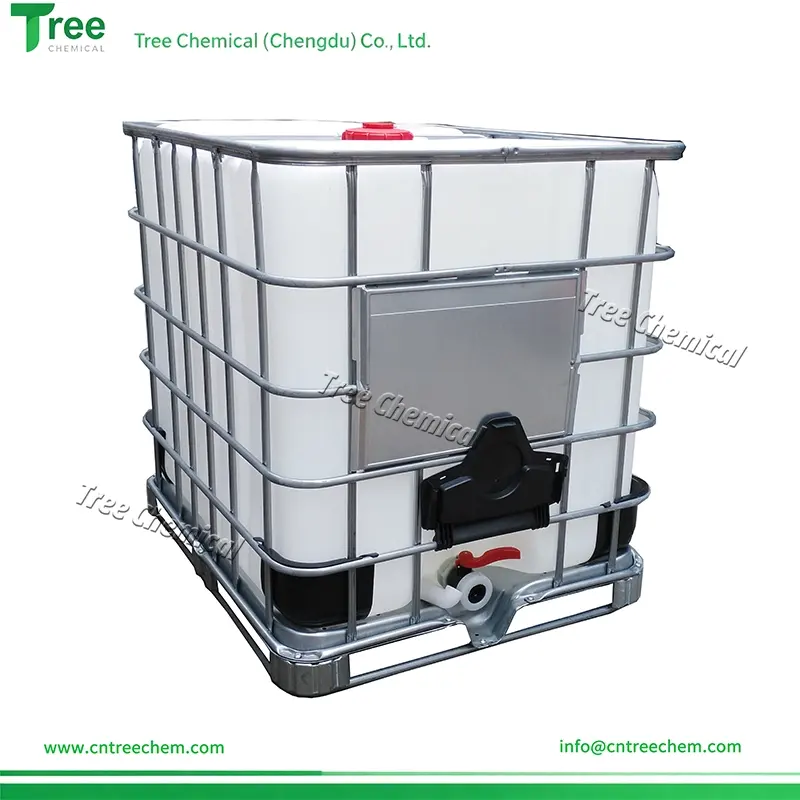
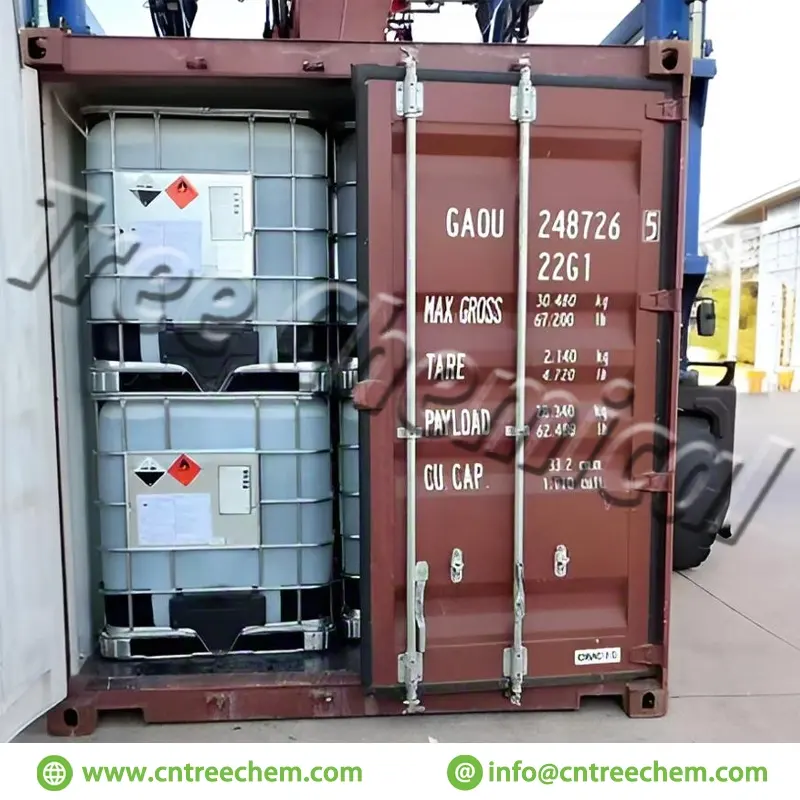
- 1000 L IBC containers


