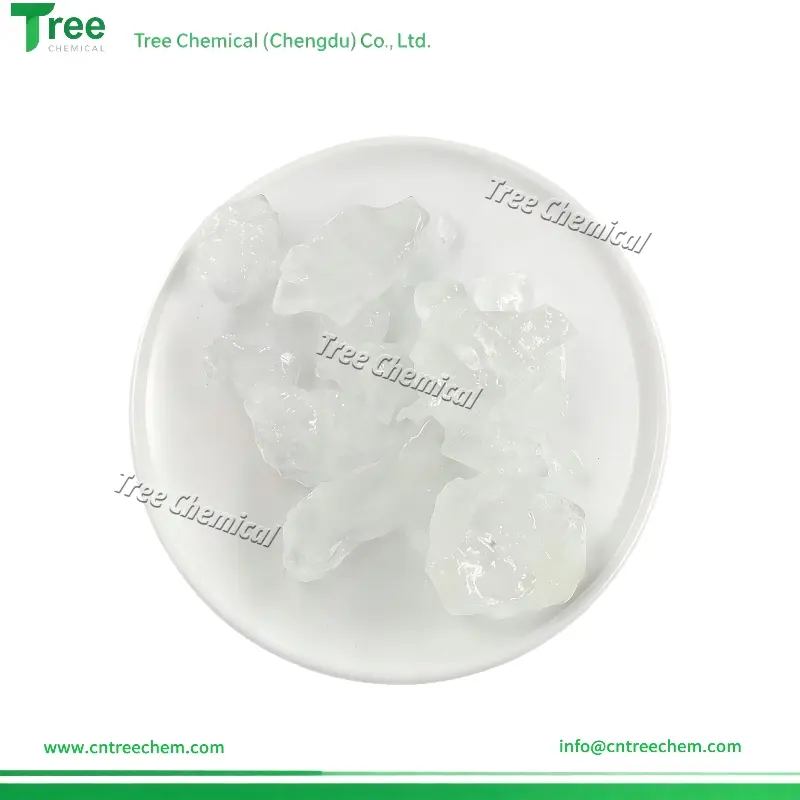


Fatty Acid Methyl Ester Ethoxylate FMEE CAS 68201-46-7 / 77846-79-8
- CAS: 68201-46-7 / 77846-79-8
- Synonyms: Fatty Acid Methyl Ester Ethoxylate; Ethoxylated Fatty Acid Methyl Ester; FEMM
- Molecular Formula: Complex mixture
- Grade: High-purity nonionic surfactant
- Packaging: 25 kg plastic drum / 200 kg plastic drum
Tree Chem manufactures Fatty Acid Methyl Ester Ethoxylate (FMEE) CAS 68201-46-7 / 77846-79-8 for customers who want to purchase high-performance nonionic surfactants with excellent emulsifying and wetting behavior. FMEE offers strong cleaning capability, low irritation, and good compatibility with anionic, nonionic, and amphoteric surfactants.
In addition to cleaning and detergent applications, FMEE is also used in textile auxiliaries, metal cleaning fluids, agrochemical formulations, and various emulsification systems. Tree Chem maintains stable quality specifications and provides export-grade packaging to support global manufacturers. For technical support or supply inquiries, please contact info@cntreechem.com.
Specification
Basic Information
| Item | Details |
| Product Name | Fatty Acid Methyl Ester Ethoxylate |
| Abbreviation | FMEE |
| Synonyms | Fatty Acid Methyl Ester Ethoxylated; Ethoxylated Methyl Ester of Fatty Acid; Fatty Methyl Ester Ethoxylate |
| CAS Numbers | 68201-46-7 / 77846-79-8 |
| Molecular Formula | Complex mixture (ethoxylated fatty acid methyl esters) |
| Appearance | Liquid |
Technical Specification
| ITEM | Spec Limit |
| Appearance (25 °C) | Liquid |
| Color (Pt-Co)* | ≤ 90 |
| Moisture (%) | ≤ 0.5 |
| Active Matter (%) (100-Moisture) | ≥ 99.5 |
| Saponification Value (mgKOH/g) | 84–97 |
| pH Value (1% aq., 25 °C) | 5.0–7.0 |
*Tested in 10% ethanol aqueous solution (25 °C)
Applications
Textile and Printing Industry
- Fatty Acid Methyl Ester Ethoxylate (FMEE) is widely used in textile pretreatment as a core component of scouring, desizing and low-temperature degreasing systems. Its dual ether–ester structure and very low surface tension give strong wetting, emulsifying and dispersing power, so it can efficiently remove natural waxes, pectins and spinning oils from cotton and blends. In high-alkali, high-hardness conditions it still maintains good flowability and stability, which allows mills to run energy-saving, short-process scouring lines. The low-foaming character is especially valuable in high-speed overflow and jet machines where foam has to be controlled without sacrificing cleaning power.
- FMEE is also used in polyester and spandex oil-removal formulations, particularly for low-temperature or room-temperature processes that avoid separate scouring baths. In polyester low-temperature degreasing agents, FMEE is combined with tailored emulsifiers such as M800 and penetrants like PAS-80 so that even highly viscous mineral oils remain dispersed and suspended at lower temperatures. In dyeing, FMEE grades with higher HLB and high cloud points, such as FMEE-68-15, serve as dispersing and levelling auxiliaries at elevated temperature, helping disperse disperse dyes evenly, prevent aggregation and reduce shade streaks during high-temperature, high-pressure dyeing. It is also incorporated into antistatic and water-repellent finishing auxiliaries as the main emulsifier that ensures uniform pick-up and smooth handle.
Laundry and Home Care Detergents
- In laundry liquids, FMEE functions as a green, low-foam nonionic surfactant used either as a co-surfactant or, in low-foaming systems, as part of the main active package. Its low foam height compared with conventional AEO or TX types makes it particularly suited for drum-type washing machines and high-efficiency detergents where excessive foam would hinder mechanical action and rinsing. When blended with LAS, AES and amide thickeners such as 6501, FMEE contributes to strong soil removal on particulate soils, body oils and kitchen grease while keeping foam controlled. Because commercial FMEE is often supplied at about 70 % activity and is relatively costly, the dosage in laundry formulations is usually held around 1–5 %, with 1–2 % typical for cost-sensitive retail products.
- In dishwashing liquids, FMEE is used at lower levels as a performance booster alongside primary actives such as alkyl polyglucoside and anionic surfactants. Its role is to enhance emulsification of heavy grease, improve low-temperature clarity and help formulas remain stable during storage and transport. In greener, phosphate-free dishwashing products, small amounts of FMEE combined with chelants and pH adjusters give excellent grease cutting while maintaining mildness. Beyond household products, FMEE is also adopted in kitchen degreasers and hard-surface cleaners, where its low foam, high cloud point and strong wetting power support spray and circulation cleaning processes without leaving residues.
Industrial and Hard-Surface Cleaning
- In industrial cleaning, FMEE is a key ingredient in low-foam hard-surface cleaners for workshops, food plants and vehicle washing lines. Formulations with roughly 10 % FMEE combined with citrate, strong chelants such as EDDHA-Na, coupling agents like M400 and a small amount of preservative deliver fast wetting and spreading on metal, glass and painted surfaces. Such systems remove oily films and particulate soils efficiently even at moderate temperatures, making them suitable for spray and high-pressure cleaning where foam suppression is critical. Process parameters such as bath temperature, contact time and FMEE dosage can be tuned to balance cleaning strength and substrate safety.
- Heavier-duty industrial cleaners for workshop floors, equipment and transportation often use FMEE together with anionic surfactants, alkalizers and hydrotropes. In these systems, FMEE provides strong emulsification and dispersing of stubborn oils and waxes while the anionics boost detergency and the alkalinity saponifies fats. FMEE’s broad temperature window and good low-temperature flowability mean such cleaners remain pourable in winter and still rinse off easily, reducing residue and facilitating closed-loop recycling of cleaning baths where required.
Metal Cleaning, Metalworking and Rust Protection
- In metal cleaning, FMEE is recognized for its high oil- and wax-removal efficiency on steel, non-ferrous alloys and complex assemblies. It forms the core of alkaline and neutral metal degreasing baths, where it is combined with supporting surfactant systems and alkaline builders to lift machining oils, drawing soaps and protective waxes from components before plating, coating or heat treatment. Comparative studies show that FMEE can provide significantly stronger de-oiling and dewaxing performance than conventional fatty alcohol ethoxylates or soap systems, enabling shorter cleaning cycles and lower bath temperatures.
- FMEE is also used in precision metal cleaners for electronics, instrumentation and high-value parts, where low residue and high rinsability are critical. Here, it is often blended with selected polyether surfactants, chelants and corrosion inhibitors so that flux residues, polishing compounds and ultra-fine particulates are removed without staining delicate alloys. In water-based cutting and grinding fluids, FMEE acts as a co-emulsifier and lubricity component: it stabilizes oil-in-water emulsions, enhances wetting of the cutting zone and helps maintain emulsion stability at elevated shear and temperature. In rust inhibitors and rolling oils, FMEE improves emulsion stability and wetting of metal surfaces so that corrosion-protective films form uniformly and remain stable during storage and transport.
Agrochemical Formulations
- In agrochemicals, FMEE serves mainly as a biodegradable emulsifier and co-surfactant in oil-based and water-based pesticide formulations. In traditional EC (emulsifiable concentrate) systems, it is used at roughly 10–15 % of the formulation alongside anionic emulsifiers and organic solvents, providing stable emulsions when the product is diluted into spray tanks. Its green, fatty-acid-derived backbone and high biodegradability make it attractive for “environmentally friendly” pesticide products that must meet tighter regulatory and eco-toxicity requirements. FMEE facilitates rapid emulsification, fine droplet size and good re-emulsification after storage, all of which contribute to stable field performance.
- In microemulsions and other advanced aqueous systems, FMEE is combined with other nonionic and anionic surfactants plus co-solvents and antifreeze agents to build transparent, thermodynamically stable concentrates. Because microemulsions typically require a higher overall surfactant load than ECs, FMEE’s strong emulsifying and dispersing ability helps lower the total surfactant demand while still giving small droplet size and good pesticide dispersion on leaf surfaces. It is also used in adjuvant products where it is blended with plant oils, penetrants and stabilizers to increase wetting, adhesion and penetration of a broad range of active ingredients, improving biological efficacy and rain-fastness in the field.
Paper, Leather and Hard-to-Clean Substrates
- In the paper industry, FMEE is applied mainly in deinking agents and recycled-fiber treatment formulations. Its job is to emulsify and disperse printing inks detached from waste paper fibers during pulping, flotation and washing. Deinking recipes that combine FMEE with other nonionic surfactants, caustic, silicate and peroxide achieve efficient ink detachment, good brightness and high cleanliness of recovered pulp, outperforming traditional AEO or OP-type systems under many conditions. FMEE’s strong dispersing ability also helps prevent detached ink particles from redepositing onto fiber surfaces, which is critical for achieving high whiteness and low speck counts.
- In leather processing, FMEE plays an important role as a deep-penetrating degreasing agent for hides and skins. Formulations using high FMEE levels together with FMES, alkyl sulfonates and phosphonate chelants can remove both surface grease and internal fats, preventing re-deposition during drum processing and delivering clean, uniform grain. PO-terminated FMEE derivatives are particularly effective in neutral degreasing, combining strong dewaxing capacity with low foam and good low-temperature performance. This improves bath stability, reduces risk of spew or uneven dyeing in later stages and supports tighter control of leather softness and handle.
Oilfield Chemicals and Energy-Related Uses
- In oilfield applications, FMEE is used as an additive in drilling fluids, wellbore clean-up agents and enhanced-oil-recovery formulations. In water-based drilling fluids, modest FMEE dosages combined with polymers, fluid-loss reducers and lubricants lower interfacial tension, improve cutting removal and contribute to borehole stability. FMEE’s surfactant properties help modify rock–fluid interactions and change pore-fluid flow regimes, which can be particularly useful in shale formations and tight reservoirs where wetting control is essential.
- As a component of oilfield surfactant packages, FMEE can also function in surfactant-flood or chemical EOR systems, where its low foam and high dispersing power support the mobilization of trapped oil. In some cases it is used in combination with other bio-based surfactants or FMES to create systems that are both performance-oriented and more environmentally acceptable than purely petrochemical alternatives. Similar surfactant packages are explored in energy-related fields such as solar-cell and lithium-battery manufacturing, where FMEE-based cleaners and wetting agents assist in wafer, electrode and separator cleaning while offering good biodegradability.
Construction, Coatings and Other Emerging Fields
- In construction materials, FMEE appears as an emulsifier and wetting agent in waterproof coatings, admixtures and specialty mortars. Acrylic or polymer-cement waterproof coatings containing a small percentage of FMEE benefit from improved pigment and filler dispersion, better film formation and enhanced water-repellent performance on concrete and masonry surfaces. By lowering surface tension and aiding flow, FMEE helps coatings level more smoothly and reduces pinholes, contributing to longer-term durability.
- Beyond these main sectors, FMEE is used in coal flotation, cosmetics and food-related emulsification in more specialized grades. In coal preparation, it acts as a flotation aid that improves separation efficiency of hydrophobic coal particles. In cosmetics, FMEE’s mild, nonionic character supports its use as an emulsifier and dispersant in certain sunscreens and color cosmetics, where it helps stabilize oil phases and pigments. Food-grade derivatives may be employed as emulsifiers in margarine and shortening, while in new-energy and environmental fields FMEE-based products function as cleaners, dispersants or additives tailored for specific green-chemistry requirements.
Storage & Handling
- Store in tightly sealed containers and keep in a cool, dry, and ventilated environment.
- Avoid direct sunlight, heat sources, and freezing conditions.
- Prevent contamination from acids, oxidizers, or incompatible chemicals.
- Ensure all transfer equipment is clean and properly grounded to avoid static buildup.
- Keep containers closed when not in use to prevent moisture absorption.
Usage Notice
- Wear appropriate protective gloves, goggles, and clothing during handling.
- Avoid direct contact with eyes or prolonged skin exposure.
- Do not mix with strong oxidizers or strong acids before compatibility verification.
- When diluting, add FMEE into water gradually under stirring.
- Dispose of residues and packaging according to local chemical regulations.
- Cotton scouring and desizing agent: a pretreatment formulation using FMEE and FMES at a mass ratio of 1:1 as the main surfactant system, supplemented with sodium alkyl sulfonate as penetrant and EDDHA-Na as a phosphorus-free chelant, removes waxes and pectins from cotton fibers while delivering high whiteness, capillary effect and strength retention in textile pretreatment.
- Polyester low-temperature oil-removal bath: a degreasing recipe with FMEE as the primary component, combined with M800 emulsifier and PAS-80 penetrant, enables low-temperature or room-temperature removal of spinning oils from polyester and spandex, allowing direct dyeing after oil-removal without liquor discharge.
- High-temperature dyeing levelling agent: a dyeing auxiliary containing 5–10 % FMEE-68-15, together with dispersant, pH regulator and water, is used in high-temperature polyester dyeing baths to disperse dyes, prevent particle aggregation and reduce color streaks under high-temperature, high-pressure conditions.
- Low-foam laundry liquid: a machine-wash detergent composed of 3–5 % FMEE, 8–12 % LAS, 10–15 % AES, 2–3 % fatty-acid amide 6501, 1–3 % sodium citrate, 0.5–2 % sodium chloride, 0.1–0.5 % CMC, 0.05–0.2 % preservative, 0.1–0.5 % fragrance and water to balance provides strong detergency with controlled foam for drum washing machines.
- Environmentally oriented dishwashing liquid: a dishwashing formula using 14–16 % alkyl polyglucoside as the main active, 1–2 % FMEE as a co-surfactant, 1.6–3 % additional anionic surfactants, 0.1–0.2 % metal-ion chelant, 0.08–0.15 % preservative, 0.065–0.12 % pH regulator, 0.08–0.12 % fragrance, 0.2–0.3 % thickener and water provides efficient removal of heavy kitchen grease with improved emulsification and mildness.
- General industrial hard-surface cleaner: an industrial cleaner containing 10 % FMEE, 5 % sodium citrate, 5 % EDDHA-Na, 5 % coupling agent M400, 0.1 % preservative and 74.9 % water offers rapid wetting and strong cleaning power for hard surfaces under spray or immersion conditions.
- Heavy-duty industrial cleaner with FMES synergy: a hard-surface cleaner made from 2.5 % LABSA (98 %), 1 % AES (70 %), 1 % 6501, 4.5 % FMES (as FMEE sulfonate), 0.08 % preservative, 0.33 % sodium hydroxide, 1 % sodium chloride, 0.1 % fragrance and water to 100 % uses FMES and related FMEE-based surfactants to remove stubborn greasy and waxy soils.
- Metal degreasing and dewaxing cleaner: a metal cleaner in which FMEE is the main surfactant, combined with a blended surfactant system and appropriate alkaline builders, provides high-efficiency removal of machining oils and waxes from steel and non-ferrous components before plating or coating.
- Precision metal cleaning solution: a precision-cleaning formulation containing 3–5 % FMEE, 2–3 % polyether surfactants, 1–2 % chelants, 0.5–1 % corrosion inhibitor and water to balance is used for electronic and precision parts, where FMEE ensures strong soil removal with low residue and good rinsability.
- Water-based cutting fluid: a semi-synthetic cutting fluid using 15–25 % base oil, 3–8 % FMEE as emulsifier, 25–35 % rust inhibitor package, 1–5 % biocide, 0.1–0.5 % defoamer and water provides emulsion stability, lubrication and corrosion protection in metal cutting and grinding operations.
- Water-based rust inhibitor: a water-dilutable rust preventive comprising 2–5 % FMEE, 15–20 % triethanolamine, 8–12 % sodium benzoate, 3–5 % sodium carbonate and water forms a dense, wettable protective film on metal surfaces for temporary indoor or outdoor storage.
- Metal neutral degreaser with PO-terminated FMEE: a neutral degreasing agent formulated with 3 parts PO-terminated FMEE, 1 part tert-butyl glycol ether, 1 part emulsifier 1308 and 1 part sodium alkyl sulfonate achieves strong neutral-pH dewaxing and de-oiling while preventing re-deposition of soils on metal parts.
- Pesticide EC emulsifier system: an emulsifiable concentrate in which FMEE is used at 10–15 % together with other anionic and nonionic emulsifiers and 40–60 % organic solvent produces fine, stable oil-in-water emulsions on dilution and serves as an eco-friendlier emulsifier system for crop-protection products.
- Pesticide microemulsion system: a microemulsion formulation containing 1–10 % active pesticide, 5–10 % FMEE, 5–10 % additional emulsifiers, 3–10 % co-emulsifiers, 5 % antifreeze agent, less than 0.5 % preservative, 0.2 % defoamer and water provides a clear, thermodynamically stable pesticide system with high bioavailability and easy dilution.
- Pesticide adjuvant for efficacy enhancement: an adjuvant blend with 20–30 % FMEE, 40–50 % vegetable oil, 10–15 % penetrant and 5–10 % stabilizer is added to spray tanks to improve pesticide dispersion, adhesion and penetration on plant surfaces.
- Paper deinking agent: a waste-paper deinking formulation composed of 10–15 % FMEE, 5–8 % polyether surfactants, 3–5 % sodium hydroxide, 5–10 % sodium silicate, 2–3 % hydrogen peroxide and water effectively detaches, emulsifies and disperses printing ink from recycled fibers.
- Leather deep-degreasing agent: a leather degreaser with 30–40 % FMEE, 15–20 % FMES, 10–15 % sodium alkyl sulfonate, 5–8 % EDTMP-Na₅ and water to balance enables strong surface and internal fat removal while preventing re-staining of hides in the drum.
- Oilfield drilling fluid additive: a drilling fluid formulation using 2–5 % FMEE together with 0.3–0.5 % polymer, 3–5 % fluid-loss reducer, 1–2 % lubricant, appropriate weighting agents and water lowers interfacial tension, enhances cuttings transport and contributes to borehole stability.
- Acrylic waterproof coating: a construction waterproof coating prepared from 40–50 % acrylic emulsion, 2–3 % FMEE, 20–30 % mineral fillers, 1–2 % thickener, 0.5–1 % defoamer and water provides good film formation and water-repellent performance on cementitious substrates.
Packaging
- 25 kg plastic drum
- 200 kg plastic drum
- Customized packaging available upon request