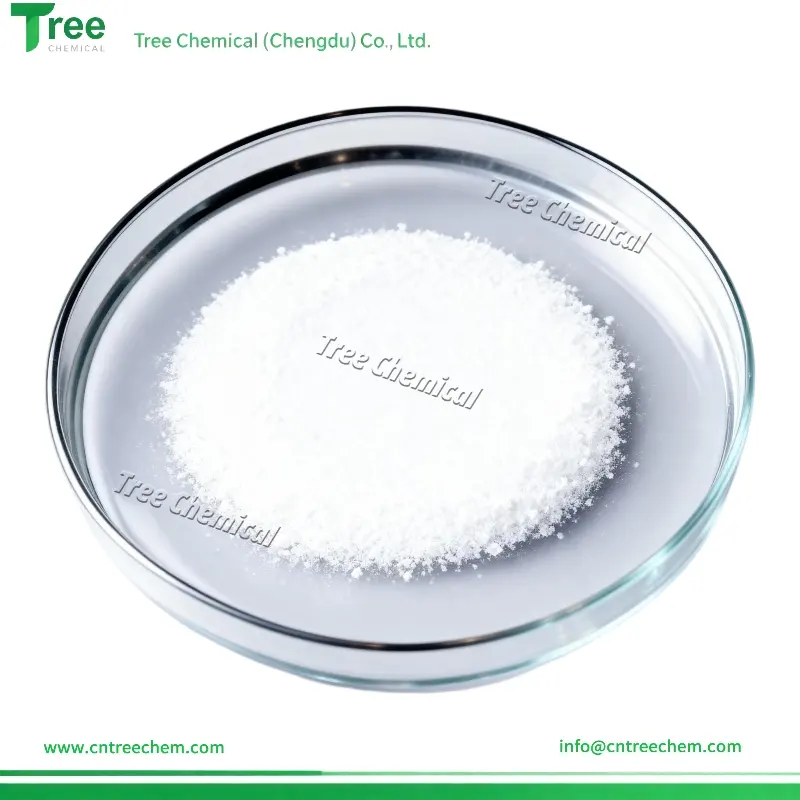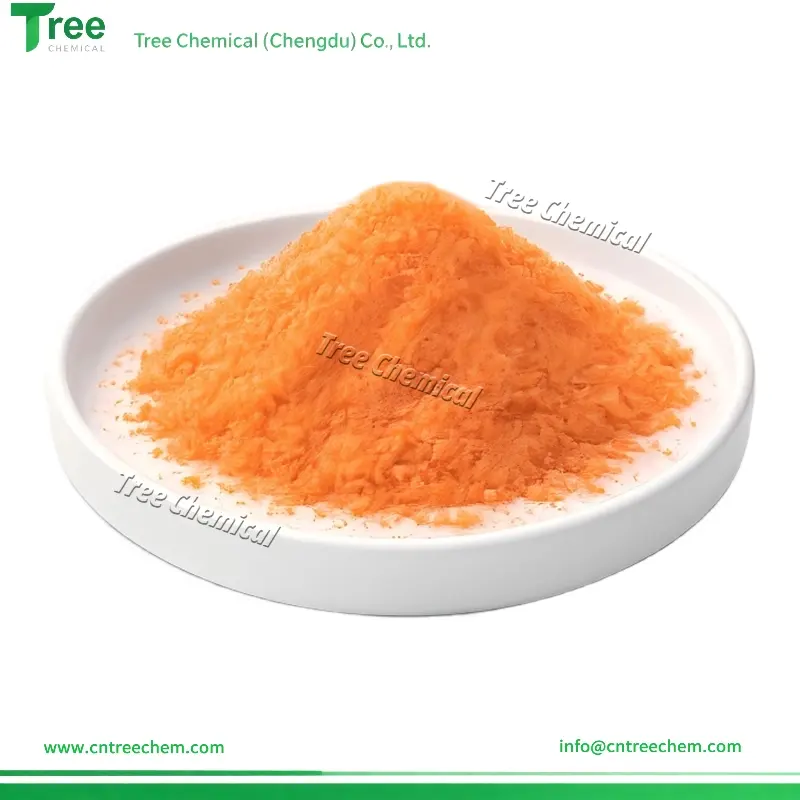
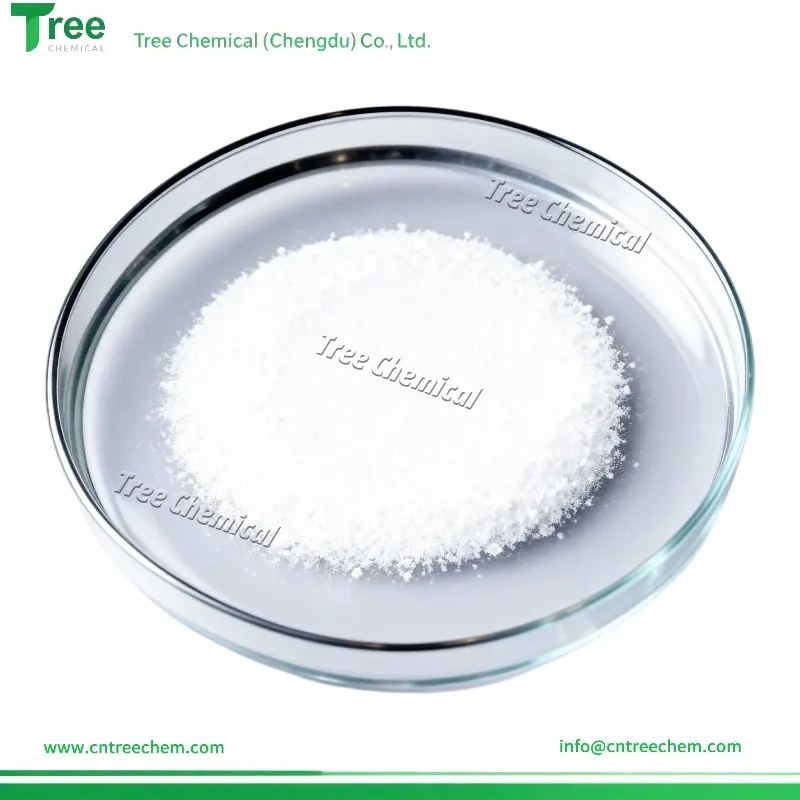
Hexamethonium Bromide Methobromine Hexamethylenebis(trimethylammonium) Dibromide CAS 55-97-0
- CAS: 55-97-0
- Synonyms: Hexamethylenebis(trimethylammonium) dibromide; Methobromine
- EINECS No.: 200-249-7
- Molecular Formula: C₁₂H₃₀Br₂N₂
- Grade: Industrial Grade
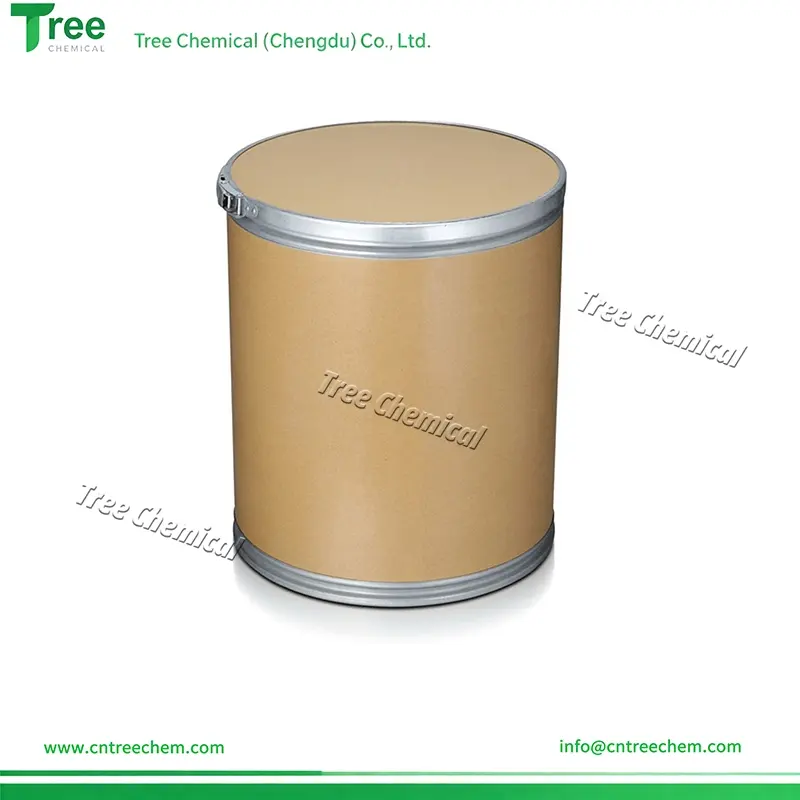
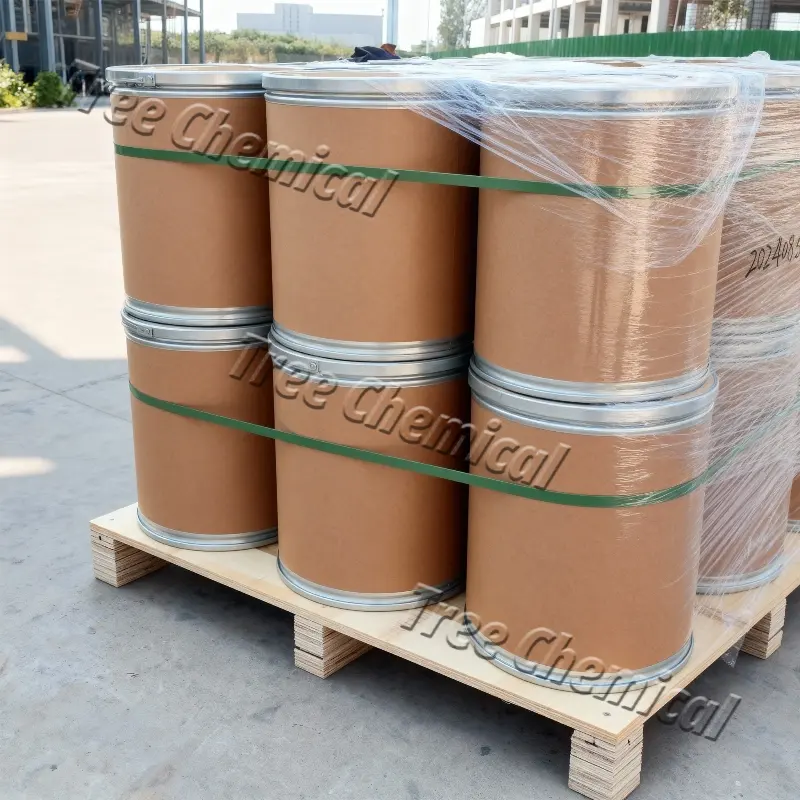
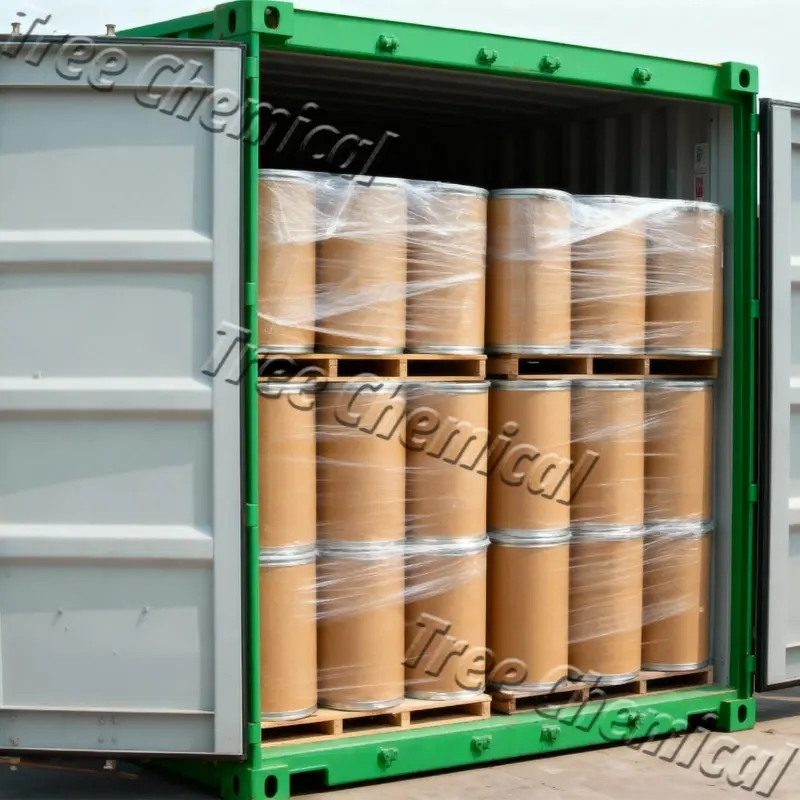
- Packaging: 25 kg fiber drum / 25 kg waterproof kraft paper bag
Tree Chem supplies Hexamethonium Bromide (CAS 55-97-0) for customers seeking to purchase high-quality quaternary ammonium salts used in research, synthesis, and formulation systems. The product is provided as a stable solid suitable for precise handling and downstream applications.
Hexamethonium bromide is known for its bis-quaternary ammonium structure and is commonly used as a reference compound, intermediate, or functional additive in controlled chemical environments. Tree Chem supports flexible packaging options to meet different customer requirements. For further information, please contact info@cntreechem.com.
Specification
Basic Information
| Item | Details |
| Product Name | Hexamethonium Bromide |
| Synonyms | Hexamethylenebis(trimethylammonium) dibromide; Methobromine |
| CAS No. | 55-97-0 |
| Molecular Formula | C₁₂H₃₀Br₂N₂ |
| Molecular Weight | 362.19 |
| EINECS No. | 200-249-7 |
Technical Specification
| Item | Specification |
| Appearance | White to off-white crystalline powder |
| Assay | ≥ 99.0% |
| Moisture Content | ≤ 0.5% |
| Solubility | Soluble in water |
Applications
Pharmaceutical Background and Current Research Use
- Hexamethonium bromide is a bis-quaternary ammonium compound that was historically used as a ganglionic blocker for severe hypertension and hypertensive emergencies. Its key pharmacological role is competitive antagonism at nicotinic acetylcholine receptors in autonomic ganglia, which blocks both sympathetic and parasympathetic neurotransmission and produces a strong autonomic “shutdown” effect in vivo.
- Today, hexamethonium bromide is used mainly as a research tool rather than a routine therapeutic drug. In cardiovascular research, it is used to study neural regulation of blood pressure and heart rate by creating a controlled ganglionic blockade in animal models, enabling clearer assessment of reflex pathways and autonomic contributions to hemodynamic changes.
- Hexamethonium bromide is also used in neuroscience and autonomic physiology research where investigators need to suppress autonomic ganglia transmission to isolate receptor subtype effects, neurotransmitter release mechanisms, or stimulus-response patterns. In urinary system studies, it supports research on bladder function and micturition control by reducing autonomic signaling and allowing controlled evaluation of reflex arcs and functional endpoints.
Injectable and Laboratory Solution Applications
- Hexamethonium bromide is commonly formulated as injectable solutions for acute research protocols and legacy clinical-style use. A typical injection approach uses aqueous solution strength around 10 mg/mL or 25 mg/mL with sodium chloride for isotonicity, with pH adjusted into a mildly acidic range and sterile filtration to produce a clear injectable product suitable for controlled dosing.
- For laboratory studies, hexamethonium bromide is also prepared as concentrated aqueous solutions for in vitro and ex vivo protocols. High-solubility behavior supports preparation in buffered saline systems, and the document highlights practical preparation methods such as using sonication for efficient dissolution when needed.
- In addition to aqueous systems, hexamethonium bromide is described as soluble in several polar organic solvents (such as ethanol, DMSO, and dimethylformamide), enabling stock solutions for specialized experimental workflows. In these cases, the material is prepared under controlled handling to maintain solution quality and reduce unwanted side reactions or instability during storage.
Phase-Transfer Catalysis in Industrial Organic Synthesis
- Hexamethonium bromide functions as an effective phase-transfer catalyst (PTC) in biphasic reactions where an aqueous base generates reactive anions that must react with an organic-phase substrate. Its cationic structure supports ion-pair transfer across phase boundaries, improving mass transfer and enabling faster, higher-yield transformations under practical agitation and temperature control.
- A highlighted PTC area is alkylation chemistry, including alkylation of phenols, alcohols, and amines using alkyl halides under moderate heating. In these manufacturing-style reactions, the catalyst is used at low mol% loading, while the aqueous base and organic solvent system provide a scalable, separable reaction environment that simplifies workup.
- Another emphasized PTC application is dichlorocarbene generation from chloroform under strong base in a biphasic system, followed by cyclopropanation of alkenes such as cyclohexene. This illustrates how hexamethonium bromide can enable controlled formation and transfer of reactive intermediates under low-temperature conditions where selectivity and safety management are critical.
Perovskite Solar Cells: Passivation and Stability Enhancement
- Hexamethonium bromide is described as a multifunctional passivation agent in perovskite solar cell technology. It is used to passivate deep-level defects associated with uncoordinated lead species and to anchor halide-related ionic species, which helps suppress ion migration and stabilize device performance during operation.
- The molecular architecture is also presented as contributing to moisture resistance by forming a protective barrier-like effect within the perovskite interface region. This function matters in practical device engineering because moisture intrusion and ion migration are major drivers of efficiency loss in unencapsulated or lightly protected devices.
- Performance outcomes noted in the document include improvements in carrier lifetime, power conversion efficiency, and retention of initial efficiency during extended ambient exposure. This positions hexamethonium bromide as a performance additive for high-efficiency perovskite platforms rather than a purely experimental novelty.
Fullerene-Based Electron Transport Layers and Low-Temperature Processing
- Hexamethonium bromide is also described in fullerene-related electron transport layer (ETL) development, including formulations where C60 is doped to create efficient solution-processed ETLs for all-carbon perovskite solar cell architectures. The role here is tied to improving electron extraction and transport while enabling low-temperature processing methods compatible with scalable coating steps.
- In these ETL applications, the compound is introduced through solution processing approaches such as spin-coating, where layer uniformity and interfacial quality directly affect device efficiency and stability. This application links hexamethonium bromide to materials-processing parameters, not only to chemical reactivity.
Surfactant and Detergent Formulations
- Hexamethonium bromide is described as having surfactant-like behavior due to its quaternary ammonium structure, enabling use in industrial detergent formulations. In such products, it can contribute to foaming and cleaning performance when combined with common anionic surfactants and foam stabilizers, with pH adjusted for performance and stability.
- The document also points to personal care–style use cases such as conditioners, softeners, hand hygiene formulations, and oral-care-related antimicrobial positioning. In these applications, the compound’s cationic nature is linked to surface interaction and antimicrobial contribution, while the formulation relies on balancing mildness, stability, and functional performance in aqueous systems.
Oil and Gas: Enhanced Oil Recovery and Flooding Systems
- Hexamethonium bromide is described in enhanced oil recovery (EOR) contexts where surfactant flooding is used to reduce interfacial tension between oil and water and improve displacement efficiency. It is also presented as a foam flooding additive that stabilizes foam and supports mobility control, improving sweep efficiency in heterogeneous reservoirs.
- These applications are formulation-driven and depend on selecting appropriate concentration ranges that produce measurable interfacial effects without destabilizing the flood chemistry. In practice, the compound’s value is tied to its ability to change oil–water interaction behavior and support more efficient recovery operations.
Electroplating Additive for Precious Metals and High-End Components
- Hexamethonium bromide is described as a high-performance electroplating additive for precious metal plating systems (such as gold, palladium, and platinum). In plating baths, it functions as a brightener and leveling agent, improving deposit appearance and uniformity while supporting better corrosion performance of the plated layer.
- The application emphasizes adsorption behavior at the cathode surface and the role of bromide in influencing crystal growth. This is positioned as valuable for precision electronic components and high-end jewelry where mirror-grade brightness, excellent leveling, and stable plating quality are required.
Agriculture: Seed Treatment and Biocidal Applications
- Hexamethonium bromide is described as having plant growth regulatory effects in seed treatment, including seed soaking protocols designed to accelerate germination and improve emergence uniformity. The document links this effect to controlled pre-treatment conditions such as soak time, cold treatment steps, and supportive solution components used to promote vitality during germination.
- The compound is also positioned as an antimicrobial/biocide ingredient in agricultural contexts through foliar spray or related application formats. In these uses, formulation stability is supported by emulsifiers and stabilizers, and the target outcomes include disease control and disinfection-oriented performance in crop production settings.
Water Treatment: Biofouling Control, Sludge Conditioning, and Niche Uses
- Hexamethonium bromide is described in industrial water treatment contexts where its antimicrobial and surfactant properties support algae control and biofilm prevention in recirculating water systems. These programs typically rely on low ppm dosing and operational monitoring to control biofouling and maintain system efficiency.
- It is also described for wastewater treatment support such as sludge conditioning and dewatering aid functions, where cationic behavior can influence aggregation and water release behavior. Additional niche mentions include specialized pool or drinking-water-related references, though the document emphasizes that toxicity constraints limit broad potable-water positioning.
Zeolite and Nanotechnology: Templates, Microemulsions, and Delivery Systems
- Hexamethonium bromide is described as a structure-directing agent (template) for zeolite synthesis such as ZSM-48, where it supports controlled crystallization in hydrothermal processing. In such synthesis, the compound’s structure helps guide pore architecture formation, after which calcination removes the template to yield the final porous material.
- In nanotechnology, the compound is described as a template or directing agent for mesoporous silica nanoparticle synthesis, enabling control over pore size and morphology. It is also described in emulsion and microemulsion systems used for drug delivery, solubilization, and nanoemulsion formation, where concentration and phase design determine droplet stability and delivery behavior.
Compatibility, Storage, and Safety in Industrial Use
- Hexamethonium bromide is described as highly water-soluble and hygroscopic, so moisture control is essential to maintain powder quality and handling consistency. The document highlights practical stability windows tied to pH control for solution preparation and emphasizes sealed storage in dry conditions with segregation from strong oxidizers.
- Safety guidance is emphasized, including the need for ventilation, PPE, and careful exposure control due to harmful exposure routes and strong aquatic toxicity concerns. Disposal is treated as hazardous waste management, with avoidance of environmental release as a core operational requirement.
Storage & Handling
- Store in tightly sealed containers in a cool, dry place.
- Protect from moisture and direct sunlight.
- Avoid contact with strong oxidizing agents.
- Use clean, dry equipment when handling.
- Follow standard chemical safety and storage guidelines.
Usage Notice
- Intended for professional, industrial, or research use only.
- Avoid inhalation of dust and prolonged skin or eye contact.
- Wear appropriate personal protective equipment during handling.
- Confirm compatibility before use in any formulation or application.
- Dispose of residues in accordance with local regulations.
- An injectable solution formulation uses hexamethonium bromide at 10 mg/mL or 25 mg/mL with sodium chloride at 9 mg/mL in water for injection, adjusting pH to about 4.5–6.5 and sterile-filtering to provide an isotonic sterile dose form for acute research or controlled administration.
- An in vitro aqueous stock formulation uses hexamethonium bromide at about 100 mg/mL prepared in buffered saline with assisted dissolution to provide a concentrated, easy-to-dose solution for laboratory autonomic-function studies.
- A cardiovascular research dosing formulation uses hexamethonium bromide at about 0.2–25 mg/kg by intravenous administration to create ganglionic blockade that reduces sympathetic nerve activity and enables measurement of reflex-controlled blood pressure and heart-rate responses.
- A neuroscience in vitro blockade formulation uses hexamethonium bromide at about 100–300 μM in physiological media to suppress autonomic ganglia transmission and isolate receptor-mediated or neurotransmitter-release mechanisms in experimental models.
- A phase-transfer catalysis formulation uses hexamethonium bromide at about 3–5 mol% with an organic substrate at 1.0 mol, aqueous NaOH/KOH at about 1.2–2.0 mol, and an organic solvent such as toluene or dichloromethane to accelerate biphasic alkylation and substitution reactions by improving ion transfer.
- A dichlorocarbene cyclopropanation formulation uses cyclohexene at 1.0 mol with chloroform at about 2.0 mol, aqueous NaOH at about 3.0 mol, hexamethonium bromide at about 3 mol%, and dichloromethane as solvent at about 0–5°C to generate dichlorocarbene efficiently and form cyclopropane derivatives.
- A perovskite precursor additive formulation introduces hexamethonium bromide as a passivation component in the perovskite processing solution to passivate deep-level defects, anchor halide-related species, and suppress ion migration for higher efficiency and improved ambient stability.
- A fullerene ETL formulation uses hexamethonium bromide–doped C60 in an appropriate organic solvent for solution processing and spin-coating to create a low-temperature electron-transport layer that improves charge extraction in all-carbon perovskite solar cells.
- An industrial detergent formulation uses hexamethonium bromide at about 0.5–2.0 wt% with SLES at about 15–20 wt% and cocamide DEA at about 3–5 wt%, adjusting with citric acid and water to deliver foaming and cleaning performance in alkaline-to-neutral cleaning products.
- An antimicrobial hand hygiene formulation uses hexamethonium bromide at about 0.1–0.5 wt% in an aqueous-alcohol carrier to provide cationic antimicrobial contribution for rinse-off sanitation systems.
- An enhanced oil recovery formulation uses hexamethonium bromide at about 0.1–0.5 wt% in an aqueous flood fluid to reduce interfacial tension and improve oil displacement efficiency during surfactant flooding.
- A surfactant flooding formulation uses hexamethonium bromide at about 0.2–0.8 wt% to improve sweep efficiency and oil displacement by strengthening interfacial activity in reservoir flooding operations.
- A foam flooding additive formulation uses hexamethonium bromide at about 0.3–0.6 wt% to stabilize foam and improve mobility control for better conformance and recovery in heterogeneous formations.
- A precious-metal electroplating additive formulation uses hexamethonium bromide at about 40–120 mg/L in Au/Pd/Pt plating baths as a brightener and leveling agent to refine crystal growth and achieve mirror-grade brightness for precision components.
- A seed germination enhancement formulation uses hexamethonium bromide solution in a timed seed-soaking step with a controlled cold-treatment stage to soften seed coats and improve emergence uniformity and germination rate.
- An agricultural biocide formulation uses hexamethonium bromide at about 0.1–0.5 wt% in a water-based spray with an emulsifier and stabilizer to provide antimicrobial protection for foliar disease control and disinfection-focused applications.
- A cooling-water treatment formulation uses hexamethonium bromide at about 5–20 ppm to control algae and suppress biofilm growth in recirculating industrial water systems.
- A wastewater conditioning formulation uses hexamethonium bromide at about 0.1–0.5 wt% to support sludge conditioning and dewatering performance through cationic aggregation effects.
- A zeolite synthesis formulation uses a silica source with an aluminum source and hexamethonium bromide at about 0.5–2.0 parts as a structure-directing agent under hydrothermal crystallization at about 150–200°C for 24–72 hours to form a targeted zeolite framework.
- A microemulsion drug-delivery formulation uses hexamethonium bromide at about 0.1–1.0 wt% to stabilize microemulsion structures and improve solubilization and delivery of hydrophobic actives in dispersion-based systems.
- A nanoemulsion formulation uses hexamethonium bromide at about 0.05–0.5 wt% to support oil-in-water nanoemulsion stability and droplet control for delivery or solubilization applications.
- A hydrotropic solubilization formulation uses hexamethonium bromide at about 0.2–0.8 wt% to enhance solubilization capacity in aqueous systems and improve dispersion of poorly soluble components.
- A storage and handling program keeps hexamethonium bromide tightly sealed at about 15–25°C in a dry environment away from oxidizers to minimize moisture uptake and maintain consistent performance across synthesis, formulation, and materials-processing use.
Packaging
- 25 kg fiber drum
- 25 kg waterproof kraft paper bag
- Other packaging options available upon customer request