



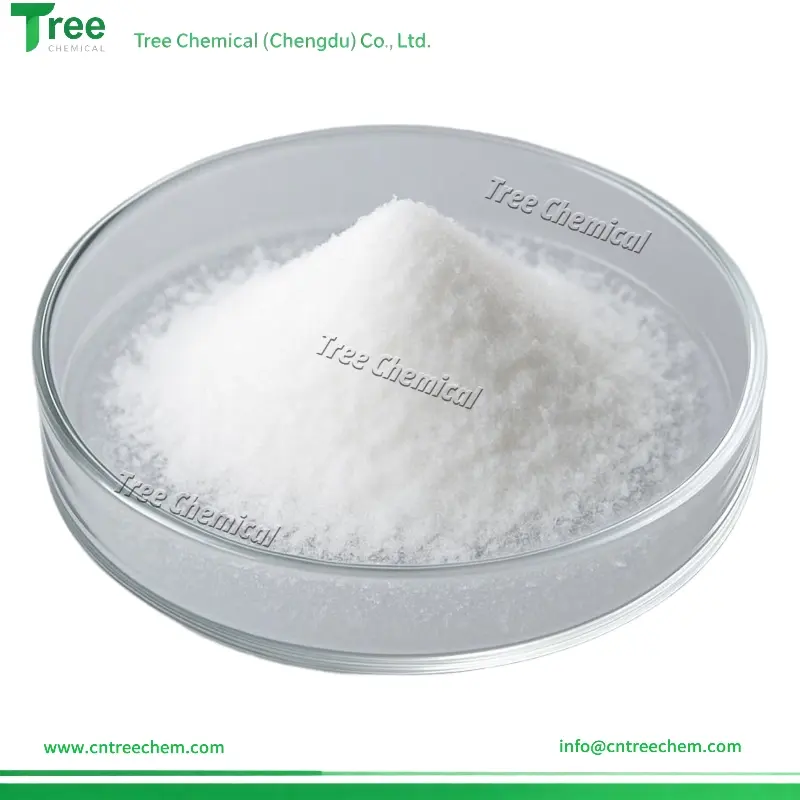
Sodium Hexametaphosphate SHMP Sodium Polymetaphosphate CAS 10124-56-8
- CAS: 10124-56-8
- Synonyms: Sodium polyphosphate; Sodium polymetaphosphate; SHMP
- EINECS No.: 233-343-1
- Molecular Formula: H7NaO18P6
- 등급: 산업용 등급
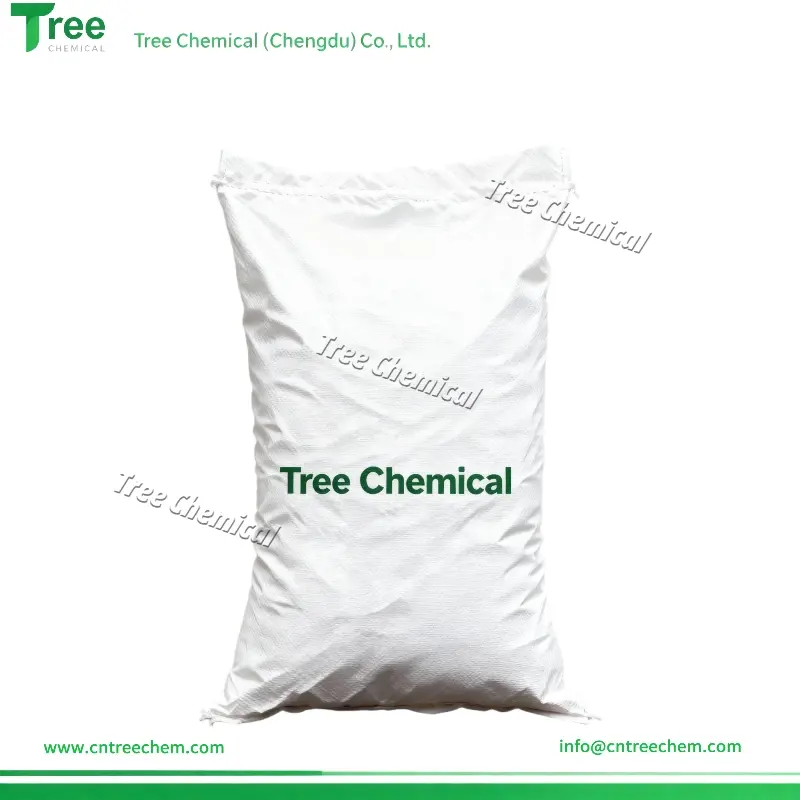
- 포장: 25kg 포대
Tree Chem manufacture Sodium Hexametaphosphate CAS 10124-56-8 for customers looking to purchase a reliable polyphosphate used in water treatment, detergents, and food processing. The product is produced with controlled phosphate content and low impurity levels to support stable performance in industrial applications. Contact info@cntreechem.com.
Sodium Hexametaphosphate acts as an effective dispersant, sequestrant, and water-softening agent. Due to its strong chelating ability toward metal ions such as calcium and magnesium, it is widely used to prevent scale formation and improve formulation stability in industrial processes.
사양
기본 정보
| 목 | 값 |
| 제품명 | Sodium Hexametaphosphate |
| 동의어 | Sodium polyphosphate; Sodium polymetaphosphate; SHMP |
| CAS | 10124-56-8 |
| EINECS | 233-343-1 |
| 분자식 | H7NaO18P6 |
| 분자량 | 503.87 |
기술 사양
| 매개변수 | Industrial Grade (First Grade) |
| Total Phosphate (as P₂O₅) | ≥68.0% |
| Inactive Phosphate (as P₂O₅) | ≤7.5% |
| Water Insoluble | ≤0.04% |
| Iron (as Fe) | ≤0.03% |
| pH (10g/L 용액) | 5.8 – 7.3 |
| 용해도 | Qualified |
응용 프로그램
Food Processing: Meat, Seafood, and Water Retention Systems
- Sodium hexametaphosphate is widely used in meat and seafood processing because it improves water-holding capacity, supports texture development, and helps maintain product yield during processing and storage. Its sequestration ability allows it to interact with metal ions and protein systems in a way that improves moisture retention and reduces quality loss.
- In processed meats such as sausages, ham, and similar restructured products, SHMP is used to improve juiciness and product stability. It helps open the protein network and supports stronger water binding, which is important for slice quality, cooking yield, and texture consistency.
- In seafood applications, SHMP is especially valued for moisture retention and weight stabilization. It is used in immersion or treatment systems to improve texture, reduce drip loss, and support a better final appearance after storage and thawing.
- Another important function in food systems is oxidation control. By chelating trace metal ions, SHMP helps reduce reactions that cause off-color development, rancidity, or quality deterioration, which makes it useful in protein-rich foods where shelf stability matters.
Dairy Processing and Protein Stabilization
- In dairy processing, SHMP is used as a stabilizer and calcium-sequestering agent, especially in processed cheese, milk powders, and dairy beverages. Its ability to bind calcium is critical because calcium strongly influences protein cross-linking and emulsion stability.
- In processed cheese systems, SHMP helps prevent graininess and improves meltability by reducing excessive calcium-driven protein aggregation. This supports smoother texture, better spreadability, and more stable emulsification in the finished product.
- In milk powders and reconstituted dairy systems, SHMP is used to improve protein stability during processing and storage. It helps reduce coagulation tendency and supports a more uniform dispersion when the product is rehydrated or further processed.
- In dairy drinks and similar systems, SHMP functions as a stabilizer that helps control precipitation and sedimentation. This is especially useful where shelf-life stability and appearance are important commercial requirements.
Beverage Processing, Canned Foods, and Product Stability
- SHMP is used in beverages because it helps control metal-ion-related instability, including haze formation, discoloration, and sediment generation. This makes it valuable in fruit juices, carbonated drinks, and other liquid systems where clarity and flavor stability are essential.
- In beverage applications, SHMP acts as a sequestrant for trace metals that might otherwise catalyze unwanted changes in color or flavor. This improves product consistency and supports longer shelf life.
- In beer and related beverages, SHMP is used as a clarifying aid to help reduce metal-related haze. This supports a cleaner visual appearance and better storage stability.
- In canned fruits and vegetables, SHMP helps preserve natural color and reduce discoloration caused by trace metal reactions. It also contributes to overall formulation stability in processed products exposed to thermal treatment and storage.
Bakery, Convenience Foods, and Powdered Systems
- SHMP is used in bakery and convenience food formulations as a dough conditioner, emulsifying support agent, and anti-caking component. These roles make it useful in products where processability and stable powder behavior are important.
- In dough systems, SHMP helps improve machinability and texture by influencing water interaction and ingredient dispersion. This supports more uniform dough handling and can improve the consistency of baked products.
- In convenience foods and powdered mixes, SHMP is used to reduce caking and improve free-flowing behavior. This is especially helpful in dry formulations where moisture pickup and agglomeration can reduce processing efficiency and end-use performance.
- It also contributes to emulsification and general texture control in prepared foods, helping maintain smoothness and stable structure in multi-ingredient systems.
Water Treatment: Scale Inhibition, Sequestration, and Corrosion Control
- Water treatment is one of the most important industrial uses of SHMP. It is used because of its strong ability to sequester hardness ions such as calcium and magnesium, which helps prevent scale formation in industrial and municipal water systems.
- In cooling water systems, SHMP helps keep hardness ions in soluble or non-scaling forms, reducing deposition on heat-transfer surfaces. This improves operational efficiency and helps reduce maintenance frequency.
- In boiler-water and feedwater treatment, SHMP helps prevent scale formation that would otherwise reduce heat-transfer efficiency and damage equipment. Its ability to interfere with crystal growth makes it especially valuable in systems exposed to elevated temperatures and concentrated salts.
- In municipal and drinking-water-related systems, SHMP is also used to control iron, manganese, lead, and copper-related water quality issues. It can help reduce discoloration, stabilize metals in solution, and support better distribution-system performance.
- Another major role is corrosion control. SHMP can contribute to formation of protective films on metal surfaces, helping reduce corrosion rate under appropriate treatment conditions.
Detergents, Laundry Products, and Industrial Cleaning
- SHMP is a classic detergent builder and water softener. In detergent systems, its value comes from binding calcium and magnesium ions that would otherwise interfere with surfactant performance.
- In laundry detergents, SHMP improves cleaning efficiency in hard water by preventing hardness ions from deactivating anionic surfactants. This supports stronger detergency, better foam utilization, and improved soil removal.
- It also acts as a dispersant, helping keep removed dirt suspended in the wash liquor rather than redepositing onto fabrics. This is important in both household and industrial laundry systems.
- In automatic dishwashing and heavy-duty cleaning products, SHMP improves overall cleaning performance by combining builder action, water softening, and soil-dispersion effects. These functions are especially important in hard-water environments and high-soil industrial cleaning operations.
- In metal cleaners, masonry cleaners, and all-purpose cleaners, SHMP helps with water conditioning and particle dispersion, supporting more effective removal of mineral soils, greasy residues, and process contamination.
Ceramic Industry: Deflocculation, Slip Control, and Glaze Processing
- SHMP is widely used in ceramic processing as a deflocculant and dispersant. This is one of its most technically important applications because slurry viscosity directly affects casting, pumping, milling, and glaze application.
- In ceramic body preparation, SHMP reduces slurry viscosity by dispersing clay and ceramic particles more effectively. This allows higher solids loading with lower water content, which improves drying efficiency and dimensional control.
- In kaolin and clay-based systems, SHMP can greatly reduce viscosity while improving slurry stability. This supports more efficient ball milling, casting, and general ceramic processing.
- In glaze and slip systems, SHMP helps prevent settling and improves flow and leveling. This allows more uniform glaze application and contributes to smoother fired surfaces.
- In technical and electronic ceramics, SHMP is used where particle dispersion and slurry precision are especially important. High-purity grades are relevant here because impurity control directly affects finished ceramic quality.
Paper, Pulp, and Filler Dispersion
- In the paper and pulp industry, SHMP is used for water softening, filler dispersion, and pH-related process support. Its sequestration function helps control hardness ions that could otherwise interfere with wet-end chemistry or deposit formation.
- As a dispersant, SHMP improves distribution of fillers, pigments, and mineral additives. This supports better sheet uniformity, coating quality, and process consistency.
- It is also used to reduce scaling and help protect metal equipment in process-water circuits. These combined roles make it useful in both pulp preparation and paper finishing operations.
Textile Processing and Dyeing Support
- In textile processing, SHMP is used primarily for water softening and dispersion control. These are important because hardness ions can interfere with dye uptake, washing efficiency, and finishing performance.
- In pretreatment and scouring, SHMP helps soften water and improve cleaning of textile substrates. This supports more consistent removal of impurities before dyeing or finishing.
- In dyeing, SHMP is used as an auxiliary that helps improve dye penetration and color uniformity. By controlling metal ions and improving dispersion, it contributes to more stable and repeatable coloration.
- It is also used in textile printing and related processes where slurry stability, water quality, and additive compatibility influence final fabric appearance and performance.
Metal Processing, Surface Treatment, and Oilfield Uses
- In metal processing, SHMP is used in cleaning and surface-treatment systems because it can bind hardness ions, disperse solids, and help stabilize solutions used in cleaning, pickling, or pretreatment operations.
- In electroplating-related systems, it may help stabilize metal-ion environments and support cleaner bath performance. In corrosion-related applications, it contributes protective behavior by reducing scale and helping manage metal-solution interactions.
- In oilfield use, SHMP appears in drilling mud and related water-treatment systems. It is used to influence mud viscosity, reduce scale formation, and help manage water quality in field operations where mineral buildup and hardness can create operational problems.
Grade Differences and Application Selection
- SHMP is available in multiple grades, and grade selection strongly affects its application suitability. Food grade is used where purity, heavy-metal limits, and regulatory compliance are critical, especially in direct food applications.
- Industrial grade is used in water treatment, detergents, ceramics, and similar cost-sensitive applications where extremely high purity is not required. This grade is typically selected for performance and economic efficiency.
- High-purity and specialized grades are used in pharmaceutical, semiconductor, electronic, and advanced ceramic applications where low impurity levels are necessary for process reliability and product quality.
- Because application requirements vary greatly, the choice of SHMP grade is directly tied to purity, intended contact conditions, and regulatory expectations.
Safety, Handling, and Storage Considerations
- SHMP is generally considered manageable in industrial use, but it still requires standard chemical handling controls. It can irritate the eyes, skin, and respiratory tract, especially in powder form.
- Because it is hygroscopic, SHMP readily absorbs moisture from the air. This means storage conditions are very important for maintaining product quality, flowability, and ease of handling.
- It should be stored in tightly sealed containers in cool, dry, well-ventilated conditions, with protection from moisture and direct heat. Proper PPE, dust control, and orderly spill handling are important during routine production and use.
- Environmental management is also important because phosphate discharge can contribute to eutrophication if waste streams are not properly controlled.
보관 및 취급
- Store in tightly sealed containers in a cool and dry environment
- Protect from moisture and contamination
- Avoid exposure to excessive heat or humidity
- Keep containers properly closed when not in use
- Follow standard chemical handling and storage procedures
사용 공지
- A processed meat formulation can use SHMP at about 0.1–0.5% of total product weight, where SHMP functions as a water-binding and texture-enhancing phosphate that improves yield, juiciness, and stability.
- A compound meat phosphate system can use sodium tripolyphosphate, sodium pyrophosphate, and SHMP in an optimized blended ratio with total phosphate controlled at about 0.5% of meat weight, where SHMP functions as the sequestrant and water-retention contributor within the phosphate package.
- A seafood treatment formulation can use SHMP at about 0.2–0.5% in an immersion solution, where SHMP functions as a moisture-retention and texture-improving agent that supports weight gain and quality stability.
- A processed cheese formulation can use SHMP at about 0.2–2.75%, where SHMP functions as a calcium-sequestering emulsifying salt that improves meltability and prevents grainy texture.
- A milk-powder stabilization formulation can use SHMP at about 0.5%, where SHMP functions as a protein stabilizer that reduces coagulation and improves storage performance.
- A beverage stabilization formulation can use SHMP at about 0.05–0.1%, where SHMP functions as a metal-ion sequestrant that prevents turbidity, sedimentation, and color instability.
- A canned fruit or vegetable formulation can use SHMP at about 0.05–0.2%, where SHMP functions as a color-protection and stability aid by controlling trace-metal-related discoloration.
- A powdered convenience-food formulation can use SHMP at about 0.05–0.1%, where SHMP functions as a dispersant and anti-caking agent that improves flowability and processing stability.
- A cooling-water treatment formulation can use SHMP at about 5–20 ppm, where SHMP functions as a scale inhibitor and metal-ion sequestrant that reduces calcium/magnesium deposition in industrial water systems.
- A drinking-water treatment formulation can use SHMP at about 0.5–2.0 ppm, where SHMP functions as a sequestrant and corrosion-control aid that helps reduce iron, manganese, lead, and copper-related water-quality problems.
- A boiler-water treatment formulation can use SHMP at about 10–50 ppm depending on hardness level, where SHMP functions as a scale inhibitor that keeps calcium and magnesium in non-scaling form.
- An RO-pretreatment formulation can use SHMP at about 1–5 ppm, where SHMP functions as an antiscalant and dispersant that helps protect membrane surfaces from fouling and deposition.
- A laundry detergent formulation can use SHMP at about 5–25% with surfactants, sodium silicate, sodium sulfate, and other builders, where SHMP functions as a water softener, builder, and soil dispersant that improves cleaning performance in hard water.
- An industrial cleaner formulation can use SHMP at about 10–20% with alkaline builders, surfactants, solvents, and chelants, where SHMP functions as a sequestrant and dispersant that strengthens heavy-duty cleaning efficiency.
- An automatic dishwashing detergent formulation can use SHMP at about 8–12% with alkaline builders, enzymes, bleach activators, and foam suppressants, where SHMP functions as a builder and hardness-control agent that improves washing performance and deposit control.
- A ceramic body slurry formulation can use SHMP at about 0.1–0.5% based on clay weight, where SHMP functions as a deflocculant that reduces viscosity and enables higher-solids ceramic processing.
- A ceramic glaze formulation can use SHMP at about 0.1–1.0% based on glaze weight, where SHMP functions as a dispersant and water-reducing agent that improves glaze flow, leveling, and suspension stability.
- A paper-processing formulation can use SHMP at about 0.1–0.5% based on filler weight, where SHMP functions as a dispersant that improves pigment and filler distribution in papermaking systems.
- A textile-processing formulation can use SHMP at about 0.5–2.0% with dyes, surfactants, and water, where SHMP functions as a water softener and dyeing auxiliary that improves color uniformity and process stability.
- A metal-cleaning formulation can use SHMP at about 5–10% with citric acid, surfactant, and water, where SHMP functions as a chelating and dispersing agent that supports oxide removal and surface preparation.
- An oilfield drilling-mud formulation can use SHMP at about 0.1–0.5% with bentonite and water plus pH adjustment, where SHMP functions as a viscosity-adjusting and scale-control additive for drilling-fluid stability.
포장
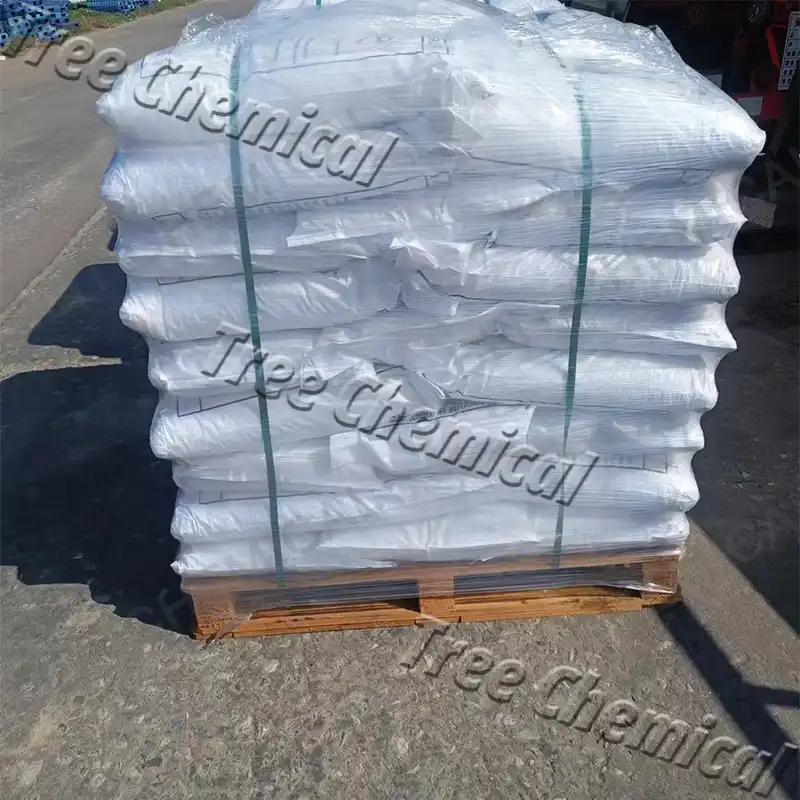
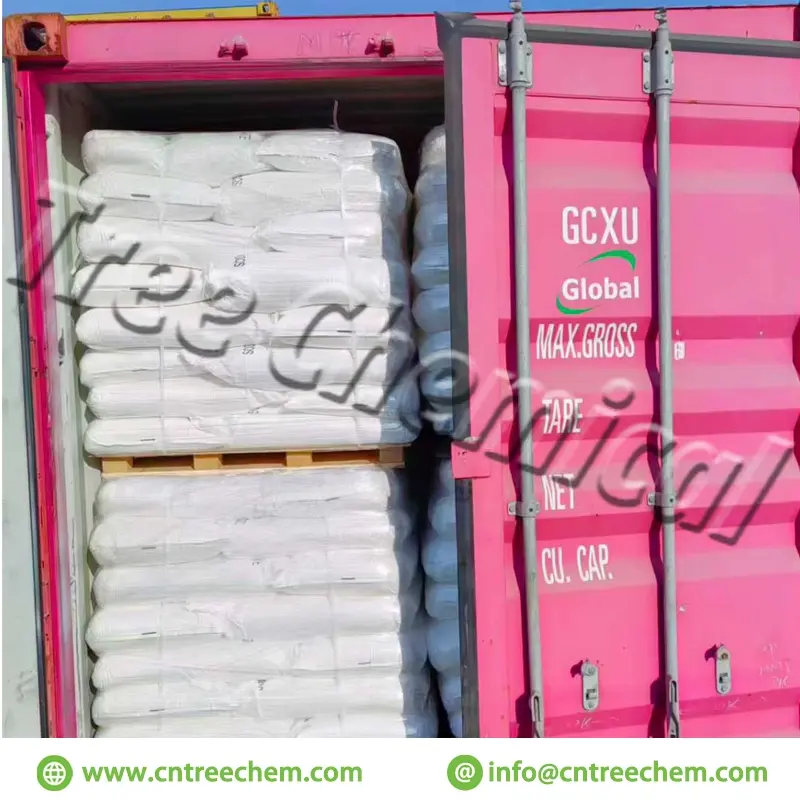
- Inner packaging: double-layer bags lined with polyethylene film
- Outer packaging: plastic woven bags
- 순중량: 포대당 25kg


