



Ammonium Bromide NH₄Br Ammonia hydrogen bromide CAS 12124-97-9
- CAS: 12124-97-9
- Synonyms: Ammonium bromide; NH₄Br; Ammonia hydrogen bromide
- EINECS No.: 235-183-8
- Molecular Formula: BrH₄N
- Grade: Industrial / Chemical
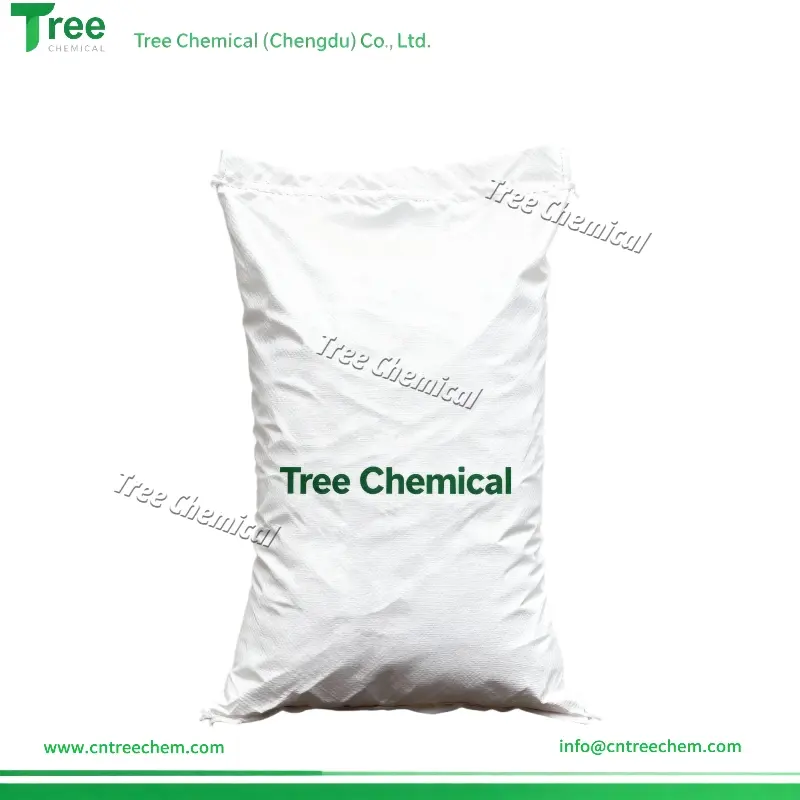
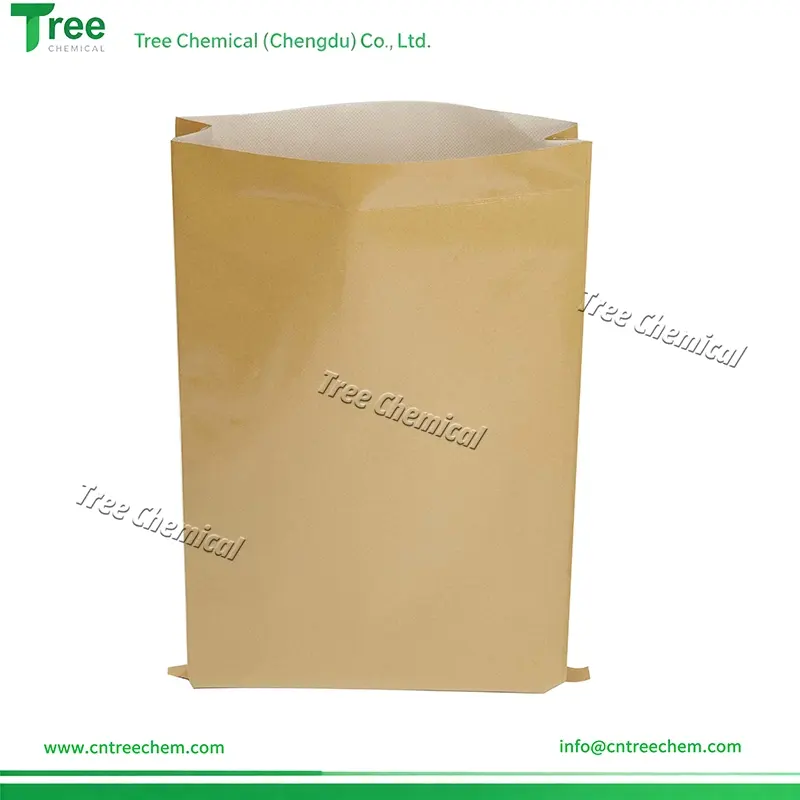
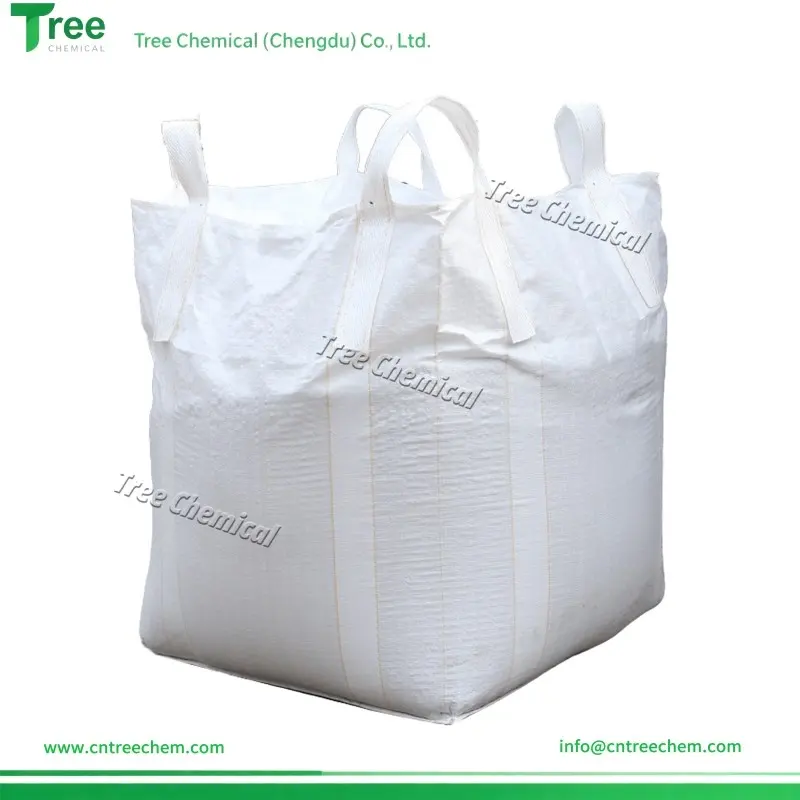
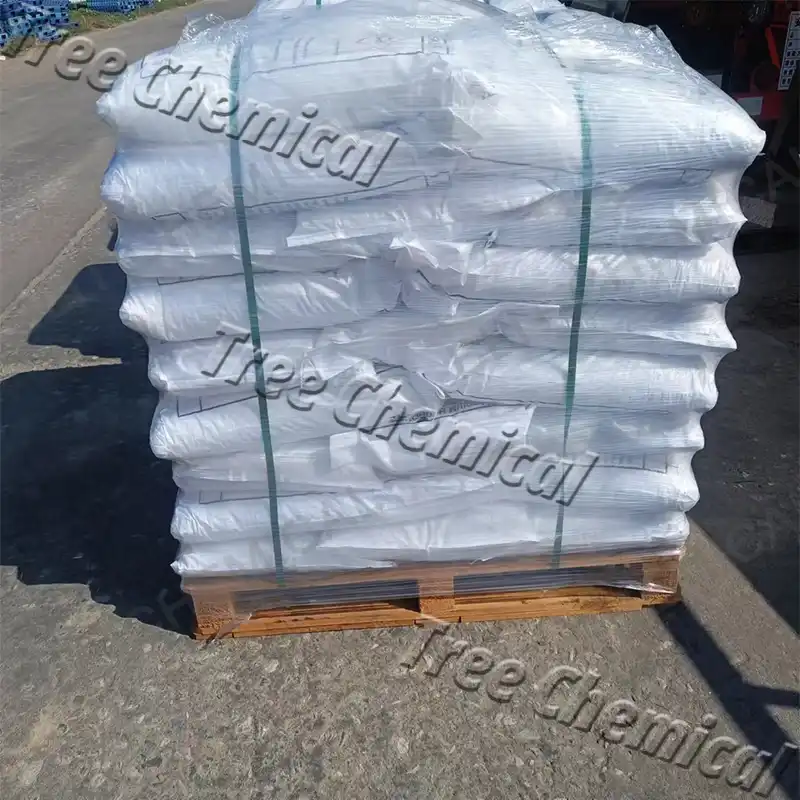
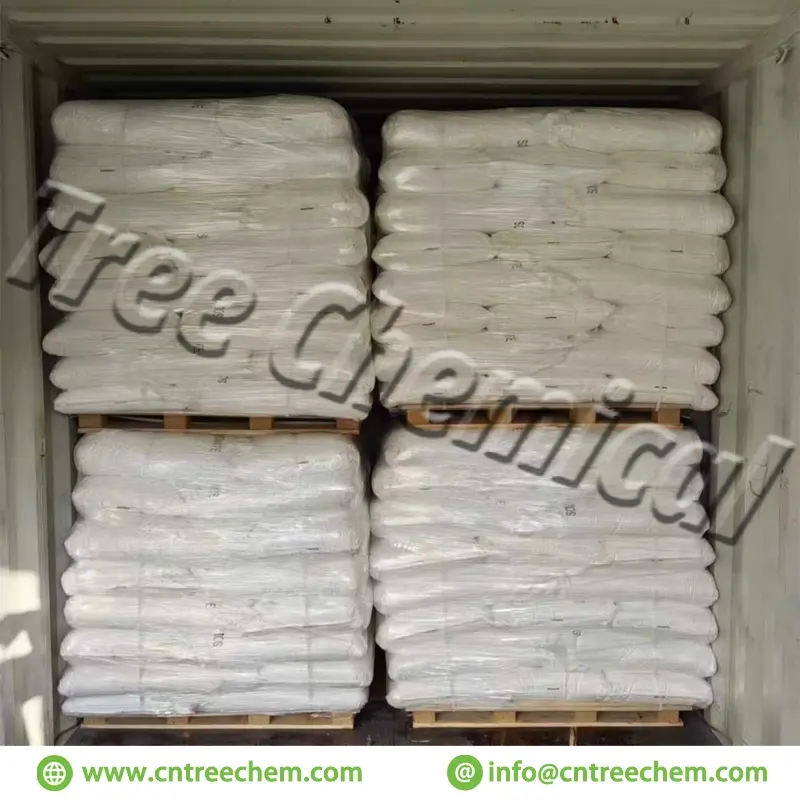
- Packaging: 25 kg bags or jumbo bags
Tree Chem manufacture Ammonium Bromide CAS 12124-97-9 for customers looking to purchase a reliable bromide salt used in pharmaceutical intermediates, photographic chemistry, and industrial synthesis processes. The product is produced with stable composition and controlled impurity levels suitable for multiple industrial applications. Contact info@cntreechem.com.
Ammonium Bromide is highly soluble in water and acts as an effective bromide ion source in chemical reactions. Because of its chemical stability and good solubility, it is widely used in pharmaceutical production, flame retardant systems, and specialty chemical formulations.
Спецификация
Основная информация
| Элемент | Ценить |
| Название продукта | Ammonium Bromide |
| Синонимы | Ammonium bromide; NH₄Br; Ammonia hydrogen bromide |
| CAS | 12124-97-9 |
| EINECS | 235-183-8 |
| Молекулярная формула | BrH₄N |
| Молекулярный вес | 97.94 |
Технические характеристики
| Параметр | Спецификация |
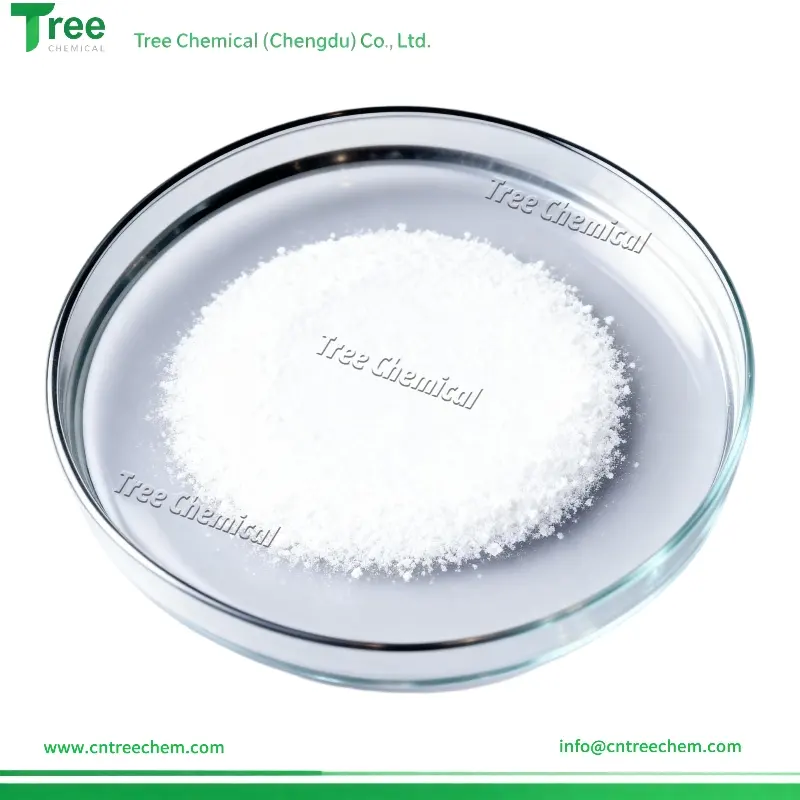
| Появление | Белый кристаллический порошок |
| Анализ | ≥98,0% |
| Chloride | ≤0,5% |
| Sulfate | ≤0,05% |
| pH (25°C) | 4.5 – 6.0 |
Приложения
Pharmaceutical and Fine Chemical Synthesis
- Ammonium bromide is widely used in the pharmaceutical and fine chemical industry as a bromide source for synthesis and intermediate preparation. Its high water solubility and complete dissociation in solution make it convenient for reaction systems that require reliable bromide availability under aqueous or mixed-solvent conditions.
- In pharmaceutical synthesis, ammonium bromide is used in the preparation of bromide-containing therapeutic intermediates, including compounds associated with sedative, anticonvulsant, and expectorant product pathways. Its role is closely tied to controlled bromide introduction, which is important when the target molecule requires brominated functionality or bromide-derived activity.
- The material is also used in broader organic synthesis as a reagent for bromination and related halogenation chemistry. These applications include transformation of aromatic compounds, alkenes, alkynes, and other substrates into brominated intermediates that are later used in pharmaceuticals, agrochemicals, and specialty chemicals.
- Because ammonium bromide is easy to handle and dissolves readily, it is suitable for both laboratory development and industrial production. This practical handling advantage supports its continued use in reaction design where bromide ion availability, reaction consistency, and relatively simple charging procedures are important.
Organic Transformation Chemistry and Catalytic Support Roles
- Ammonium bromide is used as a bromine-source component in electrophilic bromination systems and other bromide-assisted transformations. In these applications, it supports the preparation of brominated organic compounds that serve as core building blocks for downstream synthesis.
- The compound is also useful in general reaction development where bromide ions are needed to influence reactivity, conversion, or halide exchange. Its ionic behavior in solution allows it to participate efficiently in systems where a controlled bromide source is preferred over more aggressive or less convenient brominating materials.
- This makes ammonium bromide relevant not only as a commodity bromide salt, but also as a functional synthesis reagent for route development, reaction optimization, and scale-up work in fine chemical manufacturing.
Traditional Medicinal, Veterinary, and Research-Oriented Uses
- Ammonium bromide has a long medicinal history as a bromide-containing pharmaceutical component. It has been associated with sedative, anticonvulsant, antispasmodic, and expectorant uses in older therapeutic systems, particularly in oral preparations such as syrups and solutions.
- Although many of these historical human medicinal uses have declined in modern mainstream practice, the compound remains relevant in research, toxicology, formulation studies, and specialized pharmaceutical-related evaluations. Its pharmacological history makes it an important reference material in bromide-related medicinal chemistry and formulation work.
- In laboratory settings, ammonium bromide may also be used in studies focused on bromide behavior, medicinal mechanism comparisons, and development of bromide-containing therapeutic systems. This gives it a continuing role beyond direct commercial drug use.
Photography, Imaging, and Emulsion Preparation
- Ammonium bromide is one of the classic bromide salts used in photographic chemistry because it reacts with silver nitrate to produce silver bromide, a light-sensitive material fundamental to silver-based photographic emulsions. This makes it a direct precursor in traditional emulsion preparation.
- In photographic emulsion manufacture, ammonium bromide is combined with gelatin, water, and silver salts under controlled temperature conditions so that silver bromide crystals can be formed with the desired particle size and sensitivity. This affects image quality, sensitivity, and development behavior in the final photographic product.
- It is also used in photothermographic materials, where it functions within multi-component systems designed for heat-developable imaging. In these systems, ammonium bromide contributes to sensitivity control, storage stability, and development performance.
- Beyond classic photography, ammonium bromide still retains value in specialized imaging, archival methods, industrial radiography, and niche photographic processes where silver-halide chemistry remains relevant.
Lithography and Process Engraving
- Ammonium bromide is also used in lithographic and process-engraving applications. In photo-lithographic transfer systems, it participates in formulations containing gelatin and acid components to support image transfer and plate-preparation operations.
- This use is linked to older but still specialized graphic and reproduction technologies where controlled bromide chemistry contributes to image formation and process reliability. Although niche compared with its larger industrial roles, it remains part of the broader imaging-related application profile of the compound.
Energy Storage: Zinc-Bromine Flow Batteries and Advanced Electrolytes
- Ammonium bromide is used in zinc-bromine flow battery systems as a supporting electrolyte and bromide-containing component that helps improve conductivity and bromine management. In these batteries, it works alongside zinc bromide and other additives to support efficient electrochemical performance.
- Its function in these electrolyte systems is not just passive conductivity support. It also contributes additional bromide ions and helps stabilize the broader electrolyte environment, which is important for energy density, bromine control, and long-term cycling performance.
- In advanced zinc-bromine formulations, ammonium bromide is combined with bromine scavengers, conductivity enhancers, and pH-control components to improve safety and reduce bromine leakage or instability. This makes it relevant in both conventional and improved battery designs.
- The compound is also used in microbattery and miniaturized electrochemical systems, where stable ionic transport and compact electrolyte design are required. This gives ammonium bromide a practical role in both grid-scale and smaller energy-storage technologies.
Electronics, Semiconductor, and Functional Coating Applications
- Ammonium bromide is used in semiconductor-related applications as a precursor or processing component that can modify electrical behavior in selected materials systems. In doping-related concepts, it is introduced in controlled low concentration under high-temperature process conditions.
- It is also used in advanced X-ray detection materials, especially hybrid organic-inorganic systems where ammonium bromide contributes to the active radiation-responsive composition. These applications emphasize high sensitivity, low detection limits, and solution-processable material design.
- In conductive coatings and films, ammonium bromide is combined with conductive particles, polymer binders, and solvents to help create functional electronic films. These systems target conductivity, transparency, and flexible-film performance, showing that ammonium bromide can move beyond classical inorganic-salt roles into electronic-material design.
Flame Retardants for Polymers, Textiles, Composites, and Wood
- Ammonium bromide is an effective flame-retardant component because, upon heating, it can release hydrogen bromide and ammonia, both of which contribute to suppression of combustion reactions. This makes it useful in polymer, textile, wood, and composite fire-protection systems.
- In plastics and polymers, ammonium bromide is used with synergists such as antimony trioxide and zinc borate to improve flame resistance. These systems are designed to interrupt flame-propagation pathways and improve fire classification without excessively compromising processability.
- In textiles, ammonium bromide is applied through pad-dry-cure finishing systems together with ammonium polyphosphate, boric acid, and binders. The goal is to provide durable flame retardancy with good wash resistance and compliance with fire-performance requirements.
- It is also used in structural composites and wood fireproofing systems. In these applications, the emphasis is on improving fire resistance in materials that must retain structural or decorative function while meeting stricter safety demands.
Water Treatment, Disinfection, and Microbial Control
- Ammonium bromide is used in water-treatment chemistry as a precursor to hypobromous acid when combined with a suitable oxidizer. This makes it valuable in microbial-control systems because hypobromous acid is effective against bacteria, fungi, algae, and viruses.
- In industrial cooling-water systems, ammonium bromide-based treatment programs are used to reduce biofilm, improve heat-transfer efficiency, and control microbial contamination. These systems are often selected because they can provide strong performance with a lower odor profile than chlorine-dominant treatment approaches.
- It is also used in swimming pools and spas, where bromine-based sanitation systems are valued for stable performance across practical operating conditions. In such systems, ammonium bromide acts as the bromide source that supports active bromine generation.
- The compound is also relevant in wastewater disinfection and other industrial water systems that need fast and effective microbial control. This gives it a broad role in water-care chemistry across both industrial and recreational settings.
Metal Processing, Electroplating, and Surface Treatment
- Ammonium bromide is used in electroplating as an electrolyte-support component and brightening aid. In electroplating baths, it helps provide ionic conductivity and can influence crystal growth, leading to smoother and more reflective plated surfaces.
- Its presence in plating systems is associated with improved deposit quality and finer-grained coating structure. These benefits are important in metal finishing operations where appearance, uniformity, and adhesion matter.
- It is also used in metal-cleaning and surface-preparation formulations. In these systems, ammonium bromide helps support oxide removal and surface conditioning before further treatment, plating, or coating.
- The compound also appears in corrosion-inhibition concepts, usually in combination with other inhibitors. In such systems, bromide ions and related solution chemistry contribute to surface conditioning and reduced corrosion attack under controlled conditions.
Analytical Chemistry and Laboratory Applications
- Ammonium bromide is widely used as a laboratory reagent in analytical chemistry and research. It serves in titration methods, standard bromide-solution preparation, precipitation chemistry, and silver bromide generation for controlled laboratory use.
- Its predictable solubility and straightforward chemistry make it useful for quality control, pharmaceutical analysis, and general chemical research. This supports its role as both a production chemical and a dependable lab reagent.
- The compound also appears in specialized research applications involving materials science, flame-retardant mechanisms, corrosion studies, and optical or photonic systems. This breadth of use reflects how ammonium bromide remains relevant across both industrial and research-scale chemical work.
Safety, Handling, and Storage Considerations
- Ammonium bromide requires appropriate handling because it can irritate the skin, eyes, and respiratory tract, and excessive or chronic exposure may lead to bromide-related systemic effects. These factors make PPE, ventilation, and dust control important in routine use.
- Because it is highly soluble and moisture-sensitive in storage, it should be kept in tightly sealed containers under cool, dry conditions. Suitable packaging materials such as HDPE or glass are preferred, and segregation from acids and oxidizers is recommended.
- In plant or laboratory work, safe handling focuses on avoiding dust generation, controlling spills, and maintaining proper hygiene and waste-disposal practices. These measures are especially important for maintaining both product quality and operator safety.
Хранение и обработка
- Store in tightly sealed containers in a cool and dry place
- Protect from moisture and contamination
- Избегайте воздействия сильных окислителей.
- Ensure containers remain properly closed during storage
- Follow standard industrial chemical safety procedures
Уведомление об использовании
- A pharmaceutical bromide-intermediate synthesis formulation uses ammonium bromide with the target substrate, solvent system, and controlled reaction conditions, where ammonium bromide functions as the bromide source for preparation of brominated therapeutic intermediates.
- An organic bromination formulation uses ammonium bromide with aromatic, alkene, or alkyne substrate plus the required reaction medium and activation system, where ammonium bromide functions as the bromine-source reagent for synthesis of brominated fine chemicals.
- A traditional oral sedative or expectorant formulation uses ammonium bromide dissolved in aqueous syrup or oral solution base with flavoring and stabilizing excipients, where ammonium bromide functions as the bromide-containing active component.
- A photographic emulsion formulation uses silver nitrate, ammonium bromide, gelatin, distilled water, and temperature-controlled mixing, where ammonium bromide functions as the bromide precursor that forms light-sensitive silver bromide crystals.
- A photothermographic imaging formulation uses silver salt, reducing agent, ammonium bromide, binder, and performance additives, where ammonium bromide functions as a halide component that supports sensitivity and controlled development.
- A lithographic transfer formulation uses gelatin, ammonium bromide, hydrochloric acid, and water under controlled heating, where ammonium bromide functions as a bromide component supporting image-transfer chemistry.
- A zinc-bromine flow battery electrolyte formulation uses zinc bromide at about 4–5 M with ammonium bromide at about 1–2 M, potassium bromide, bromine-complexing agent, and acidic pH control, where ammonium bromide functions as a supporting electrolyte and bromide contributor improving conductivity and bromine management.
- An advanced zinc-bromine battery electrolyte formulation uses zinc bromide with ammonium bromide at about 5–10% plus bromine scavenger, conductivity enhancer, and pH buffer, where ammonium bromide functions as an electrolyte-stabilizing bromide component for improved cycle performance.
- A microbattery electrolyte formulation uses zinc bromide, ammonium bromide at about 0.5–1.0 M, conductive salt, organic additive, and pH buffer, where ammonium bromide functions as a supporting electrolyte for miniaturized electrochemical systems.
- A semiconductor doping-related formulation uses ammonium bromide at low concentration in the process feed or carrier phase under high-temperature treatment, where ammonium bromide functions as a bromide precursor contributing to conductivity modification.
- An X-ray detector hybrid-material formulation uses ammonium bromide with organic cation components in a polar solvent system for solution casting, where ammonium bromide functions as the inorganic radiation-responsive component in the active layer.
- A conductive coating formulation uses ammonium bromide at about 5–15% with silver nanoparticles, polymer binder, water/alcohol solvent system, and plasticizer, where ammonium bromide functions as a conductivity-supporting component in transparent or flexible conductive films.
- A polymer flame-retardant formulation uses base resin, ammonium bromide at about 6–8 parts per 100 parts resin, antimony trioxide, zinc borate, and processing aid, where ammonium bromide functions as the bromine-based flame-retardant active interrupting combustion-chain reactions.
- A textile flame-retardant treatment formulation uses ammonium bromide at about 10–20% on fabric weight with ammonium polyphosphate, boric acid, binder, and water in a pad-dry-cure process, where ammonium bromide functions as the flame-retardant component supporting durable fabric fire resistance.
- A composite flame-retardant formulation uses ammonium bromide with resin matrix, reinforcement, and synergist package, where ammonium bromide functions as a fire-performance additive improving flame resistance and smoke suppression.
- A wood fireproofing formulation uses ammonium bromide at about 20–30% with ammonium sulfate, boric acid, and water, where ammonium bromide functions as the flame-retardant and preservative component in wood treatment.
- A water disinfection formulation uses ammonium bromide solution with sodium hypochlorite and pH adjustment, where ammonium bromide functions as the bromide precursor that rapidly generates hypobromous acid for microbial control.
- An industrial cooling-water treatment program uses ammonium bromide at about 200–500 ppm with chlorine source, corrosion inhibitor, and scale inhibitor, where ammonium bromide functions as the bromide source for continuous microbial and biofilm control.
- A pool or spa sanitation system uses ammonium bromide at an initial 50–100 ppm with lower maintenance dose and controlled pH, where ammonium bromide functions as the bromide reservoir for bromine-based water disinfection.
- An electroplating bath formulation uses metal salt, ammonium bromide at about 5–10%, pH buffer, surfactant, and water, where ammonium bromide functions as an electrolyte and brightening-support additive improving deposit smoothness and reflectivity.
- A corrosion-inhibition system uses ammonium bromide at about 0.1–1.0% with sodium nitrite, benzotriazole, and pH adjustment, where ammonium bromide functions as a supporting corrosion-inhibition component in metal-protection systems.
- A metal-cleaning formulation uses ammonium bromide at about 5–10% with citric acid, surfactant, and water, where ammonium bromide functions as a surface-preparation component assisting oxide removal and cleaning performance.
Упаковка
Packaging can be arranged according to customer requirements:
- 25 kg woven bags
- 25 kg kraft paper bags
- Jumbo bags (1 ton)


