



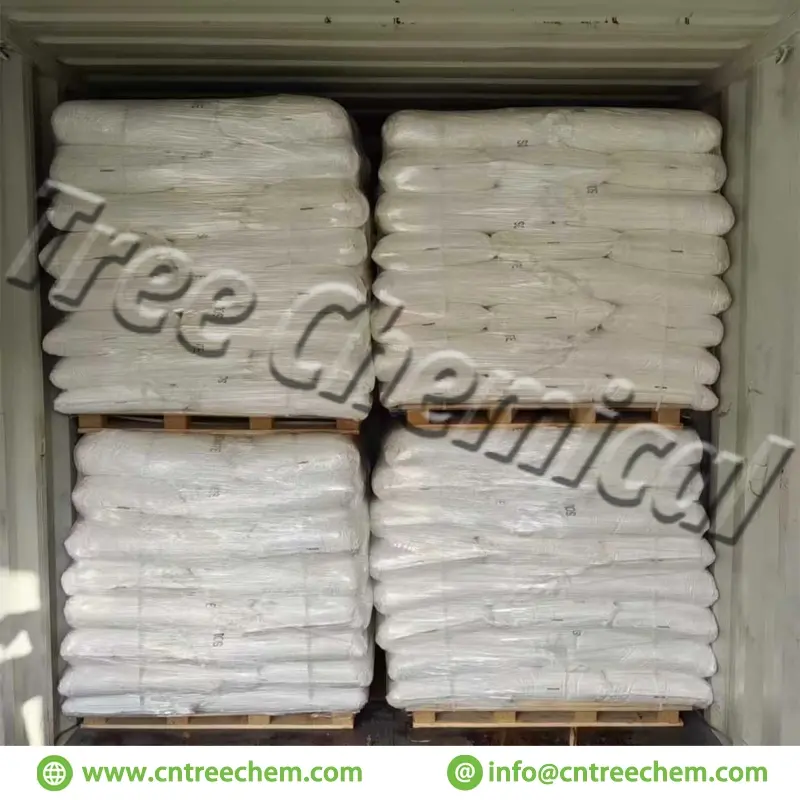
Sodium Bromide NaBr Hydrobromic acid sodium salt CAS 7647-15-6
- CAS: 7647-15-6
- Synonyms: Sodium bromide; NaBr; Hydrobromic acid sodium salt
- EINECS No.: 231-599-9
- Molecular Formula: NaBr
- Grade: Industrial / Pharmaceutical
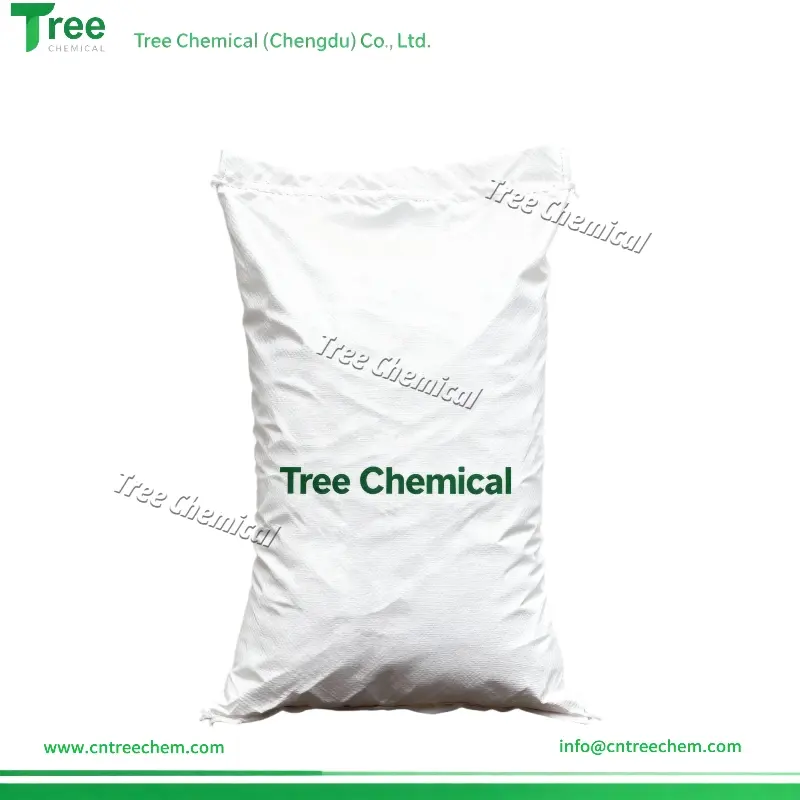
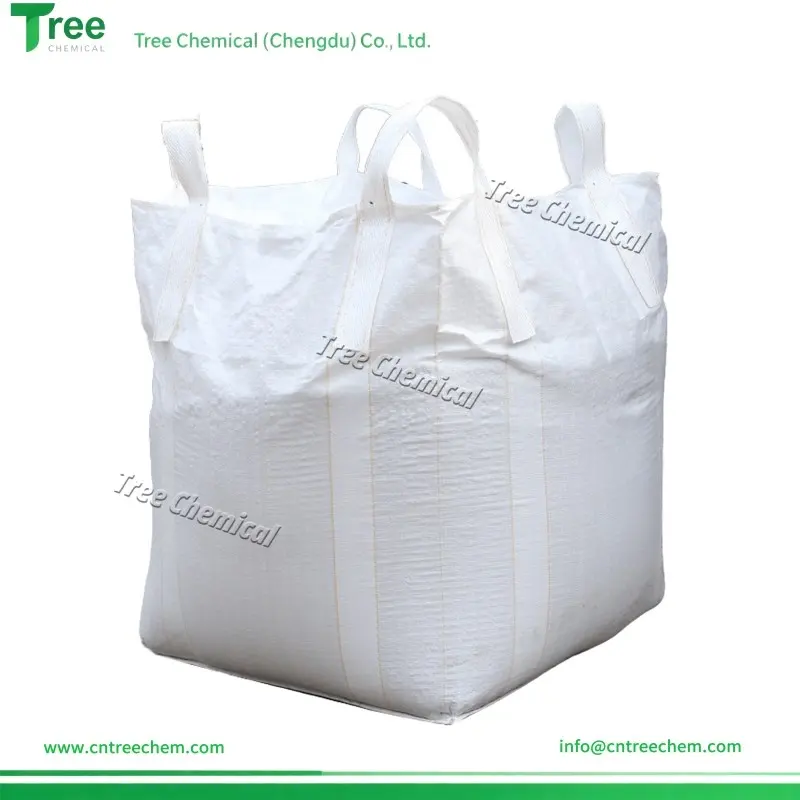
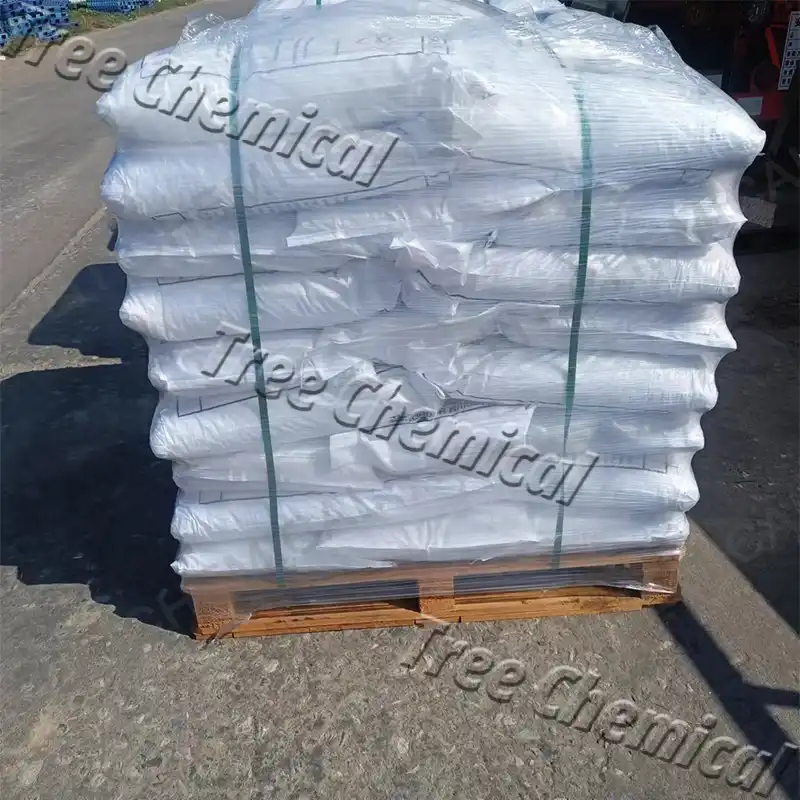
- Packaging: 25 kg woven bags or jumbo bags
Tree Chem manufacture Sodium Bromide CAS 7647-15-6 for customers looking to purchase a reliable bromide salt used in oilfield fluids, pharmaceuticals, and chemical synthesis. The product is produced with controlled impurity levels and stable composition suitable for both industrial and pharmaceutical applications. Contact info@cntreechem.com.
Sodium Bromide is highly soluble in water and forms stable bromide solutions. Due to its chemical stability and bromide ion availability, it is widely used in drilling fluids, pharmaceutical intermediates, photographic chemicals, and specialty chemical manufacturing.
Specification
Basic Information
| Item | Value |
| Product Name | Sodium Bromide |
| Synonyms | Sodium bromide; NaBr; Hydrobromic acid sodium salt |
| CAS | 7647-15-6 |
| EINECS | 231-599-9 |
| Molecular Formula | NaBr |
| Molecular Weight | 102.89 |
Technical Specification
| Parameter | Specification |
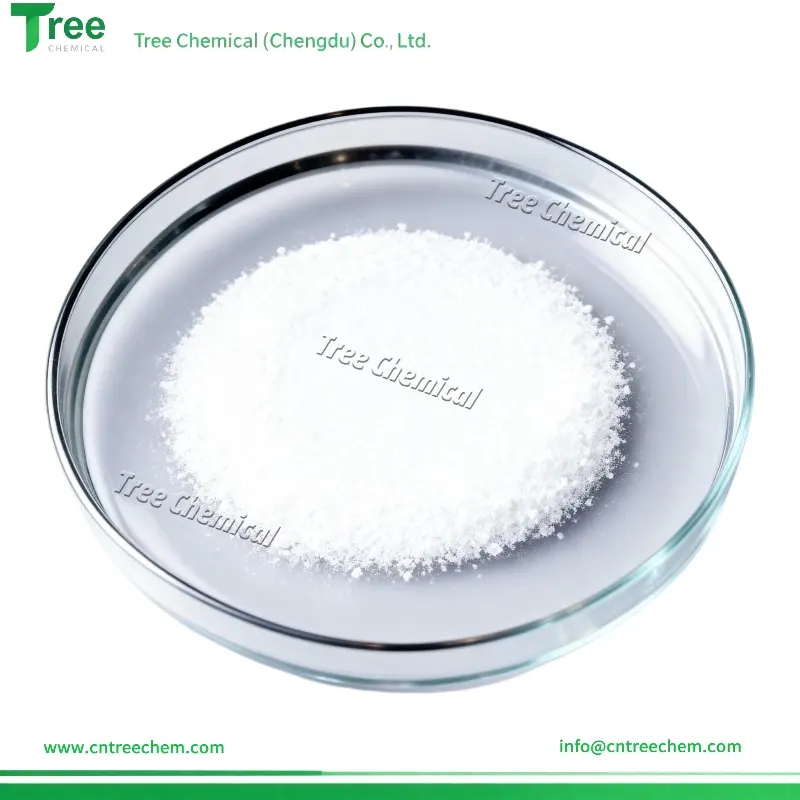
| Appearance | White crystalline powder |
| Assay | Industrial Grade ≥98.5% / Pharmaceutical Grade ≥99.0% |
| Chloride | ≤1.0% |
| pH (25°C) | 5.5 – 8.5 |
Applications
Oil and Gas Industry: Clear Brine Fluids for Completion, Workover, and Stimulation
- Sodium bromide is one of the most important bromide salts used in oilfield clear brine systems because it forms dense, solids-free aqueous fluids that can provide hydrostatic pressure control without introducing suspended solids into the formation. This property makes sodium bromide especially valuable in completion and workover operations where reservoir protection is critical and formation damage must be minimized.
- In practical well service, sodium bromide brines are chosen for their combination of density, clarity, and compatibility with formations that contain bicarbonate or sulfate ions. Compared with calcium-based brines, sodium bromide systems can reduce precipitation risk in certain reservoir environments, which supports more stable fluid performance and cleaner downhole conditions.
- Sodium bromide is also widely used in blended high-density brines together with zinc bromide and, in some formulations, calcium bromide or calcium chloride. These mixed systems allow density, crystallization temperature, and overall fluid cost to be adjusted more precisely for deepwater, HPHT, and ultra-deep well environments.
- Because sodium bromide brines are solids-free, they are also well suited to stimulation and intervention operations where fluid cleanup and post-treatment productivity matter. This makes sodium bromide not only a density component, but also a formation-friendly fluid-building salt for high-value oil and gas operations.
Drilling, Completion, and Advanced Well-Control Systems
- In drilling and completion fluids, sodium bromide is used when operators need reliable density control in high-pressure wells while maintaining fluid clarity and minimizing solids invasion. These properties are especially important in reservoirs where permeability damage must be kept low and wellbore stability must be maintained over extended operations.
- Sodium bromide-based systems are valued for their ability to be tailored with rheology modifiers, corrosion inhibitors, and other salts to match specific well conditions. This allows fluid designers to build brines that are stable across a broad temperature range and that can be matched to formation pressure without excessive viscosity or precipitation problems.
- For stimulation and acidizing systems, sodium bromide is used because it allows the formulation of dense, clear carrier fluids that remain compatible with acid packages and treatment additives. This helps improve acid placement and supports more effective dissolution of formation damage while maintaining pressure control in the well.
- In workover applications, sodium bromide fluids are used for the same practical reasons: density flexibility, low solids content, and formation compatibility. This gives the compound a strong position as a service-fluid material in challenging well environments.
Pharmaceutical and Fine Chemical Synthesis
- Sodium bromide is used in pharmaceutical manufacturing as a bromine source and reaction component in the synthesis of intermediates for a variety of drug classes. It is particularly relevant in bromination-based routes where controlled introduction of bromine is required to build functionalized intermediates.
- In the preparation of pharmaceutical intermediates, sodium bromide appears in processes related to sedatives, diuretics, anticonvulsants, and antidepressant-related compounds. A notable process role is in oxidative bromination systems where sodium bromide works with an oxidizing agent to create brominated intermediates under controlled conditions.
- Sodium bromide is also valuable in general fine chemical synthesis because it can serve as a bromide source in substitution, halogenation, and related transformations. These reactions benefit from sodium bromide’s high solubility and easy handling in aqueous and mixed-solvent systems.
- Its use in research and development is also important. In route screening, reaction optimization, and laboratory-scale synthesis, sodium bromide provides a practical inorganic bromide source for developing and refining organic transformations.
Catalysis and General Organic Transformation Chemistry
- Sodium bromide functions in a number of catalytic and reagent-support roles in organic chemistry. One important area is nucleophilic substitution, where sodium bromide provides bromide ions that help convert alkyl chlorides into alkyl bromides or otherwise shift halide balance in useful synthetic directions.
- It is also described in oxidation chemistry, especially TEMPO-mediated oxidation systems, where bromide can play a catalytic-support role in improving oxidation efficiency. In such systems, sodium bromide is not simply a salt additive; it becomes part of a catalytic environment that influences rate and outcome.
- Sodium bromide is also used in selective bromination and halogenation-related reaction systems where bromide availability is required under controlled oxidative conditions. These applications show that sodium bromide is a versatile inorganic reagent extending well beyond one single reaction class.
- Because of this broad organic utility, sodium bromide remains relevant in both industrial production and laboratory-scale chemistry where dependable bromide reactivity is needed.
Veterinary, Historical Medicinal, and Research Uses
- Sodium bromide has a long medicinal history as a sedative and anticonvulsant, and although it has largely been replaced in human medicine by newer drugs, it still retains practical relevance in veterinary medicine, particularly for seizure management.
- In veterinary antiepileptic use, sodium bromide is administered orally and requires monitored long-term dosing because of cumulative effects and serum-level dependence. This reflects a specialized but still meaningful therapeutic role, especially in animal health management.
- The compound is also relevant in pharmaceutical and biomedical research because of its historical and pharmacological profile. It may be used in analytical, toxicological, and formulation studies where bromide pharmacokinetics or bromide-containing medicinal systems are being evaluated.
- These uses are more specialized than its oilfield role, but they show that sodium bromide still has a foothold in medical and veterinary-related chemical applications.
Energy Storage: Zinc-Bromine Flow Batteries and Related Electrolytes
- Sodium bromide is an important component in zinc-bromine flow battery systems, which are increasingly used for stationary and grid-scale energy storage. In these systems, sodium bromide contributes bromide ions, improves electrolyte conductivity, and supports the overall electrochemical environment.
- Its role in these batteries is typically as a supporting bromide salt rather than the sole active material. When paired with zinc bromide and additional electrolyte modifiers, sodium bromide helps improve ionic transport and system stability while contributing to overall battery efficiency.
- More advanced zinc-bromine systems also include bromine complexing agents, conductivity enhancers, buffers, and bromine scavengers. In these formulations, sodium bromide helps strengthen the electrolyte package and contributes to energy density, operational stability, and safer bromine management.
- Sodium bromide is also used in smaller electrochemical systems and microbattery concepts, where safety, miniaturization, and stable ionic behavior are important. This gives the compound a growing role in energy-storage technologies beyond traditional chemical industries.
Electronics, Semiconductor Processing, and Functional Materials
- Sodium bromide appears in semiconductor and electronic-material applications where it is used as a doping precursor or conductivity-related component in device manufacturing. In these uses, controlled purity and processing conditions are especially important.
- Its role in semiconductor-related processing is linked to improving electrical properties and supporting device performance in specific fabrication routes. These are specialized applications, but they show that sodium bromide can move into higher-value electronic materials when grade and process control are adequate.
- Sodium bromide is also described in advanced X-ray detection materials, including hybrid organic-inorganic systems used in direct X-ray detectors. In these materials, sodium bromide becomes part of an active radiation-sensitive structure rather than acting only as a conventional inorganic salt.
- In conductive coatings and films, sodium bromide is incorporated into polymer-based or nanoparticle-containing systems to enhance conductivity and film performance. These applications focus on balancing transparency, conductivity, and coating stability for modern electronic uses.
Photography, Imaging, and Photothermographic Materials
- Sodium bromide has a classic and highly important role in photographic chemistry because it reacts with silver nitrate to form silver bromide, one of the most important light-sensitive materials in photographic emulsions. This gives sodium bromide a foundational place in traditional imaging science.
- In photographic emulsion preparation, sodium bromide is used under controlled conditions with gelatin and silver salts to create silver bromide crystals with the desired size and sensitivity. The compound therefore acts as a direct precursor to the active light-sensitive phase in the emulsion.
- It is also used in photothermographic materials, where it functions as a development inhibitor, halide modifier, or sensitivity-control component in heat-developable imaging systems. These systems require careful formulation to balance storage stability, infrared sensitivity, and development speed.
- Although digital imaging has reduced the importance of traditional photographic chemicals, sodium bromide still retains value in niche imaging chemistry and specialized radiographic or thermographic materials.
Flame Retardants for Polymers, Textiles, and Composites
- Sodium bromide is used as a flame retardant component because bromide-based systems can interrupt combustion-chain reactions and reduce flame propagation. In polymer formulations, it works by contributing bromine chemistry that suppresses burning and helps improve fire performance.
- In plastic and polymer systems, sodium bromide is commonly paired with synergists such as antimony trioxide and other additives to raise flame-retardant efficiency. These formulations are designed to improve fire classification without causing excessive loss of processing performance.
- In textile finishing, sodium bromide is used in pad-dry-cure formulations together with ammonium polyphosphate, boric acid, binders, and related flame-retardant partners. The goal is to create durable flame-retardant effects that can survive repeated washing and practical use.
- It is also incorporated into composite materials that require structural strength together with improved flame resistance. These uses show sodium bromide’s relevance in both consumer and technical materials where fire safety is a design priority.
Radiation Shielding and Medical Imaging
- Because bromine has a relatively high atomic number and sodium bromide solutions can be prepared at high concentration, the compound is used in certain radiation shielding concepts. Dense sodium bromide solutions can absorb radiation while still allowing some transparency, which is useful in specialty shielding-window designs.
- This makes sodium bromide relevant in nuclear and laboratory shielding applications where a liquid shielding medium can offer design flexibility. Such systems are useful in viewing windows, detector shielding, and specialized radiation-handling environments.
- Sodium bromide is also used in medical imaging-related concepts such as radiopaque and contrast-type formulations. In these uses, its role is tied to X-ray absorption and the ability to enhance visibility in imaging procedures when used under controlled formulation conditions.
- This area illustrates another unusual aspect of sodium bromide’s profile: it functions not only in bulk industrial chemistry but also in specialized imaging and shielding technologies.
Water Treatment, Disinfection, and Industrial Water Systems
- Sodium bromide is widely used in water treatment because it acts as a precursor to hypobromous acid, an effective disinfectant against bacteria, algae, fungi, and viruses. When combined with an oxidizing source such as sodium hypochlorite, sodium bromide rapidly generates the active bromine species used for microbial control.
- In industrial cooling towers and recirculating water systems, sodium bromide-based treatment programs are valued because they can reduce biofilm, improve heat-transfer efficiency, and often produce a lower odor profile than chlorine-only systems. These benefits are important in large industrial systems where fouling directly affects operating cost and performance.
- Sodium bromide is also used in swimming pools and spas, where bromine-based sanitation systems are attractive because of their stability and performance over practical operating pH and temperature ranges. In these systems, sodium bromide supports algae and bacteria control with lower dependence on free chlorine.
- The compound is also relevant in wastewater disinfection and some specialized process-water systems where rapid generation of hypobromous acid is desirable. This gives sodium bromide a strong role in modern industrial and recreational water-care chemistry.
Analytical Chemistry and Laboratory Applications
- Sodium bromide is used in analytical chemistry as a reagent, titration component, and reference material. Its well-defined chemistry and high purity in laboratory grades make it suitable for quantitative and preparative analytical work.
- It is used in silver nitrate titrations, silver bromide preparation, and specialized crystallization or precipitation studies. These applications are generally smaller in volume, but they are important in maintaining sodium bromide’s place as a laboratory-standard inorganic reagent.
- Another notable use is in spectroscopy-related laboratory practice, where bromide salts can be relevant because of optical properties in selected instrumental contexts. Sodium bromide is also useful in protein crystallization studies and general research procedures involving ionic precipitation or bromide incorporation.
- These uses reinforce the idea that sodium bromide is not only a bulk industrial salt, but also a dependable laboratory chemical with broad analytical relevance.
Safety, Handling, and Storage Considerations
- Sodium bromide requires careful handling even though its acute toxicity is relatively moderate compared with some more hazardous bromine chemicals. It can irritate skin, eyes, and the respiratory tract, and long-term or excessive exposure can lead to bromide-related systemic effects.
- Because it is highly soluble and can absorb moisture, storage should be in tightly sealed containers kept in cool, dry, well-ventilated areas. Suitable packaging materials such as HDPE or glass are preferred, while incompatible storage near acids or strong oxidizers should be avoided.
- In routine operations, dust control, splash avoidance, and good hygiene practices are important. Powder handling may require respiratory protection depending on scale and ventilation quality, and spill cleanup should use inert absorbents with appropriate waste management.
- These storage and handling requirements are especially important for maintaining product quality in technical-grade and high-purity-grade sodium bromide used in oilfield, pharmaceutical, electronic, and analytical applications.
Storage & Handling
- Store in sealed containers in a cool, dry environment
- Protect from moisture and contamination
- Keep away from strong oxidizing agents
- Ensure containers remain tightly closed
- Follow standard chemical handling procedures
Usage Notice
- A clear brine workover/completion fluid can be formulated with sodium bromide at about 35–45% in water plus a small amount of pH stabilizer, where sodium bromide functions as the primary density-building salt that provides a clear, solids-free fluid for pressure control.
- A high-density mixed bromide brine can be formulated with zinc bromide at about 40–50%, sodium bromide at about 15–25%, water as balance, and optional surfactant system, where sodium bromide functions as a co-solubilizing density component that helps build high-density clear brines for deepwell operations.
- An advanced drilling/completion fluid can be formulated with concentrated sodium bromide solution, calcium bromide, potassium chloride, rheology modifier, and corrosion inhibitor, where sodium bromide functions as the main brine component delivering adjustable density and stable HPHT fluid performance.
- A stimulation/acidizing fluid can be formulated with sodium bromide at about 15–25%, hydrochloric acid, iron control agent, surfactant, and corrosion inhibitor, where sodium bromide functions as the dense clear carrier salt that supports acid placement and minimizes formation damage.
- A bromination reaction system for pharmaceutical intermediates can be formulated with substrate, sodium bromide at slight excess to stoichiometric level, catalytic acid, oxidizing agent, and mixed solvent, where sodium bromide functions as the bromide source for oxidative bromination.
- A general catalytic bromination system can be formulated with substrate, sodium bromide at catalytic-to-substoichiometric loading, oxidizing agent, and suitable solvent, where sodium bromide functions as the bromide provider and catalytic-support component for selective halogenation.
- A veterinary antiepileptic oral formulation can be dosed with sodium bromide at about 20–30 mg/kg body weight in divided administration, where sodium bromide functions as the anticonvulsant active for long-term seizure control.
- A zinc-bromine flow battery electrolyte can be formulated with zinc bromide at about 4–5 M, sodium bromide at about 1–2 M, potassium bromide, bromine complexing agent, and acidic pH adjustment, where sodium bromide functions as the conductivity-enhancing bromide salt in the working electrolyte.
- An enhanced zinc-bromine battery electrolyte can be formulated with zinc bromide, sodium bromide at about 5–10%, bromine scavenger, conductivity enhancer, and pH buffer, where sodium bromide functions as a supporting bromide component that improves electrolyte balance and system stability.
- A microbattery electrolyte can be formulated with sodium bromide at about 0.5–1.0 M, zinc sulfate, organic additives, and water, where sodium bromide functions as a safe conductive bromide salt for compact electrochemical power systems.
- A semiconductor doping-related formulation can use sodium bromide at low concentration in the process feed under high-temperature treatment, where sodium bromide functions as a precursor contributing to conductivity modification in device fabrication.
- A hybrid X-ray detector material can be formulated with organic cation component and sodium bromide in mixed polar solvent for solution casting, where sodium bromide functions as the inorganic radiation-responsive component in the active detection layer.
- A conductive coating can be formulated with sodium bromide at about 5–15%, silver nanoparticles, polymer binder, solvent mixture, and plasticizer, where sodium bromide functions as a conductivity-supporting component in transparent or flexible electronic films.
- A photographic emulsion can be formulated with silver nitrate, sodium bromide in slight excess, gelatin, water, and pH adjuster, where sodium bromide functions as the bromide precursor that forms light-sensitive silver bromide crystals.
- A photothermographic material can be formulated with silver salt, reducing agent, sodium bromide at about 0.5–2.0%, binder, and additives, where sodium bromide functions as a halide modifier that supports sensitivity and controlled development behavior.
- A polymer flame-retardant formulation can be formulated with base resin, sodium bromide at about 6–8 parts per 100 parts resin, antimony trioxide, synergist, and processing aid, where sodium bromide functions as the bromine-based flame-retardant component interrupting combustion chemistry.
- A textile flame-retardant treatment can be formulated with sodium bromide, ammonium polyphosphate, boric acid, binder, and water in a pad-dry-cure process, where sodium bromide functions as the flame-retardant active supporting durable fire resistance on fabric.
- A structural composite flame-retardant system can be formulated with sodium bromide, resin matrix, reinforcement, and synergist, where sodium bromide functions as the brominated flame-retardant component improving fire performance and smoke reduction.
- A radiation-shielding liquid window can be formulated with concentrated sodium bromide solution enclosed between transparent panels, where sodium bromide functions as the dense radiation-absorbing liquid medium.
- A medical imaging contrast formulation can be formulated with sodium bromide at about 30–50% w/v, sodium citrate stabilizer, pH buffer, and water, where sodium bromide functions as the radiopaque component for imaging enhancement.
- A bromine-based disinfection system can be formulated with sodium bromide solution and sodium hypochlorite under controlled pH, where sodium bromide functions as the precursor that rapidly generates hypobromous acid for microbial control.
- An industrial cooling-water treatment program can use sodium bromide at about 200–500 ppm with chlorine source, corrosion inhibitor, and scale inhibitor, where sodium bromide functions as the bromide source for continuous biofilm and microbial control.
- A pool or spa sanitation system can use sodium bromide at an initial 50–100 ppm with lower maintenance dose and pH control, where sodium bromide functions as the bromide reservoir for stable bromine-based water disinfection.
Packaging
- Packaging can be arranged according to customer requirements:
- 25 kg woven bags
- 1 ton jumbo bags


