Tetrabutylammonium Acetate B4N·Ac Tetra-n-butylammonium acetate CAS 10534-59-5
- CAS: 10534-59-5
- Synonyms: Tetrabutylammonium acetate; Tetra-n-butylammonium acetate; B4N·Ac
- EINECS No.: 234-101-8
- Molecular Formula: C18H39NO2
- Grade: Industrial / Technical
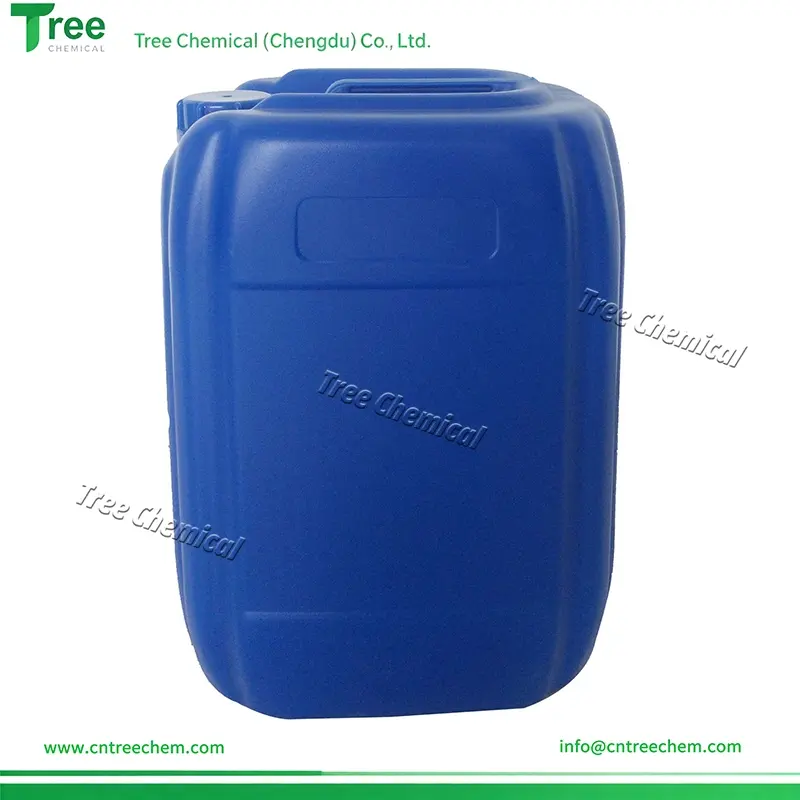
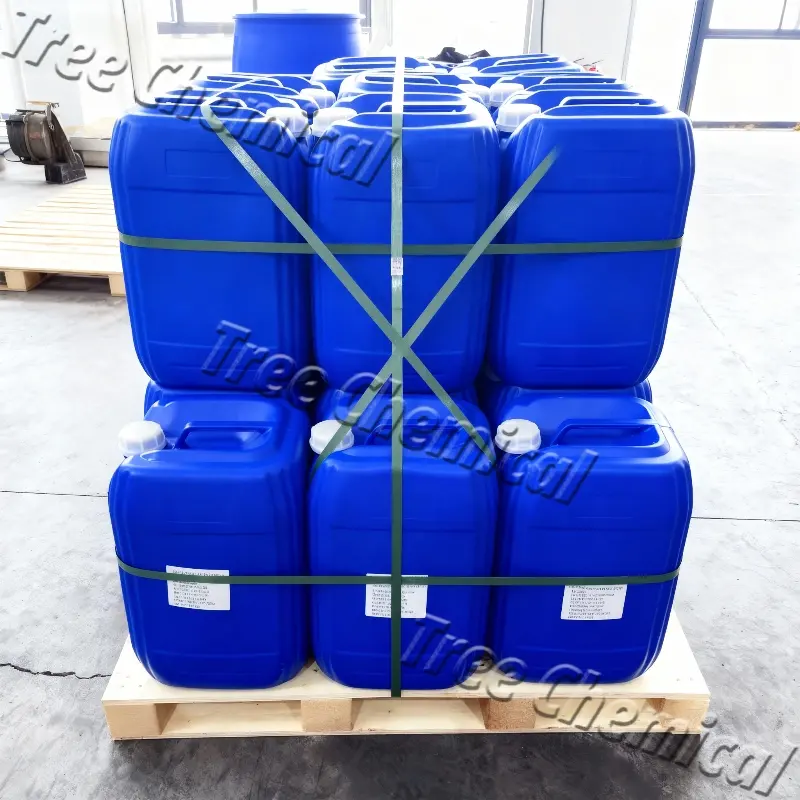
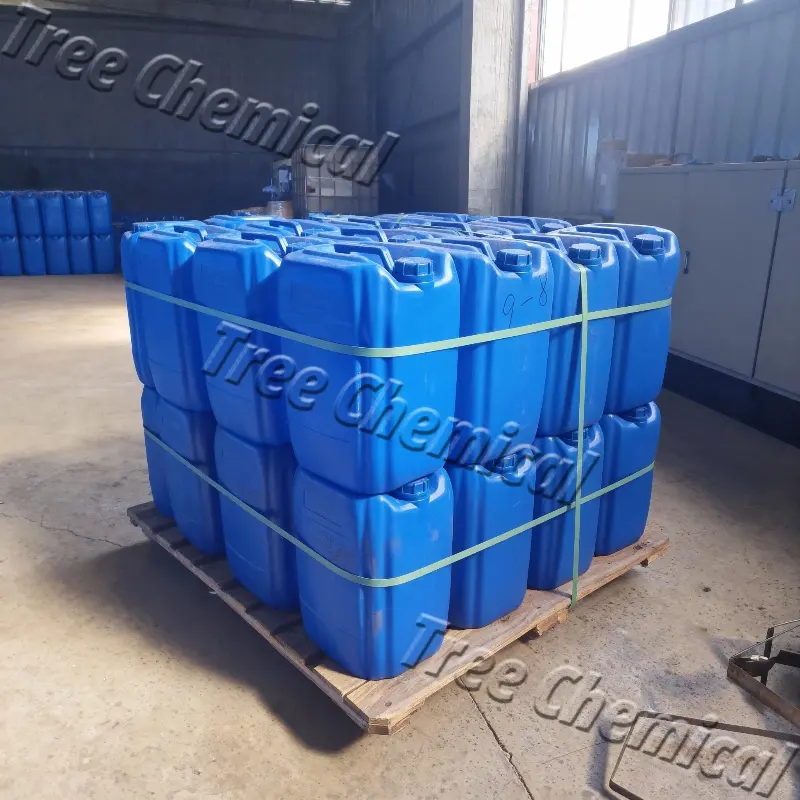
- Packaging: 25 kg plastic drum
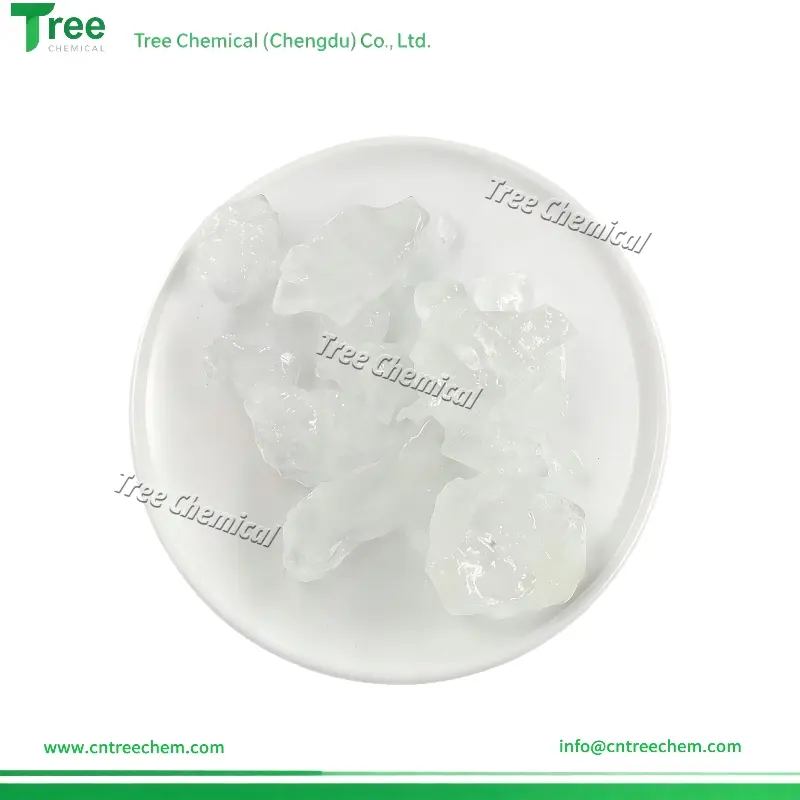
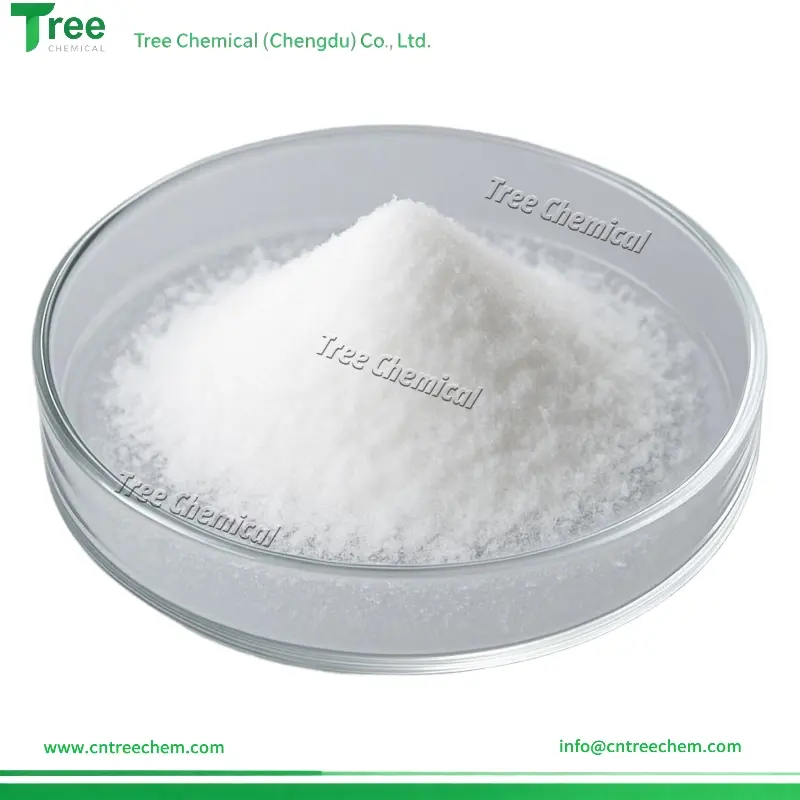
Tree Chem supplies Tetrabutylammonium acetate (CAS 10534-59-5) for customers looking to purchase a functional quaternary ammonium salt suitable for catalysis and synthesis applications. This product is typically supplied as a white to yellowish solid with high ionic purity and consistent performance.
Tetrabutylammonium acetate is commonly selected for reactions requiring enhanced solubility, ion pairing, or phase-transfer efficiency. Tree Chem supports flexible production and supply arrangements to meet different technical requirements. For further details, please contact info@cntreechem.com.
Specification
Basic Information
| Item | Description |
| Product Name | Tetrabutylammonium Acetate |
| Synonyms | Tetrabutylammonium acetate; Tetra-n-butylammonium acetate; B4N·Ac; 1-Butanaminium, N,N,N-tributyl-, acetate |
| CAS No. | 10534-59-5 |
| EINECS No. | 234-101-8 |
| Molecular Formula | C18H39NO2 |
| Molecular Weight | 301.51 |
Technical Specification
| Parameter | Specification |
| Appearance | White to pale yellow solid |
| Assay | ≥ 90% |
| Solubility | Soluble in water, alcohols, and chloroform |
| Form | Solid |
Applications
Organic Synthesis and Fine Chemical Manufacturing
- Tetrabutylammonium acetate is widely used as a phase-transfer catalyst in biphasic organic reactions where inorganic bases or nucleophiles are generated in an aqueous phase but must react with substrates dissolved in an organic phase. By forming ion pairs with reactive anions, it enhances mass transfer across the phase boundary and improves reaction efficiency under practical stirring and temperature conditions.
- In nucleophilic substitution and alkylation reactions, tetrabutylammonium acetate supports higher conversion and shorter reaction times compared with systems that lack a phase-transfer component. This makes it suitable for fine chemical manufacturing routes where operational simplicity and reproducibility are important for scale-up.
- Tetrabutylammonium acetate is also applied in acetylation and esterification chemistry, where the acetate anion can participate in acetyl transfer or buffering effects. These reactions benefit from milder conditions and improved selectivity, which is particularly valuable when handling multifunctional or sensitive intermediates.
- In multi-step synthesis workflows, tetrabutylammonium acetate is used to enable one-pot or tandem reactions, reducing the need for intermediate isolation. This supports more streamlined process design and can contribute to lower solvent usage and improved overall efficiency.
Pharmaceutical and API Intermediate Synthesis
- In pharmaceutical intermediate synthesis, tetrabutylammonium acetate is used to facilitate reactions that involve ionic reagents and organic substrates in biphasic systems. Its role is to improve reaction feasibility and yield without requiring aggressive reaction conditions that could compromise product purity or selectivity.
- The compound is used in azidation, alkylation, and related substitution reactions that form key building blocks for active pharmaceutical ingredients. In these contexts, tetrabutylammonium acetate helps maintain consistent reaction kinetics and manageable workup, which are critical for downstream purification and quality control.
- Tetrabutylammonium acetate is also positioned as a useful catalyst choice in greener synthesis concepts, where process designers aim to minimize hazardous reagents and simplify catalytic systems while preserving performance.
Energy Storage and Electrochemical Applications
- Tetrabutylammonium acetate is used as an electrolyte additive or supporting electrolyte in energy storage research, including lithium-ion batteries and supercapacitors. In these systems, it contributes to ionic conductivity and can influence interfacial behavior between electrodes and electrolyte.
- When used as an additive in lithium-ion battery electrolytes, tetrabutylammonium acetate is introduced at low concentrations to modify film formation on electrode surfaces and support cycling stability. Its role is not as a primary charge carrier, but as a functional component that helps stabilize electrochemical performance.
- In supercapacitor and non-aqueous electrochemical systems, tetrabutylammonium acetate serves as a conductive salt that supports rapid ion transport and stable charge–discharge behavior. It is also explored in polymer and gel electrolyte concepts where mechanical integrity and ionic mobility must be balanced.
Electronics, Semiconductor Processing, and Electroplating
- Tetrabutylammonium acetate is used in semiconductor processing formulations, particularly in cleaning and residue-removal steps following etching or lithography. In these applications, it supports effective removal of organic and inorganic residues while maintaining compatibility with sensitive device structures.
- It is also incorporated into photoresist stripping formulations, where it contributes to stripping efficiency and wetting behavior in solvent–water mixtures designed for advanced semiconductor fabrication.
- In electroplating, tetrabutylammonium acetate is applied as an additive in precious metal plating baths, including gold and palladium systems. At low dosing levels, it helps improve deposit brightness, uniformity, and surface leveling, which is important for electronic components and precision coatings.
Analytical Chemistry and Electrochemical Testing
- Tetrabutylammonium acetate is widely used as an ion-pairing reagent in chromatographic analysis. It improves retention and separation of polar or ionic analytes in reversed-phase HPLC by forming ion pairs that modify analyte interaction with the stationary phase.
- This application is particularly relevant in nucleic acid, pharmaceutical impurity, and highly polar compound analysis, where standard mobile phases often provide insufficient resolution.
- Tetrabutylammonium acetate is also used as a supporting electrolyte in electrochemical experiments such as cyclic voltammetry. In these systems, it provides stable ionic strength and a wide electrochemical window, enabling reproducible measurement of redox behavior in non-aqueous solvents.
Materials Science, Polymers, and Surface Processing
- In materials science, tetrabutylammonium acetate is used in cellulose processing and biomass-related research, where it supports dissolution or dispersion of cellulose-based materials when combined with suitable solvent systems.
- The compound is also used in polymer electrolyte and conductive material development, where it improves ionic transport within polymer matrices. These applications support research into solid-state electrolytes, flexible electronics, and functional coatings.
- Tetrabutylammonium acetate is further applied as a dispersing or processing aid in nanocomposite preparation, helping control particle dispersion and morphology in systems such as carbon nanotube or nanoparticle composites.
Environmental and Industrial Treatment Applications
- Tetrabutylammonium acetate is used in wastewater treatment and remediation concepts, particularly in extraction and separation of heavy metals or organic contaminants. Its phase-transfer behavior supports efficient transfer of target species into an extractable phase under controlled conditions.
- It is also explored in oil–water separation and demulsification processes, where it helps destabilize emulsions and improve phase separation efficiency in industrial wastewater streams.
- In broader industrial operations, tetrabutylammonium acetate is used as a process aid in cleaning formulations, textile auxiliaries, and dispersion systems where improved mass transfer and surface interaction are beneficial.
Storage & Handling
- Store in tightly sealed containers in a cool, dry, and well-ventilated area
- Avoid exposure to moisture, heat, and direct sunlight
- Keep away from strong oxidizing agents and acids
- Use clean, dry tools when handling to prevent contamination
Usage Notice
- This product is intended for industrial, research, or chemical processing use only.
- Operators should follow standard laboratory or industrial safety procedures and wear appropriate protective equipment.
- Compatibility and suitability should be confirmed through small-scale testing before large-scale use.
- A biphasic alkylation formulation uses an organic substrate, aqueous sodium hydroxide, an alkyl halide, and tetrabutylammonium acetate at low molar loading, where tetrabutylammonium acetate functions as a phase-transfer catalyst to enable efficient reaction between immiscible phases.
- An acetylation formulation combines alcohol or phenol substrates with tetrabutylammonium acetate in an aprotic solvent under mild heating, using tetrabutylammonium acetate as both catalyst and acetate source to promote ester formation.
- A pharmaceutical intermediate synthesis formulation uses tetrabutylammonium acetate at catalytic levels in a biphasic substitution system to improve conversion and selectivity while maintaining manageable workup conditions.
- A lithium-ion battery electrolyte formulation incorporates tetrabutylammonium acetate as a low-level additive in a carbonate solvent system with a lithium salt, where it functions to influence interfacial stability and cycling behavior.
- A supercapacitor electrolyte formulation uses tetrabutylammonium acetate dissolved in an organic solvent as a conductive salt to support rapid charge–discharge performance and stable cycling.
- A polymer electrolyte formulation combines a polymer matrix, plasticizer, and tetrabutylammonium acetate, using tetrabutylammonium acetate as an ionic conductor to enhance conductivity while preserving mechanical strength.
- A semiconductor post-etch cleaning formulation includes tetrabutylammonium acetate in a solvent–water system, where it functions to assist residue removal without damaging sensitive device features.
- A photoresist stripping formulation uses tetrabutylammonium acetate with a high-boiling solvent system to improve stripping efficiency and surface cleanliness.
- A precious metal electroplating bath formulation uses tetrabutylammonium acetate at low concentration as a brightener and leveling additive to improve deposit uniformity and surface appearance.
- An HPLC mobile phase formulation includes tetrabutylammonium acetate as an ion-pairing reagent to enhance retention and separation of polar analytes in reversed-phase chromatography.
- An electrochemical testing formulation uses tetrabutylammonium acetate as a supporting electrolyte in non-aqueous solvents to provide stable conductivity and reproducible electrochemical measurements.
Packaging
- 25 kg plastic drum