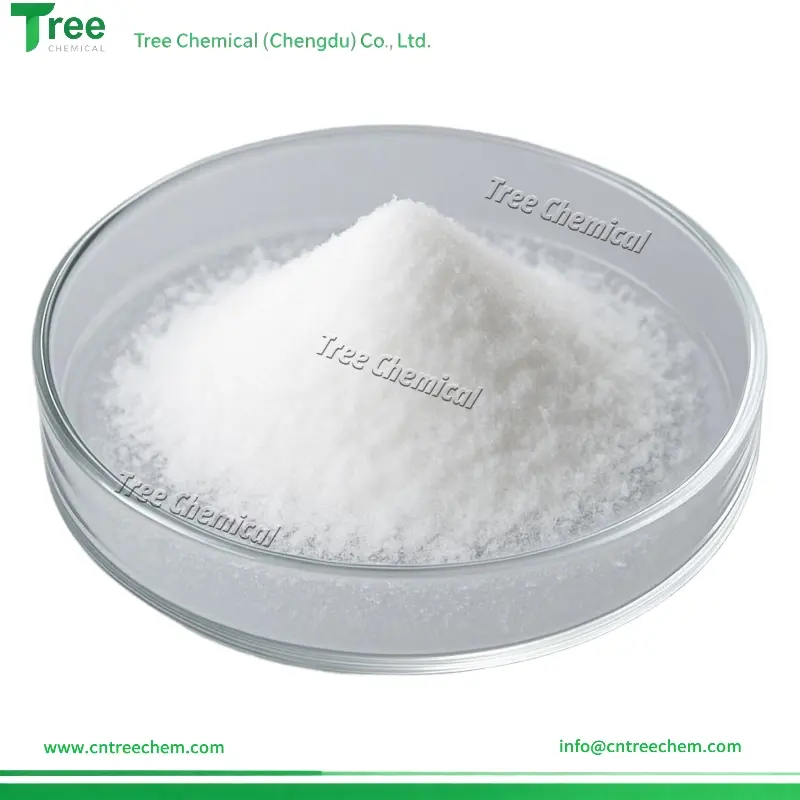
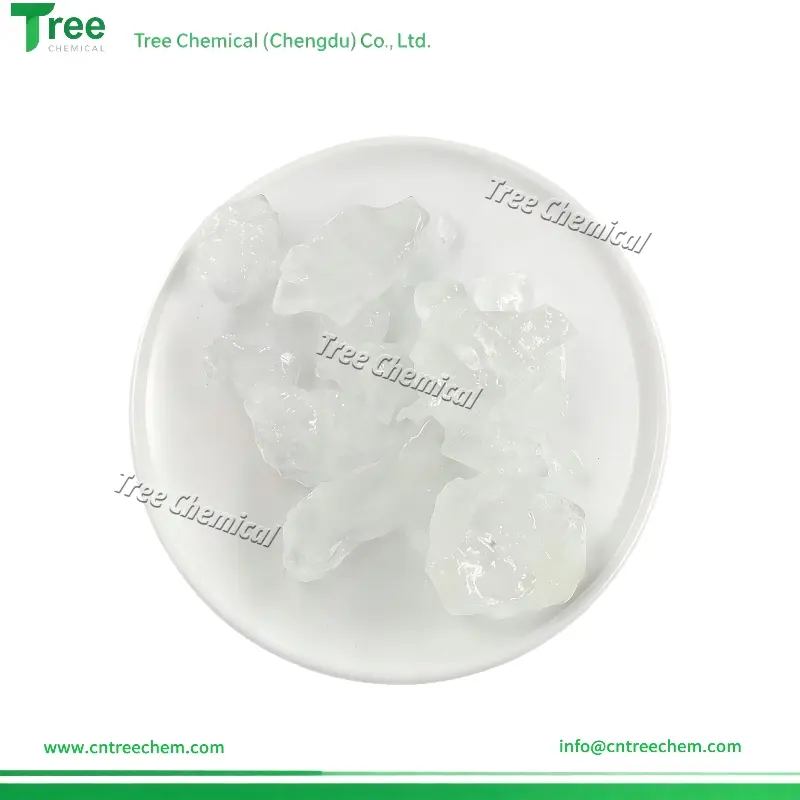
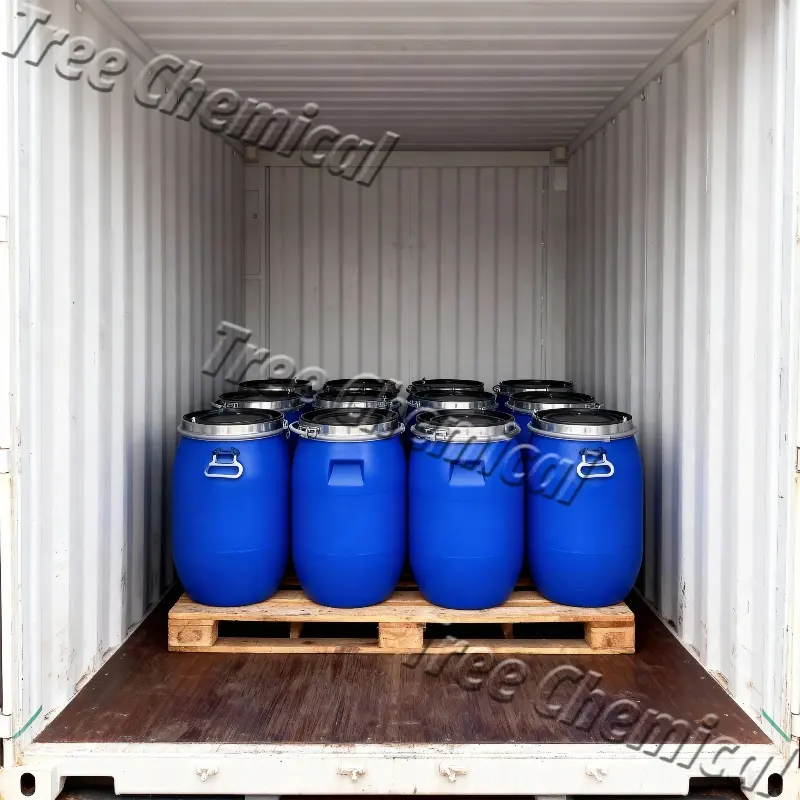
Tetrabutylammonium Fluoride TBAF Tetra-n-butylammonium fluoride CAS 429-41-4
- CAS: 429-41-4
- Synonyms: Tetrabutylammonium fluoride; TBAF
- Molecular Formula: C₁₆H₃₆FN
- EINECS No.: 207-057-2
- Grade: Industrial
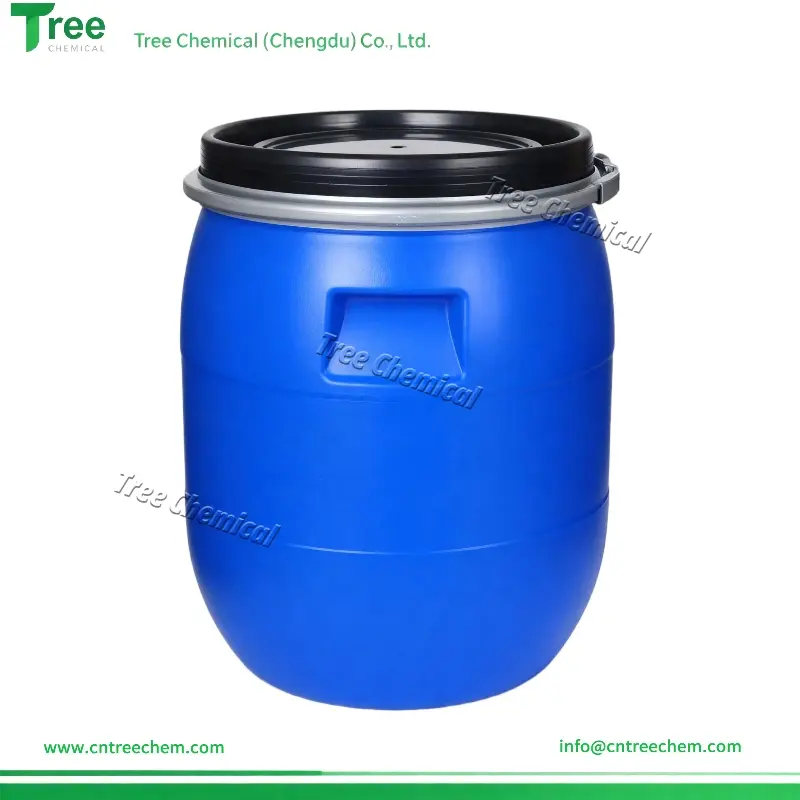
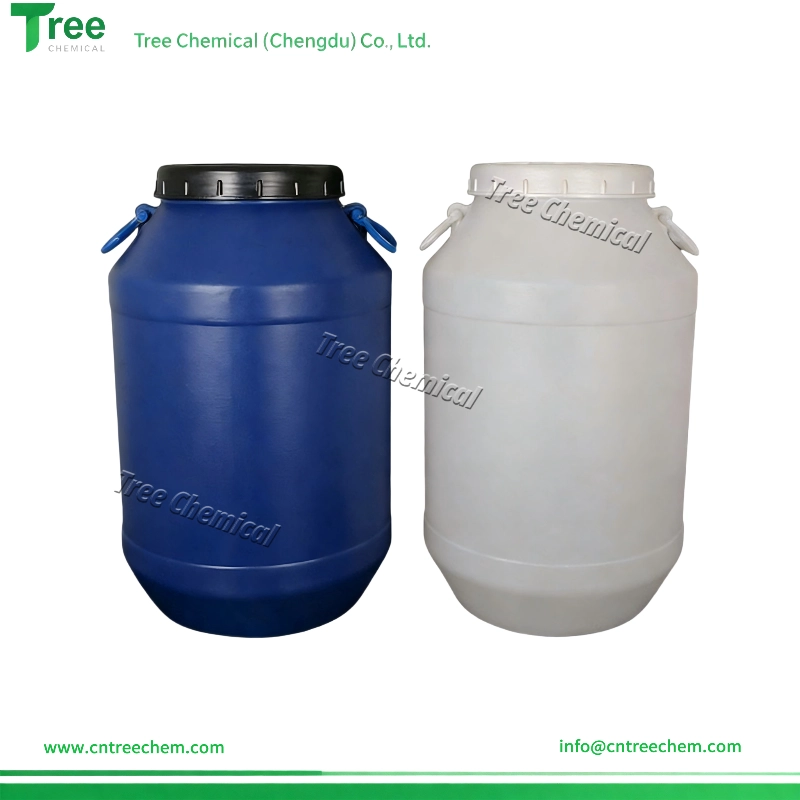
- Packaging: 20 kg plastic drum or 1 kg small package
Tree Chem supplies Tetrabutylammonium Fluoride (CAS 429-41-4) for customers looking to purchase high-performance fluoride reagents used in organic synthesis and specialty chemical applications. The product is available in stable liquid form and is suitable for precise reaction control.
Tetrabutylammonium fluoride is commonly applied as a fluoride ion source for the cleavage of silyl protecting groups and as a catalyst or reagent in acylation, silylation, and fluorination reactions. Tree Chem supports global customers with consistent quality and flexible packaging options. For specifications or orders, please contact info@cntreechem.com.
Specification
Basic Information
| Item | Details |
| Product Name | Tetrabutylammonium Fluoride |
| Synonyms | TBAF; Tetra-n-butylammonium fluoride |
| CAS No. | 429-41-4 |
| Molecular Formula | C₁₆H₃₆FN |
| Molecular Weight | 261.46 |
| EINECS No. | 207-057-2 |
Technical Specification
| Item | Specification |
| Appearance | Colorless to pale yellow liquid |
| Assay (as TBAF) | ≥ 75.0% |
| Water Content | ≤ 25.0% |
| pH (25 °C) | 7.0 – 9.0 |
Applications
Organic Synthesis and Fine Chemical Manufacturing
- Tetrabutylammonium fluoride (TBAF) is broadly used in organic synthesis because it delivers fluoride in forms that are highly soluble in polar aprotic solvents. This makes TBAF practical when reactions must run in THF, DMSO, or acetonitrile and when inorganic fluoride salts would otherwise show limited solubility or slow kinetics.
- TBAF is also valued as a phase-transfer catalyst–type reagent in systems where a reactive anion must function effectively in an organic phase. In such setups, the tetrabutylammonium cation helps carry fluoride (and other anionic species) into the organic layer, improving mass transfer and typically increasing reaction efficiency.
Desilylation in Multi-Step Synthesis (Protecting Group Removal)
- The most common use of TBAF is desilylation—removing silyl protecting groups (such as TBDMS-type silyl ethers) during multi-step synthesis. This is a high-impact step in pharmaceutical and complex-molecule routes because fluoride has strong affinity for silicon, allowing cleavage of Si–O bonds under relatively mild conditions.
- In practice, TBAF is chosen when the process needs a selective deprotection that avoids harsh acidic conditions and maintains compatibility with sensitive functional groups. Reaction temperature is commonly controlled from near 0°C up to room temperature depending on substrate sensitivity, and reaction time can vary widely with molecular complexity.
- Desilylation with TBAF supports scalable workflows because it is typically implemented as a straightforward solution-phase operation with predictable stoichiometry, and moisture-control measures can be introduced when substrates are highly water-sensitive.
Fluorination and Nucleophilic Substitution (Agrochemical and Specialty Intermediates)
- TBAF is applied in nucleophilic fluorination-related workflows where fluoride reactivity must be increased and delivered in an organic environment. It can be used alone as a fluoride source or used to enhance fluoride behavior when paired with other fluoride sources in biphasic or solvent-assisted systems.
- In aryl-substrate fluorination scenarios, TBAF’s role is tied to enabling practical conversion under elevated temperature while improving ion availability. This is relevant for producing fluorinated aromatic intermediates that are commonly used in agrochemicals and fine chemicals.
- Because many fluorination reactions are limited by fluoride solubility and transport, TBAF is often selected for process robustness, especially when consistent conversion and manageable workup matter at scale.
Pharmaceutical API and Fluorinated Intermediate Synthesis
- TBAF is used in pharmaceutical synthesis routes where fluorinated motifs are introduced to improve properties such as metabolic stability and bioavailability. In these applications, it can support substitution chemistry that installs fluorine into heteroaromatic systems or other activated substrates.
- From a route-design perspective, TBAF is attractive when the desired transformation benefits from a soluble fluoride source under polar aprotic conditions. It can enable more controllable processing compared with heterogeneous fluoride systems, which can show variability due to mass-transfer limitations.
Polymer and Materials Science
- TBAF is used as an initiator or process aid in polymer-related chemistry where controlled reactivity is required. A highlighted application is PVDF-related polymerization, where small amounts of TBAF can influence chain growth behavior and help tune molecular weight outcomes.
- TBAF is also used in silicone polymer modification where it catalyzes transformations such as hydrolysis of silicone-ether linkages. In these systems, it can be used to adjust crosslink density and improve practical performance such as adhesion to metal substrates, supporting sealant and adhesive development.
- These uses position TBAF as more than a lab reagent: it becomes a functional tool in materials engineering where catalyst selection directly affects polymer structure and performance.
Electronics and Semiconductor Processing
- High-purity TBAF is used in semiconductor manufacturing environments where residue removal and surface cleanliness are critical. In post-etch residue (PER) removal, TBAF-containing formulations help dissolve organosilicate or organometallic residues generated during plasma etch steps, improving device reliability.
- TBAF is also used in photoresist stripping formulations in display and semiconductor-related processes where cross-linked resist materials must be removed without damaging underlying layers. These cleaning/stripping systems are typically engineered around solvent/water blends, controlled temperature, and short immersion times to maximize removal efficiency while protecting sensitive films.
- In this downstream segment, impurity control (especially metal ions) and formulation stability are central, and TBAF selection is tied closely to process compatibility and defect-risk management.
Analytical Chemistry and Instrumental Methods
- TBAF is applied as an eluent modifier in ion chromatography to improve separation behavior for anions. By adjusting eluent composition, it can help improve peak shape and resolution for trace anion analysis in environmental and pharmaceutical samples.
- TBAF is also used as an ion-pairing reagent in mass spectrometry (notably ESI-MS) to enhance ionization of certain acidic analytes. In this role, very low concentrations are used to improve sensitivity and signal-to-noise performance without overloading the system.
- These analytical uses highlight TBAF’s utility beyond synthesis—serving as a performance-tuning additive for separation and detection workflows.
Safety, Handling, and Storage in Industrial Practice
- TBAF requires strict safety controls due to corrosivity and severe health hazards. A major risk is that TBAF can hydrolyze in the presence of water to form hydrofluoric acid (HF), which is highly toxic and corrosive, so moisture management and appropriate PPE are essential.
- Handling typically emphasizes fume-hood operation (or strong ventilation), chemical splash protection, compatible gloves, and disciplined spill response. Storage guidance generally focuses on sealed containers, cool conditions, and segregation from oxidizers and strong acids, with different storage practices depending on whether TBAF is supplied as THF solution, aqueous solution, or hydrate crystals.
Storage & Handling
- Store in tightly sealed containers in a cool, dry, and well-ventilated area.
- Avoid exposure to moisture, heat, and direct sunlight.
- Keep away from acids and strong oxidizing agents.
- Use corrosion-resistant equipment during handling.
- Ground containers during transfer to prevent static discharge.
Usage Notice
- For professional and industrial use only.
- Handle with appropriate personal protective equipment.
- Avoid contact with skin, eyes, and inhalation of vapors.
- Confirm compatibility with solvents and substrates before use.
- Dispose of residues in accordance with local chemical regulations.
- A desilylation process for TBDMS-protected alcohols can use tetrabutylammonium fluoride as a 1.0 M solution in THF at about 1.1–1.2 equivalents relative to substrate, run from 0°C to room temperature for 45 minutes to extended times depending on substrate complexity, optionally using an anhydrous drying agent as a water scavenger.
- A phase-transfer fluorination of aryl halides can use tetrabutylammonium fluoride trihydrate at about 2.0 equivalents in an organic solvent such as toluene, combined with an additional fluoride source in the aqueous phase, operated around 80°C for several hours to enhance fluoride availability and improve conversion to fluorinated aromatics.
- A fluorinated pharmaceutical intermediate substitution can use tetrabutylammonium fluoride at about 1.2 equivalents in DMSO at around 100°C for several hours to drive nucleophilic substitution on an activated heteroaromatic substrate to produce a fluorinated intermediate.
- A PVDF polymerization system can use vinylidene fluoride monomer as the feedstock with tetrabutylammonium fluoride (1 M in THF) at about 0.05–0.2 phr as an initiator in DMF, optionally with a co-initiator, operating near 60°C under pressure for several hours to control molecular weight through initiator dosage.
- A silicone resin modification can use tetrabutylammonium fluoride at about 0.5 phr in isopropanol around 50°C for about 2 hours to catalyze hydrolysis-related modification, improving crosslink control and adhesion performance in silicone-based adhesives/sealants.
- A semiconductor post-etch residue remover can use tetrabutylammonium fluoride (anhydrous, high purity) at about 0.05–0.2 wt% with a small amount of HF, DMSO, deionized water as diluent, and a low-dose PEG-type surfactant to reduce re-deposition, operated at about 25°C with immersion around 5–10 minutes for high residue-removal efficiency.
- A photoresist stripping formulation can include tetrabutylammonium fluoride at about 0.1–0.5 wt% with N-methylpyrrolidone at about 20–30 wt% and deionized water as balance, processed around 60°C for about 15 minutes to remove cross-linked resist from display or semiconductor substrates.
- An ion chromatography eluent modifier can use about 0.01 M tetrabutylammonium fluoride with about 0.005 M sodium carbonate in deionized water, operated at typical IC flow conditions to improve resolution and peak shape for anionic analytes.
- An ESI-MS ion-pairing mobile phase can use a 70:30 acetonitrile/water mixture containing about 0.001 M tetrabutylammonium fluoride to enhance ionization efficiency of acidic analytes and improve signal-to-noise for trace detection.
- A storage program for tetrabutylammonium fluoride 1 M in THF can keep the solution sealed under inert atmosphere at low temperature, while aqueous solutions and hydrate crystals are stored sealed in cool, dry conditions and segregated from oxidizers and strong acids to reduce hydrolysis risk and maintain consistent performance.
Packaging
- 20 kg plastic drum
- 1 kg small package
- Custom packaging available upon request