Tetrabutylammonium Tribromide TBABr₃ Tetra-n-butylammonium tribromide CAS 38932-80-8
- CAS: 38932-80-8
- Synonyms: Tetrabutylammonium perbromide; Tetra-n-butylammonium tribromide
- EINECS No.: 609-598-3
- Molecular Formula: C₁₆H₃₆Br₃N
- Grade: Industrial / Laboratory
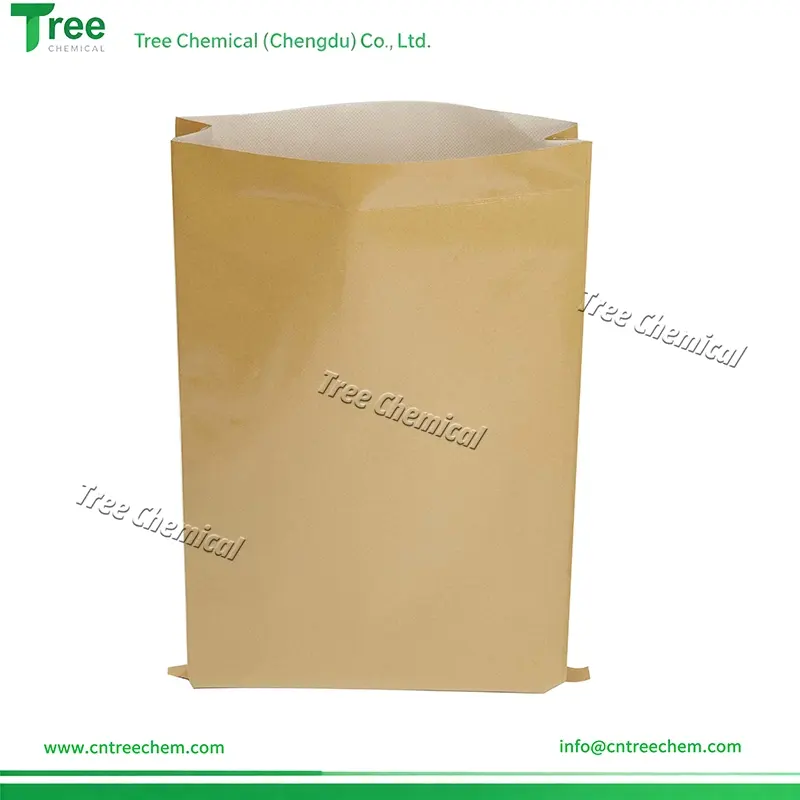
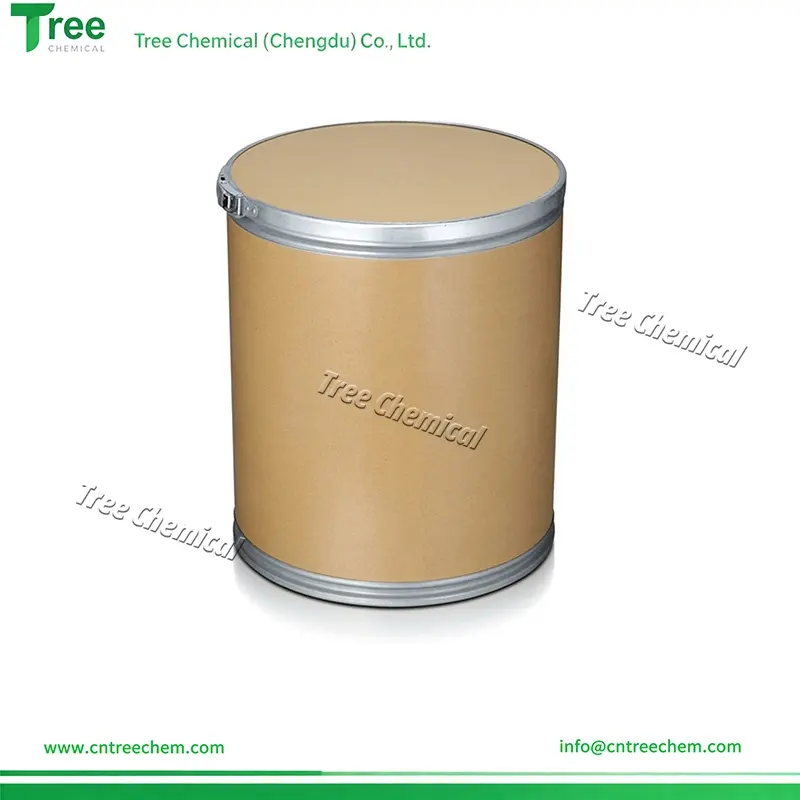
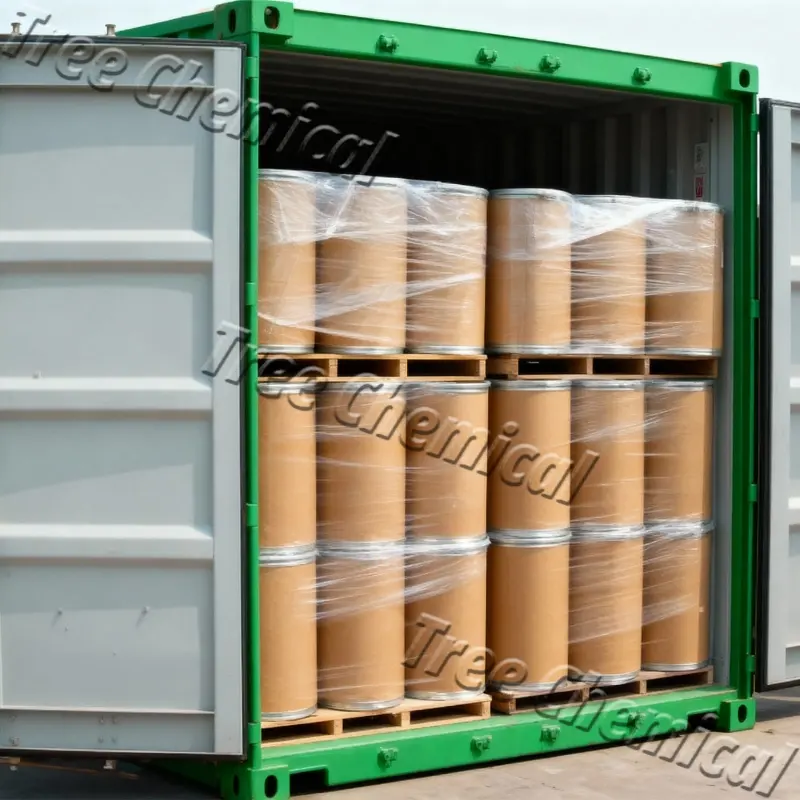
- Packaging: 25 kg kraft paper bag / 25 kg fiber drum / Customer requirements
Tree Chem supplies Tetrabutylammonium Tribromide CAS 38932-80-8 for customers looking to purchase a reliable bromination reagent used in fine chemicals and organic synthesis. The product is provided in crystalline powder form with stable composition, supporting reproducible reaction performance across different applications.
As a specialized quaternary ammonium salt, Tetrabutylammonium Tribromide is valued for its ease of handling and effective bromine delivery under mild reaction conditions. Tree Chem supports both laboratory and industrial users with stable supply and professional technical coordination. For inquiries, please contact info@cntreechem.com.
Specification
Basic Information
| Item | Description |
| Product Name | Tetrabutylammonium Tribromide |
| CAS No. | 38932-80-8 |
| Synonyms | Tetrabutylammonium perbromide; Tetra-n-butylammonium tribromide; TBABr₃ |
| Molecular Formula | C₁₆H₃₆Br₃N |
| Molecular Weight | 482.18 |
| EINECS No. | 609-598-3 |
Technical Specification
| Parameter | Specification |
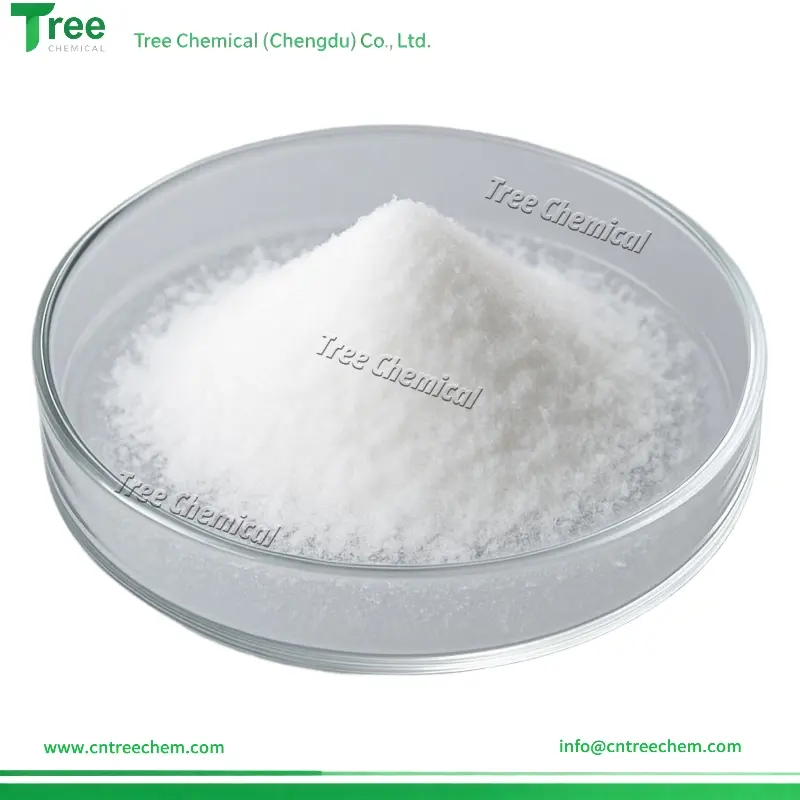
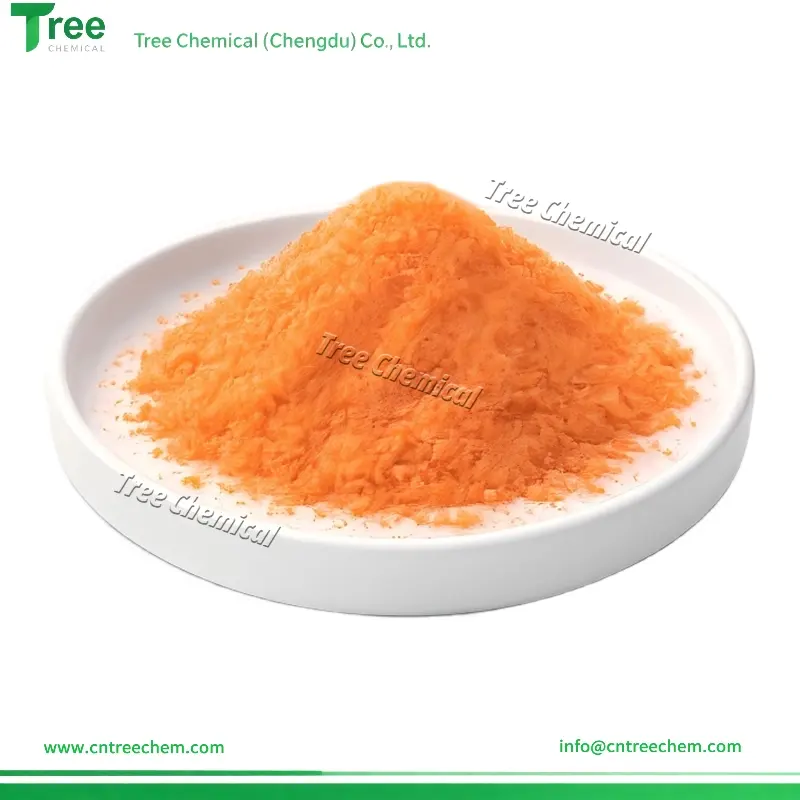
| Appearance | Orange to reddish-brown crystalline powder |
| Assay | ≥ 98.0% |
| Moisture | ≤ 0.5% |
| Melting Point | 71–76 °C |
Applications
Solid Brominating Agent for Fine Chemical and Pharmaceutical Manufacturing
- Tetrabutylammonium tribromide (TBABr₃) is used as a convenient solid source of “bromine equivalent” for selective bromination in fine chemical production. Because it is a weighable, relatively stable solid compared with elemental bromine, TBABr₃ is applied when operations want to reduce the handling burden associated with volatile, highly corrosive liquid bromine while still achieving strong brominating power.
- In practice, TBABr₃ is applied to brominate activated aromatic and heteroaromatic systems under mild temperature control, supporting regioselective outcomes that are important for intermediate purity. The document highlights that TBABr₃ can provide excellent selectivity and is often used to introduce bromine at electronically favored positions, helping route designers build reliable “brominated handles” for subsequent coupling, substitution, or cyclization steps.
- TBABr₃ is also used as a brominating reagent for building blocks that feed into pharmaceutical categories (including antibiotic- and anticancer-related intermediate pathways and antihistamine precursor chemistry). In these workflows, TBABr₃ is selected for controllable bromination and the ability to operate across common polar solvent systems while maintaining manageable workup.
Phase-Transfer Catalysis in Biphasic Organic Synthesis
- Beyond bromination, TBABr₃ is described as an efficient phase-transfer catalyst (PTC) in biphasic systems where aqueous base generates reactive anions that must react in an organic phase. The tetrabutylammonium cation helps transfer anionic reactants across the phase boundary, raising effective anion availability in the organic layer and improving reaction rate and yield.
- A representative industrial use is alkylation to produce alkyl phenyl ethers from phenols using aqueous sodium hydroxide and an organic solvent such as toluene. This approach is emphasized as operationally practical because it avoids strict anhydrous conditions while still reaching high conversion, making it suitable for scale-up where robustness and cost control matter.
- TBABr₃ is also positioned as a low-loading catalyst in broader transformation classes (including acetalization/ketalization and certain cyclization routes). The file stresses that TBABr₃ can deliver strong catalytic efficiency at a few mol% levels, supporting mild conditions and chemoselectivity for substrates that do not tolerate harsher acids or more aggressive halogenation setups.
Catalysis in Carbonyl Protection and Carbohydrate Modification
- TBABr₃ is described as catalytically active in acetalization/ketalization of carbonyl compounds, where it can generate active brominating/acidic species in situ to drive chemoselective formation of acetals under mild conditions. This application is important in multi-step synthesis where carbonyl protection must be efficient and compatible with functional-group-rich molecules.
- In carbohydrate chemistry, TBABr₃ is highlighted for catalytic formation of O-isopropylidene (acetonide) derivatives using acetone, enabling sugar protection under room-temperature conditions with low catalyst loading. This supports intermediate manufacture in pharmaceutical and specialty chemical sectors where carbohydrate-derived frameworks and protected polyols are commonly used.
- These catalytic “protection/derivatization” uses are operationally attractive because they can reduce reagent complexity while offering good yield under relatively gentle temperature windows, which helps control side reactions and simplifies downstream purification.
Heterocycle Functionalization and Ring-Forming Transformations
- TBABr₃ is extensively used in heterocycle chemistry, including bromination of indoles and other heteroaromatics where regioselectivity is critical. The document notes that TBABr₃ can preferentially brominate electron-rich positions (for example, C-3 bromination on indole systems), producing brominated heterocycles that serve as versatile intermediates for medicinal chemistry and agrochemical synthesis.
- TBABr₃ is also described in bromination of pyrrole/furan-type frameworks and in routes where bromonium-ion intermediates enable cyclization. These transformations are valuable because they convert relatively simple precursors into more complex ring systems used as pharmacophores or functional materials.
- For industrial users, TBABr₃’s role here is enabling predictable, selective functionalization—creating intermediates that are primed for later steps such as cross-coupling, nucleophilic substitution, or further oxidation/reduction sequences.
Polymer and Materials Science: Flame Retardants and Brominated Polymers
- A major downstream area in the document is polymer applications, where TBABr₃ is used to introduce bromine into polymer structures to improve flame retardancy. In polyolefin systems (PE/PP), TBABr₃-derived bromination is linked to achieving practical bromine content ranges that raise limiting oxygen index (LOI) and improve fire resistance.
- TBABr₃ is also described in producing brominated polystyrene and brominated styrenic block copolymers (such as SBS/SEBS derivatives). These brominated polymers are positioned as high-performance flame retardants for engineering plastics and thermoplastic elastomers, where thermal stability and high bromine loading are required to meet demanding fire safety needs.
- In polymer functionalization, TBABr₃ is used to create brominated sites on polyolefin chains that can serve as reactive handles for grafting polar groups. This helps compatibilize polymer blends and enables further modification strategies used in adhesives, composites, and specialty plastics.
Electronic Materials: Silver Nanowires and Flexible Conductive Films
- TBABr₃ is described as a bromine source in polyol-type synthesis of silver nanowires, where controlled halide chemistry helps guide anisotropic growth to produce ultra-high aspect ratio nanowires. These nanowires are then used to build transparent conductive networks for flexible electronics.
- The document connects these nanowires to flexible transparent conductive films (for example, coated on PET substrates), emphasizing practical film performance indicators such as high transmittance, low haze, and low sheet resistance, along with long-term stability. In this value chain, TBABr₃ is not the end material, but it is a key enabler in producing a nanowire morphology suitable for scalable coating and device integration.
- This application is relevant to display technologies, flexible sensors, and other electronics where a balance of conductivity and optical clarity is required.
Analytical Chemistry and Quality Control: Unsaturation Determination
- TBABr₃ is described as an analytical reagent for determining unsaturation (double-bond content) in fats, oils, fatty acids, and polymer samples. By reacting with C=C bonds, TBABr₃ supports titration-style and electrochemical determination methods that quantify unsaturation with good sensitivity and reproducibility.
- For food and oil analysis, the document highlights iodine value/unsaturation determination workflows that use TBABr₃ as the brominating titrant, followed by back-titration steps for excess reagent. This provides a structured QC approach for raw materials and finished products where unsaturation level is a key quality parameter.
- For polymer QC, TBABr₃ is similarly used to quantify unsaturation in rubbers or polymer matrices, helping manufacturers monitor reactivity, aging behavior, and consistency of feedstock or production lots.
Electroplating Additive for Precious Metal Deposits
- TBABr₃ is described as a brightener/leveling additive in precious metal electroplating baths (notably gold, and also palladium/platinum group systems). At low mg/L dosing, it is positioned to refine crystal growth, improve leveling, and deliver mirror-grade brightness and uniformity.
- This application targets precision electronic components and jewelry-quality finishes where deposit appearance and uniform coating performance are critical. The document links TBABr₃’s function to adsorption effects at the cathode surface that alter deposition behavior and improve final coating quality.
Safety, Handling, and Storage Considerations in Industrial Use
- The document classifies TBABr₃ as hazardous and emphasizes irritation and respiratory risks, so industrial handling focuses on ventilation, dust control, and appropriate PPE—especially during powder transfer. Because TBABr₃ can act as a bromine source, storage is positioned around keeping containers tightly sealed, dry, and protected from direct sunlight, with segregation from incompatible materials such as strong oxidizers and acids.
- Operational guidance also highlights spill control with inert absorbents, controlled cleanup, and disposal as hazardous waste according to local regulations. Storage practices include selecting suitable container materials and clear hazard labeling to maintain both product quality and compliance in warehouse and transport workflows.
Storage & Handling
- Store in tightly sealed containers in a cool, dry, and well-ventilated area
- Protect from heat, moisture, and direct sunlight
- Avoid contact with strong oxidizing agents and acids
- Keep handling equipment clean and dry during use
- Ground containers and equipment to prevent static discharge
Usage Notice
- Tetrabutylammonium Tribromide should be handled by trained personnel familiar with brominating reagents.
- Appropriate personal protective equipment, including gloves and eye protection, is recommended during handling and weighing.
- Avoid prolonged exposure to moisture, as this may affect product stability and performance.
- A selective aromatic bromination formulation uses an activated aromatic or heteroaromatic substrate in DCM or chloroform with TBABr₃ at about 1.0–1.2 equivalents from 0°C to room temperature, where TBABr₃ functions as a controlled solid bromine source enabling regioselective bromination under mild conditions.
- An indole C-3 bromination formulation uses an indole substrate with TBABr₃ at about 1.0–1.2 equivalents in DCM/CHCl₃ from 0°C to room temperature, where TBABr₃ functions as a selective brominating agent to deliver high C-3 preference and practical yield.
- A biphasic phenol alkylation formulation uses phenol (1.0 mol), an alkyl halide (1.2 mol), TBABr₃ (3–5 mol%), 50 wt% aqueous NaOH (1.5–2.0 mol), and toluene at 60–80°C for 2–4 hours, where TBABr₃ functions as a phase-transfer catalyst to accelerate ether formation with high conversion.
- A carbonyl acetalization formulation uses a carbonyl compound (1.0 mol) with an alcohol (2.0–3.0 mol) and TBABr₃ (5–10 mol%) from room temperature to 60°C for 2–6 hours, where TBABr₃ functions as an efficient catalyst that promotes chemoselective acetal/ketal formation under mild conditions.
- A carbohydrate isopropylidenation formulation uses a sugar (1.0 mol) in excess acetone with TBABr₃ at about 2 mol% at room temperature for 1–3 hours, where TBABr₃ functions as a low-loading catalyst to form O-isopropylidene derivatives efficiently.
- A brominated polyolefin flame-retardant formulation uses PE/PP (100 parts) with TBABr₃ (15–25 parts) plus antioxidant (0.1–0.5 parts) and processing aid (0.5–1.0 parts), where TBABr₃ functions as the bromination reagent to introduce bromine content that raises LOI and improves fire resistance.
- A brominated polystyrene synthesis formulation uses polystyrene (100 parts) with TBABr₃ (120–150 parts) plus FeCl₃ (0.5–1.0 parts) in DCM at 40–60°C for 8–12 hours, where TBABr₃ functions as the brominating agent enabling high bromine loading and high thermal stability in the product.
- A silver nanowire synthesis formulation uses AgNO₃ (0.1–0.2 M) with TBABr₃ (0.01–0.02 M) and PVP (0.1–0.2 M) in ethylene glycol at 150–180°C for 1–3 hours, where TBABr₃ functions as a bromine/halide source that guides anisotropic growth to achieve ultra-high aspect ratio nanowires.
- A gold electroplating bath formulation uses Au(III) chloride (5–15 g/L) with TBABr₃ (40–120 mg/L) and citric acid (20–30 g/L) at pH 3.5–4.5 and 40–60°C, where TBABr₃ functions as a brightener/leveling additive that refines deposit morphology and improves brightness.
- An unsaturation determination formulation uses TBABr₃ at about 0.1 M in acetonitrile as the titrant with an oil/fat sample dissolved in acetonitrile and electrochemical or titration endpoint detection, where TBABr₃ functions as the brominating reagent to quantify double-bond content for iodine value and QC control.
Packaging
- 25 kg plastic drum
- Other packaging available upon customer request