Tetraethylammonium Tetrafluoroborate TEATFB Tetraethylammonium fluoroborate CAS 429-06-1
- CAS: 429-06-1
- Synonyms: Tetraethylammonium tetrafluoroborate; TEATFB
- EINECS No.: 207-055-1
- Molecular Formula: C₈H₂₀BF₄N
- Grade: Industrial Grade
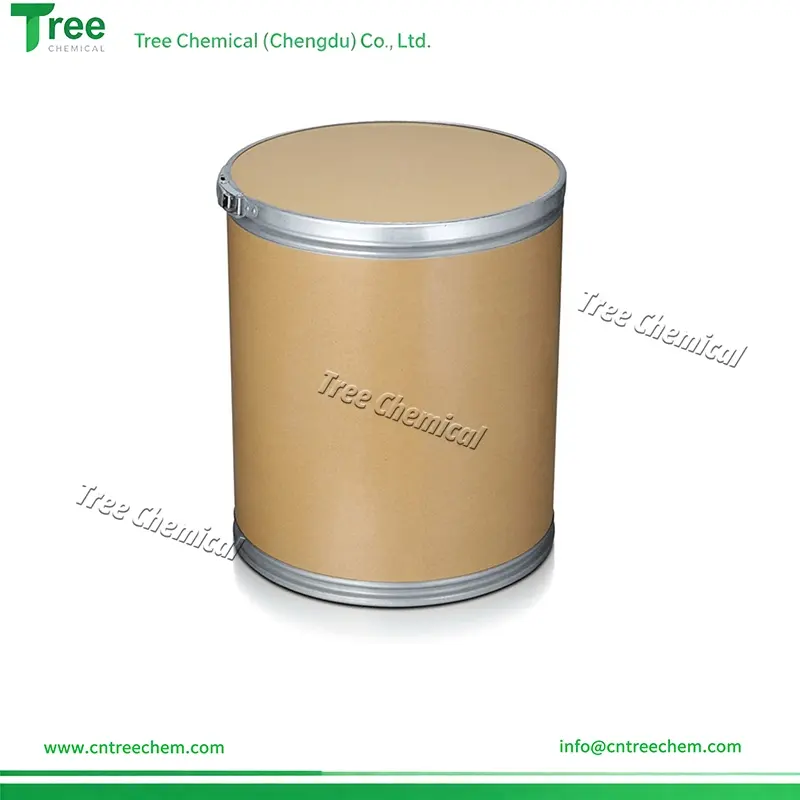
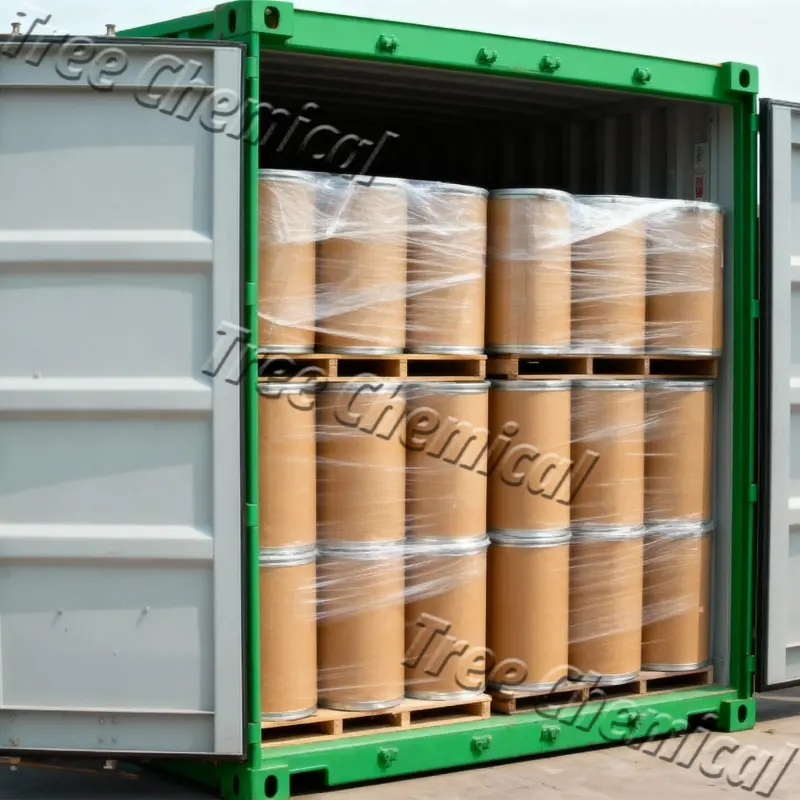
- Packaging: 25 kg fiber drum
Tree Chem supplies Tetraethylammonium Tetrafluoroborate (CAS 429-06-1) for customers seeking to purchase high-purity quaternary ammonium salts used in electrochemical and synthetic applications. The product is provided in solid form with stable composition and consistent quality.
Tetraethylammonium tetrafluoroborate is commonly applied as a supporting electrolyte in electrochemical systems and as a functional salt in organic and materials chemistry. Tree Chem supports global customers with standardized specifications and flexible supply arrangements. For orders or detailed specifications, please contact info@cntreechem.com.
Specification
Basic Information
| Item | Details |
| Product Name | Tetraethylammonium Tetrafluoroborate |
| Synonyms | TEATFB; Tetraethylammonium fluoroborate |
| CAS No. | 429-06-1 |
| Molecular Formula | C₈H₂₀BF₄N |
| Molecular Weight | 217.06 |
| EINECS No. | 207-055-1 |
Technical Specification
| Item | Specification |
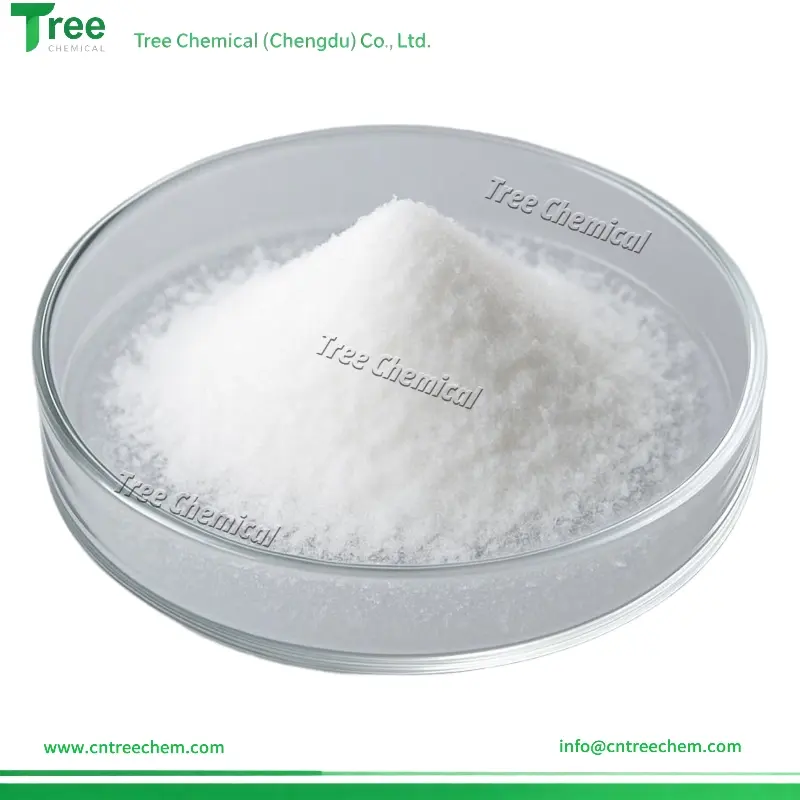
| Appearance | White to off-white crystalline powder |
| Assay | ≥ 99.0% |
| Moisture Content | ≤ 0.5% |
| Solubility | Soluble in water and polar organic solvents |
Applications
Energy Storage: Supercapacitor Electrolytes
- Tetraethylammonium tetrafluoroborate (TEABF₄) is positioned as a core electrolyte salt for electric double-layer capacitors (EDLCs, supercapacitors) because it combines high ionic conductivity with a wide electrochemical stability window. In practical device engineering, this combination supports higher operating voltage and stable charge–discharge behavior, which directly influences energy density and cycle durability.
- A standard industrial approach is using TEABF₄ dissolved in anhydrous acetonitrile as a single-salt electrolyte system. This format is widely adopted because it dissolves readily, transports ions efficiently through porous carbon electrodes, and provides consistent performance under typical EDLC operating conditions.
- Beyond the single-salt system, TEABF₄ is also described in blended electrolyte strategies where it is combined with another electrolyte salt to tune high-voltage stability, conductivity balance, and long-term cycling retention. This reflects a formulation mindset where TEABF₄ is not only a default salt, but also a functional component used to optimize performance targets under more demanding voltage or rate conditions.
Lithium-Ion and Dual-Ion Batteries: Functional Electrolyte Additive
- TEABF₄ is described as a functional additive in LiPF₆-based lithium-ion battery electrolyte systems. In this role, TEABF₄ is not the primary charge carrier, but an engineered additive intended to improve interfacial behavior and long-term cycling stability.
- The key value proposition in the file is TEABF₄’s ability to influence the solid-electrolyte interphase (SEI) formation on the anode. By improving SEI characteristics, TEABF₄ can reduce impedance growth and support more stable cycling, which is a critical requirement for performance retention and safety in modern battery operation.
- TEABF₄ is also referenced in dual-ion and hybrid electrochemical storage concepts where mixed-salt strategies are applied. In these systems, TEABF₄ supports the broader aim of balancing voltage capability, conductivity, and cycling robustness.
Organic Synthesis: Phase-Transfer Catalysis in Biphasic Reactions
- TEABF₄ is used in organic synthesis as a phase-transfer catalyst (PTC), especially in reactions where reactants or bases are present in an aqueous phase while the substrate resides in an organic phase. In such biphasic setups, TEABF₄ helps move reactive species across phase boundaries, improving mass transfer and enabling faster, higher-yield transformations.
- The file highlights typical PTC reaction classes that benefit from TEABF₄, including nucleophilic substitution and N-alkylation chemistry. In these workflows, TEABF₄ helps achieve strong conversion under practical agitation and temperature control, supporting process designs that can scale from lab to production.
- Another featured PTC use is dichlorocarbene generation from chloroform under basic conditions, which is then captured by an alkene substrate to form cyclopropane derivatives. This showcases TEABF₄’s value in enabling reactive intermediates within a controlled biphasic environment, where phase behavior and ion transfer otherwise limit efficiency.
Pharmaceutical Intermediate Synthesis
- TEABF₄ is described as useful in preparing pharmaceutical intermediates, including fluorinated and heterocycle-related systems. Its relevance here is tied to improving reaction feasibility and throughput when ionic reagents or phase behavior becomes a limiting factor.
- In pharmaceutical development routes, reagents and conditions often must be balanced against selectivity, impurity control, and workup simplicity. TEABF₄ is positioned as a practical tool that supports those constraints by enhancing reaction efficiency without forcing complex solvent redesign.
Analytical Chemistry: Electrochemical Supporting Electrolyte
- TEABF₄ is commonly used as a supporting electrolyte in electrochemical analysis, where the goal is to increase solution conductivity and stabilize electrochemical measurements without chemically interfering with the analyte. This is especially relevant in non-aqueous electrochemistry where solvent choice requires an electrolyte that dissolves well and remains stable.
- In voltammetry and related techniques, TEABF₄ supports cleaner signals and reproducible electrochemical behavior by providing consistent ionic strength. This improves measurement repeatability and helps interpret redox behavior in both research and applied development settings.
Analytical Chemistry: Ion-Pairing Reagent in Chromatography
- TEABF₄ is described as an ion-pairing reagent used in chromatography (including HPLC and ion chromatography) to improve separation of charged analytes. The mechanism described is ion-pair formation with negatively charged species, reducing effective polarity and improving retention and resolution in reversed-phase systems.
- This use case is important for analytical workflows where standard mobile phases do not sufficiently separate ionic species. By introducing TEABF₄ at controlled concentration, separation performance can be tuned without redesigning the entire method.
Polymer and Materials Science: Polymer Electrolytes and Surface Modification
- TEABF₄ is incorporated into polymer electrolyte formulations designed for flexible electronics and wearable devices, where ionic conductivity and mechanical flexibility are both required. In these systems, TEABF₄ acts as the ionic charge carrier while a polymer matrix provides film-forming structure and a plasticizer improves ion mobility.
- The file also describes TEABF₄ in surface modification contexts, where it is used to improve corrosion resistance and antifouling performance. It is referenced in preparation concepts such as self-assembled monolayers on metal surfaces for biosensor-related uses, reflecting its relevance in functional surface engineering rather than only bulk electrolyte roles.
Safety, Handling, and Storage in Industrial Practice
- TEABF₄ is described as hygroscopic, meaning moisture control is central to preserving product quality and consistent performance in both electrochemical and synthesis use. Practical handling emphasizes avoiding dust inhalation and preventing eye/skin contact through standard PPE and ventilation controls.
- Storage guidance focuses on sealed containers, cool and dry conditions, and segregation from strong oxidizers and acids. The file also provides a shelf-life expectation under recommended storage, reinforcing that long-term stability depends on controlling moisture exposure.
Storage & Handling
- Store in tightly sealed containers in a dry, cool, and well-ventilated area.
- Protect from moisture and direct sunlight.
- Avoid contact with strong oxidizing agents.
- Use clean, dry equipment during handling.
- Follow standard chemical handling procedures.
Usage Notice
- For professional and industrial use only.
- Avoid inhalation of dust and contact with skin or eyes.
- Use appropriate personal protective equipment.
- Confirm compatibility before use in electrochemical or synthetic systems.
- Dispose of waste according to local environmental regulations.
- Supercapacitor electrolyte formulation uses TEABF₄ at 1.0 mol/L in anhydrous acetonitrile as the ionic charge carrier to deliver high conductivity and a wide operating voltage window in EDLC devices.
- Hybrid supercapacitor electrolyte formulation blends TEABF₄ and LiPF₆ at a 4:1 molar ratio in mixed carbonate solvent (EC:DMC:EMC at 1:1:1 by mass) to enhance high-voltage stability while improving conductivity balance and cycling retention.
- Lithium-ion battery electrolyte additive formulation uses LiPF₆ as the primary salt (about 10 wt%) with TEABF₄ as an additive (about 2 wt%) in EC:DEC (1:1 by volume) to improve SEI stability and reduce impedance growth during cycling.
- PTC N-alkylation formulation uses aniline (1.0 eq), ethyl bromide (1.2 eq), TEABF₄ (5 mol%) and 50 wt% aqueous NaOH (2.0 eq) in toluene (about 5 mL per mol aniline) at about 80°C for about 4 hours to drive high conversion and yield.
- Dichlorocarbene cyclopropanation formulation uses chloroform (2.0 eq), TEABF₄ (3 mol%) and 40 wt% aqueous NaOH (3.0 eq) with cyclohexene (1.0 eq) in dichloromethane (about 10 mL per mol cyclohexene) at about 0–5°C for about 2 hours to generate dichlorocarbene and form cyclopropane derivatives.
- Electrochemical supporting electrolyte formulation uses TEABF₄ at 0.1 mol/L in anhydrous acetonitrile with a low-mM analyte level to stabilize conductivity and support reproducible voltammetry measurements.
- HPLC ion-pairing mobile phase formulation uses TEABF₄ at 0.005 mol/L in methanol:water (70:30 by volume) to form ion pairs with negatively charged analytes and improve retention and separation in reversed-phase methods.
- Polymer electrolyte film formulation uses PVDF-HFP (20 wt%), TEABF₄ (10 wt%), and propylene carbonate (70 wt%) to form a flexible electrolyte film with improved ion mobility for flexible electrochemical devices.
- Surface modification preparation can use TEABF₄ as an ionic component in solution-based treatments to support formation of functional surface layers aimed at corrosion resistance, antifouling behavior, or biosensor-interface performance.
Packaging
- 25 kg fiber drum
- Other packaging available upon customer request