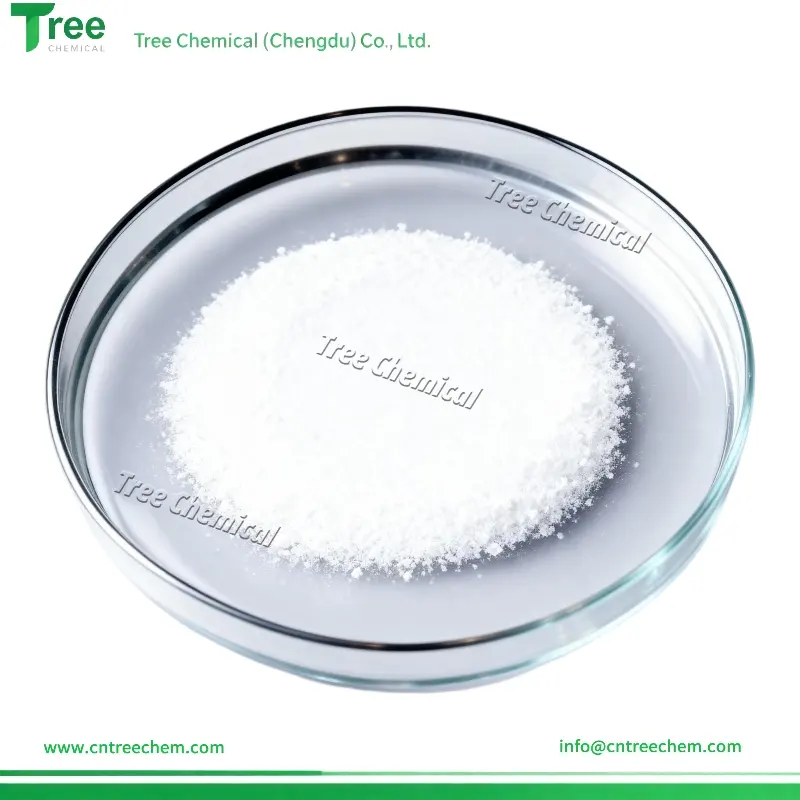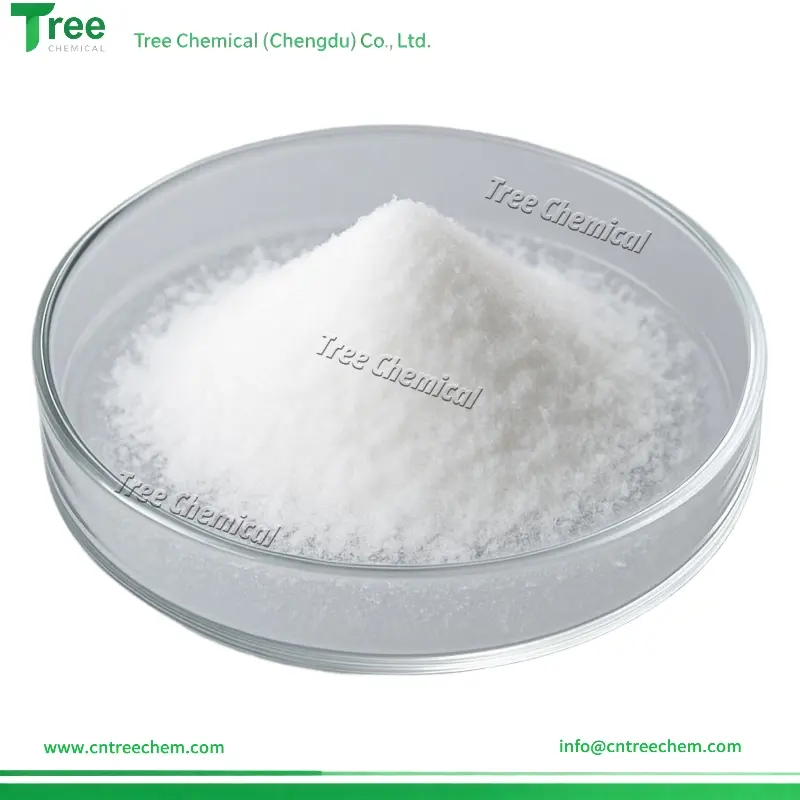
Triethylmethylammonium Chloride TEMAC Methyltriethylammonium Chloride CAS 10052-47-8
- CAS: 10052-47-8
- Synonyms: Triethylmethylammonium chloride; Methyltriethylammonium chloride
- EINECS No.: 205-516-1
- Molecular Formula: C₇H₁₈ClN
- Grade: Industrial Grade
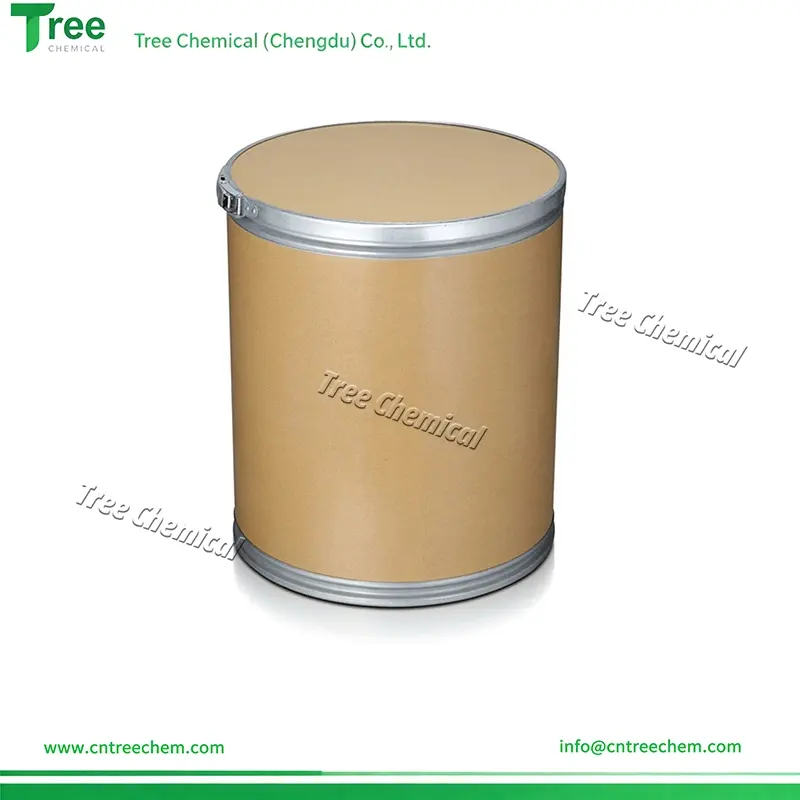
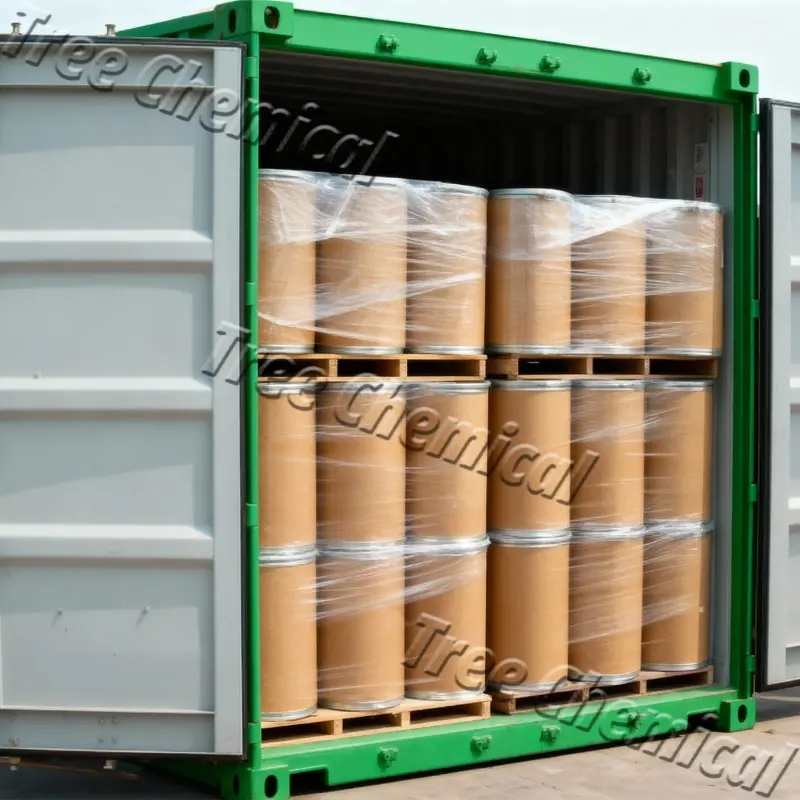
- Packaging: 25 kg fiber drum
Tree Chem supplies Triethylmethylammonium Chloride (CAS 10052-47-8) for customers seeking to purchase quaternary ammonium salts used in synthesis, catalysis, and formulation processes. The product is provided as a stable solid suitable for controlled handling and downstream processing.
Triethylmethylammonium chloride is widely applied in organic reaction systems where ionic strength, solubility control, or phase-transfer performance is required. Tree Chem supports global customers with standardized specifications and flexible supply solutions. For further information, please contact info@cntreechem.com.
Specification
Basic Information
| Item | Details |
| Product Name | Triethylmethylammonium Chloride |
| Synonyms | TEMAC; Methyltriethylammonium chloride; N,N,N-Triethyl-N-methylammonium chloride |
| CAS No. | 10052-47-8 |
| Molecular Formula | C₇H₁₈ClN |
| Molecular Weight | 151.68 |
| EINECS No. | 205-516-1 |
Technical Specification
| Item | Specification |
| Appearance | White to off-white crystalline solid |
| Assay | ≥ 99.0% |
| Moisture Content | ≤ 1.0% |
| Solubility | Freely soluble in water and polar solvents |
Applications
Organic Synthesis and Fine Chemicals (Phase-Transfer Catalyst)
- Triethylmethylammonium chloride (TEMAC) is primarily applied as a phase-transfer catalyst in biphasic organic synthesis where an anionic reactant is generated in an aqueous phase but must react efficiently with an organic-phase substrate. In these systems, TEMAC accelerates mass transfer between immiscible phases, which helps shorten reaction time and improves conversion and yield in practical production setups.
- TEMAC is described as especially effective for nucleophilic substitution and alkylation chemistry, where the reaction rate is often limited by how quickly a reactive anion can access the organic substrate. This makes TEMAC useful for intermediate manufacturing workflows that rely on robust, stir-tolerant reaction behavior and consistent performance during scale-up.
- TEMAC is also applied to dichlorocarbene generation from chloroform under strong basic aqueous conditions, enabling cyclopropanation of alkenes as a route to specialty chemical structures. In this application, TEMAC supports the controlled formation and transfer of reactive intermediates, helping maintain productivity under low-temperature conditions where selectivity and safety control are important.
Fragrance, Agrochemical, and Pharmaceutical Intermediate Routes
- TEMAC is used in phenol alkylation to produce alkyl phenyl ethers, which are positioned as key intermediates for downstream industries including fragrances, pharmaceuticals, and agrochemicals. The application emphasizes that TEMAC enables high yield at low catalyst loading, supporting industrial attractiveness where efficiency and raw material utilization are central.
- In intermediate synthesis routes, TEMAC helps generate phenoxide nucleophiles in aqueous base and transfer them effectively into the organic phase for alkylation. This improves process throughput and makes the reaction more reliable under standard temperature and mixing conditions.
- TEMAC is also described as a practical choice in routes that need phase-transfer support but prefer lower toxicity profiles compared with some other quaternary ammonium salts. This positioning matters when manufacturing programs must balance reactivity, worker safety controls, and compatibility with existing plant operations.
Water Treatment: Biocide and Biofilm Control in Industrial Systems
- TEMAC functions as a cationic biocide and biofilm inhibitor in industrial water systems, providing broad control against bacteria, algae, and fungi in operational environments. It is highlighted for use in cooling towers and process-water circulation where continuous microbial pressure can cause biofouling, corrosion acceleration, and efficiency loss.
- In cooling tower operation, TEMAC is described as a primary biocide used in continuous-feed programs, and it is also paired with a co-biocide to strengthen overall microbial reduction. The performance focus includes strong reduction of microbial counts and meaningful biofilm-thickness reduction, which supports better heat-transfer efficiency and lower maintenance burden.
- TEMAC is also used in reverse osmosis systems as a biofouling inhibitor to reduce microbial adhesion and slow membrane fouling. In this application, it is positioned as a periodic treatment that helps extend membrane life and reduce cleaning frequency, supporting operational cost control and more stable RO performance.
Oil and Gas: Corrosion Inhibition and Clay Stabilization
- TEMAC is used as a corrosion inhibitor in upstream and midstream oil and gas environments, especially in brines that contain CO₂ and/or H₂S where carbon steel corrosion can be severe. Its cationic nature supports adsorption on negatively charged metal surfaces, forming a protective film that reduces dissolution and lowers corrosion rate.
- In practical inhibitor packages, TEMAC is combined with a co-inhibitor to improve film stability in high-salinity conditions, and solvents/carriers are selected to support injection and distribution in pipeline systems. The application description emphasizes performance improvement versus uninhibited systems, supporting use when corrosion reduction is a top operational KPI.
- TEMAC is also applied as a clay stabilizer in drilling fluids where clay swelling and formation instability can create operational risk. By interacting with clay surfaces, TEMAC helps reduce swelling behavior and supports wellbore stability, while also contributing to reduced fluid loss and better drilling control in clay-rich formations.
Pharmaceutical and API Manufacturing (PTC-Enabled Transformations)
- TEMAC is used as a phase-transfer catalyst in API-intermediate synthesis where N-alkylation and related transformations are required under conditions that include aqueous reagents and organic substrates. This supports reaction feasibility and throughput when direct homogeneous reaction conditions would be less efficient or harder to control.
- A described example is N-alkylation chemistry for an antihistamine-related intermediate pathway, where TEMAC is used at modest mol% loading to drive conversion under controlled temperature and time. In this context, TEMAC is positioned as a practical tool to achieve good yield while keeping processing compatible with standard solvent systems and aqueous-base operation.
- This pharmaceutical relevance ties back to TEMAC’s broader PTC behavior: it improves ion availability in the reactive phase and reduces the penalty of phase separation, which is often a core limitation in manufacturing-scale alkylation and substitution chemistry.
Electroplating: Brightener and Deposit Quality Control
- TEMAC is used as an additive in electroplating baths—particularly zinc (and referenced alongside tin applications)—to improve deposit brightness, uniformity, and adhesion. In plating operations, small additive concentrations can significantly affect crystal growth behavior and the final appearance and performance of the metal coating.
- In zinc electroplating systems, TEMAC is described as part of a sulfate/chloride bath framework with buffering control over an operating pH range. The targeted outcome is a bright, uniform finish with strong adhesion, supporting use in industrial finishing where cosmetic appearance and coating durability both matter.
- This application positions TEMAC beyond synthesis and water treatment: it becomes a functional bath modifier used to tune deposition behavior under specified current density ranges in production plating lines.
Safety, Handling, and Storage in Routine Industrial Use
- TEMAC is described as commercially supplied either as an aqueous solution (commonly 30–50 wt%) or as a high-purity anhydrous solid. Handling practices focus on preventing skin/eye irritation and minimizing inhalation exposure, especially for powder forms where dust control and ventilation are critical.
- Compatibility guidance emphasizes avoiding strong oxidizers and strong acids to prevent decomposition risk and to maintain product stability. Storage recommendations differentiate aqueous solution versus anhydrous solid, with cool, dry, tightly sealed containers used to preserve quality and extend shelf life under typical warehouse conditions.
Storage & Handling
- Store in sealed containers in a cool, dry, and well-ventilated area.
- Protect from moisture and direct sunlight.
- Avoid contact with strong oxidizing agents.
- Use clean and dry tools during handling.
- Follow standard industrial chemical storage practices.
Usage Notice
- For professional and industrial use only.
- Avoid inhalation of dust and prolonged skin contact.
- Wear appropriate personal protective equipment during handling.
- Confirm suitability before use in reaction or formulation systems.
- Dispose of waste according to applicable regulations.
- Phenol alkylation formulation uses TEMAC (50 wt% aqueous) at about 5 mol% to transfer phenoxide into the organic phase and accelerate ether formation to achieve high-yield fine-chemical intermediates.
- Dichlorocarbene cyclopropanation formulation uses TEMAC (anhydrous, ≥98%) at about 3 mol% to enable chloroform-to-dichlorocarbene generation under aqueous base and drive cyclopropanation of alkenes for specialty chemical production.
- Cooling tower biocide formulation uses TEMAC (50 wt% aqueous) at about 50–100 ppm as the primary biocide to control bacteria and suppress biofilm growth during continuous recirculating-water operation.
- RO membrane biofouling inhibitor formulation uses TEMAC (30 wt% aqueous) at about 10–20 ppm to reduce microbial adhesion on membranes and extend operating life while lowering cleaning frequency.
- Carbon steel pipeline corrosion inhibitor formulation uses TEMAC (50 wt% aqueous) at about 0.5–1.0 wt% active in a solvent/carrier package to form a protective film and reduce corrosion rate in CO₂/H₂S brines.
- Drilling fluid clay stabilizer formulation uses TEMAC (anhydrous) at about 0.5–1.5 lb/bbl to suppress clay swelling and improve wellbore stability in shale and clay-rich formations.
- API-intermediate N-alkylation formulation uses TEMAC (anhydrous, ≥98%) at about 7 mol% to enhance phase-transfer efficiency and improve yield in biphasic amination/alkylation manufacturing steps.
- Zinc electroplating brightener formulation uses TEMAC (50 wt% aqueous) at about 0.5–1.5 g/L to refine deposit crystal structure and improve brightness, uniformity, and adhesion in sulfate-based plating baths.
Packaging
- 25 kg fiber drum
- Other packaging available upon customer request