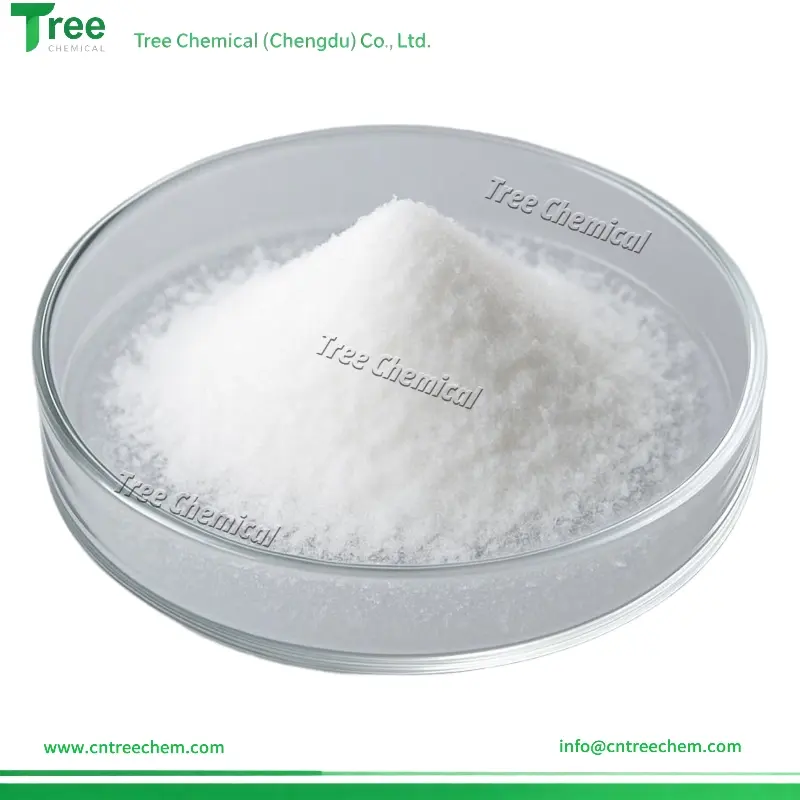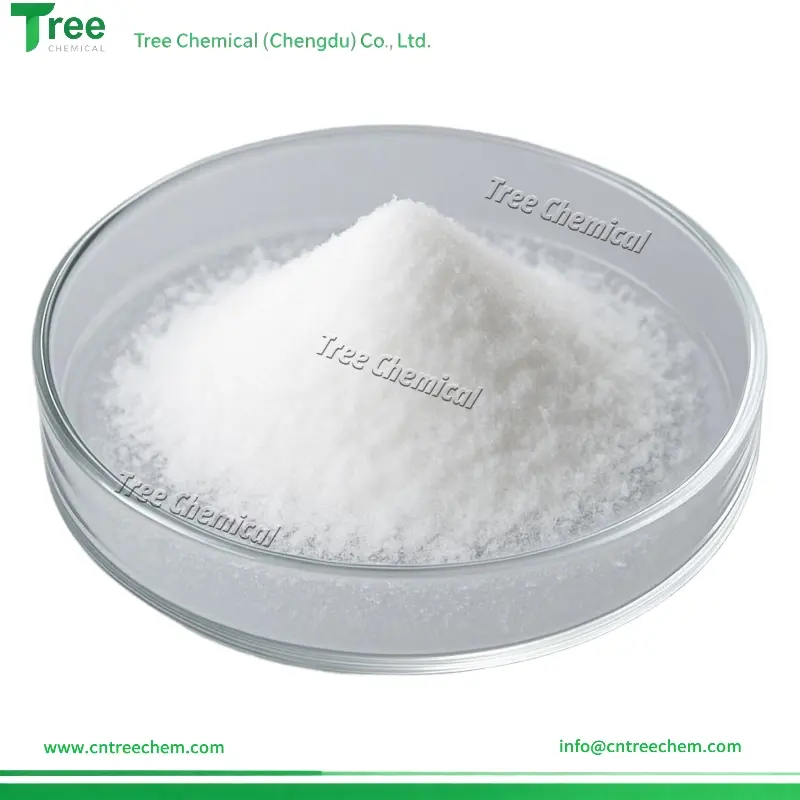
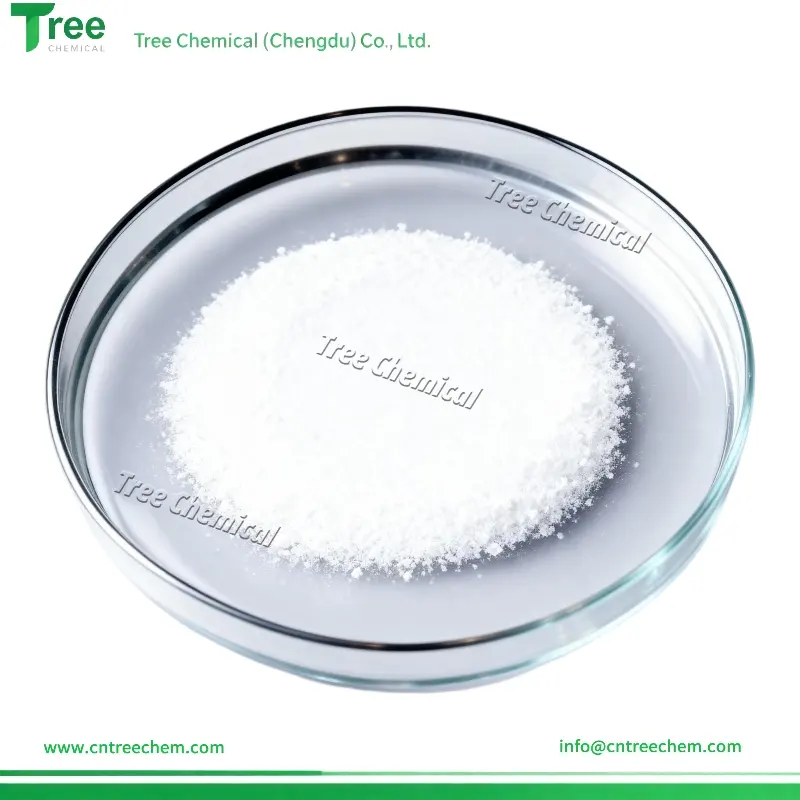
Trimethylpropylammonium Bromide TMPAB Propyltrimethylammonium Bromide CAS 2650-50-2
- CAS: 2650-50-2
- Synonyms: Trimethylpropylammonium bromide; Propyltrimethylammonium bromide
- EINECS No.: 220-172-2
- Molecular Formula: C6H16BrN
- Grade: Industrial Grade
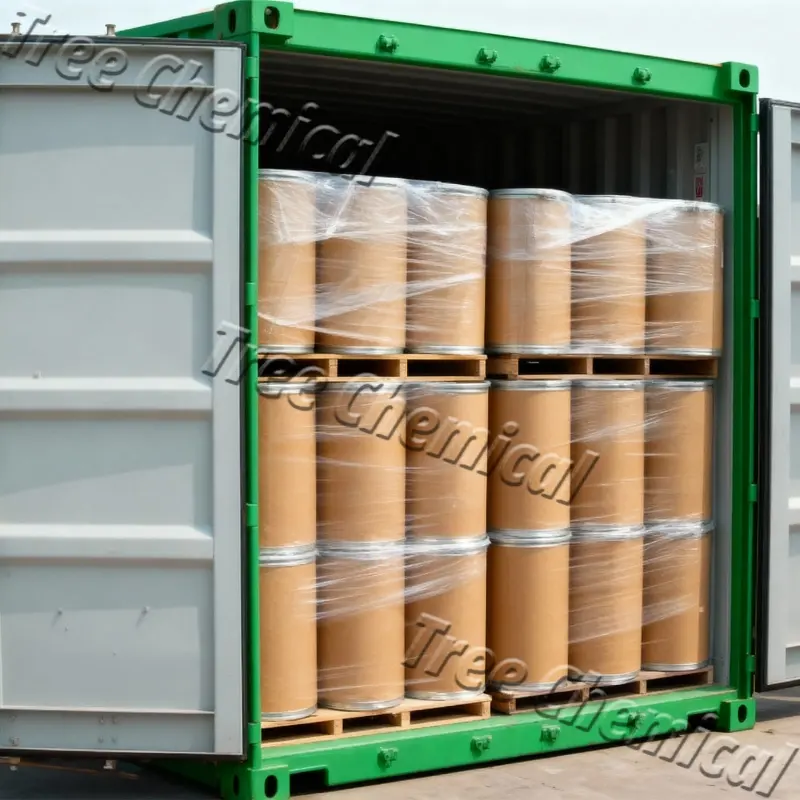
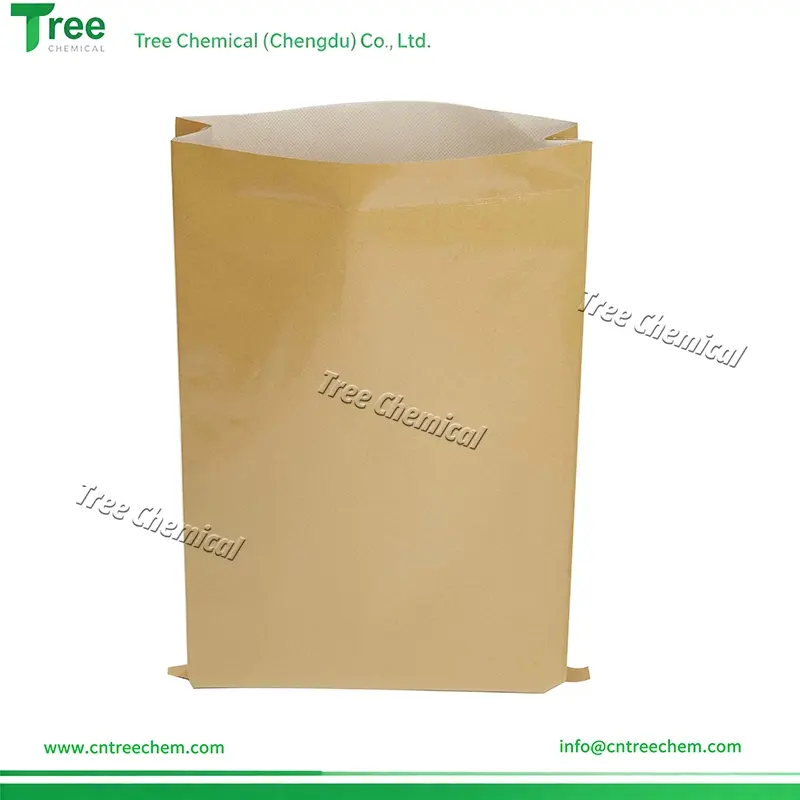
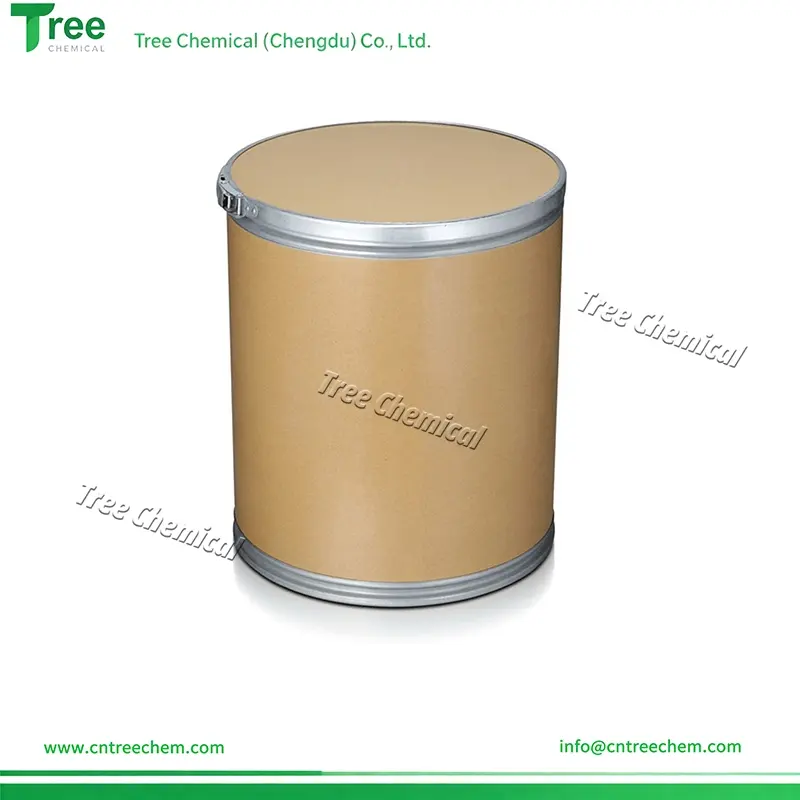
- Packaging: 25 kg fiber drum or 25 kg waterproof kraft paper bag
Tree Chem supplies Trimethylpropylammonium Bromide (CAS 2650-50-2) for customers looking to purchase a reliable quaternary ammonium compound used in synthesis and formulation work. The product is offered with controlled purity and stable physical properties to support downstream reactions and processing requirements.
Trimethylpropylammonium Bromide is commonly handled as a crystalline solid, readily soluble in water, and should be stored under dry conditions to prevent moisture absorption. Technical support and documentation are available upon request. Email: info@cntreechem.com
Specification
Basic Information
| Item | Value |
| Product Name | Trimethylpropylammonium Bromide |
| CAS No. | 2650-50-2 |
| Synonyms | Trimethylpropylammonium bromide; c; N,N,N-Trimethylpropan-1-aminium bromide |
| Molecular Formula | C6H16BrN |
| Molecular Weight | 182.10 |
| EINECS No. | 220-172-2 |
Technical Specification
| Item | Specification |
| Appearance | White to off-white crystalline solid |
| Assay | ≥ 99.0% |
| Melting Point | 237–241 °C |
| Solubility | Freely soluble in water; hygroscopic |
Applications
Core Functional Roles in Industrial Use
- Trimethylpropylammonium bromide (TMPAB) is a quaternary ammonium salt used across multiple value chains because it combines strong ionic character with an amphiphilic cation structure. This balance enables TMPAB to interact with both aqueous systems and organic-phase processes, which is why it appears repeatedly in synthesis, formulation, and materials processing.
- TMPAB is typically handled as a white to off-white crystalline solid and is described as highly water-soluble and hygroscopic, so moisture control is a practical requirement during storage, charging, and weighing. Its solubility profile and quaternary ammonium center make TMPAB a frequently selected phase-transfer catalyst, a cationic surfactant, and a precursor for ionic-liquid design through anion exchange.
- Beyond “chemical enabling,” TMPAB is also described as carrying antimicrobial activity typical of quaternary ammonium compounds, which expands its relevance into water treatment, hygiene-style formulations, and surface-focused use cases where biocidal contribution matters.
Organic Synthesis: Phase-Transfer Catalysis for Substitution and Alkylation
- TMPAB is used as an efficient phase-transfer catalyst (PTC) in biphasic organic reactions where nucleophiles are generated in an aqueous phase but must react with substrates in an organic phase. By transferring reactive anions across the phase boundary, TMPAB improves effective nucleophile availability in the organic layer and supports higher conversion under practical operating conditions.
- A key application is nucleophilic substitution—enabling production of substituted products such as ethers and nitriles using aqueous bases or nucleophile sources. This approach is positioned as industrially attractive because it can reduce reliance on strictly anhydrous conditions and often simplifies workup while maintaining strong yield performance.
- TMPAB is also described in phenol alkylation frameworks where phenoxide is generated in aqueous base and then transferred to the organic phase to react with alkyl halides. In such routes, TMPAB supports robust mixing tolerance and stable productivity, which are important considerations for scale-up.
Organic Synthesis: Esterification, Acetylation, and Reaction-Enablement
- TMPAB is presented as catalytically active in esterification chemistry used for fine chemicals and intermediate synthesis. The described role centers on improving reaction efficiency across defined temperature and time windows, supporting practical manufacturing when mild-to-moderate conditions are preferred.
- In acetylation-related concepts, TMPAB is described as contributing catalytic support and helping drive formation of ester products under controlled conditions. The emphasis is on route practicality—supporting transformations that can be integrated into multi-step manufacturing without excessive reagent complexity.
- In addition to classic PTC behavior, TMPAB is positioned as a useful surfactant-like helper in synthesis contexts where emulsion stability or phase behavior influences reaction outcome, separation, or reproducibility.
Catalysis in Cyclization and Specialty Transformations
- TMPAB is described as useful in intramolecular cyclization routes that build ring systems relevant to fine chemicals and pharmaceutical frameworks. In these pathways, TMPAB supports transfer of reactive intermediates between phases and helps maintain productive kinetics during multi-step sequences.
- A representative example is an indole-related cyclization framework where TMPAB is used at molar-percent loading to help the condensation/cyclization sequence proceed efficiently. The practical point is that TMPAB is used to improve feasibility and yield when phase behavior and intermediate transport otherwise limit performance.
- This “beyond substitution” use positions TMPAB as a flexible catalytic tool in synthesis planning, especially for reactions that combine aqueous bases with organic substrates and benefit from improved interfacial transport.
Polymer Chemistry: Polymerization, Emulsion Control, and Property Tuning
- TMPAB is described as a catalyst or stabilizing contributor in polymerization systems, including acrylic polymerization frameworks where it can influence kinetics and molecular weight distribution. In these settings, TMPAB dosage is presented as a lever to tune polymer architecture and product specification outcomes.
- TMPAB is also applied in emulsion polymerization as a surfactant/emulsifier to stabilize monomer droplets and developing polymer particles. This supports the production of uniform latex particles and narrow particle-size distributions, which are critical for coatings, binders, and dispersion-based materials.
- Beyond making polymers, TMPAB is described as enabling polymer modification strategies (including grafting and crosslinking support), where it contributes to improved surface energy, adhesion behavior, or processing speed depending on formulation design.
Pharmaceutical Industry: Synthesis of Key Intermediates
- TMPAB is described as a phase-transfer catalyst in β-lactam antibiotic intermediate synthesis, where a hydrophilic core component must be coupled with a more hydrophobic acylating reagent. In this context, TMPAB supports efficient coupling under controlled low-temperature conditions and is tied to high-yield outcomes.
- TMPAB is also described in the synthesis of platinum-based anticancer drug intermediates, where it improves solubility and enhances ligand substitution efficiency in aqueous reaction environments. These examples highlight TMPAB’s role as a route-enabling reagent that improves feasibility and throughput for high-value intermediates.
- Beyond synthesis, the document also positions TMPAB as a functional excipient in formulation concepts, where it can modify release behavior or formulation performance through interactions with polymers and interfaces.
Pharmaceutical Formulation and Biotech Process Use
- TMPAB is described as a release modifier in controlled-release matrix tablet concepts, where it influences swelling/erosion behavior of polymer matrices and supports sustained release profiles. In this use, TMPAB is not a catalyst but a functional additive that changes performance of the dosage-form structure.
- In topical formulations, TMPAB is positioned as an emulsifier and penetration enhancer. The described mechanism emphasizes its cationic interaction with negatively charged components of skin, which can disrupt barrier organization and increase drug flux relative to a baseline formulation.
- TMPAB is also described as a phase modifier in aqueous two-phase protein purification systems, where it changes interfacial properties and improves partition behavior for proteins. Additionally, it is used at low concentration in cell culture media concepts as a surfactant/antifoam-type additive to reduce aggregation and improve handling performance.
Electronics and Semiconductor Processing
- TMPAB is described for semiconductor post-etch cleaning formulations designed to remove organic residues and photoresist remnants while maintaining surface integrity. In these systems, TMPAB is included alongside alkaline and oxidizing components, and the process window emphasizes controlled temperature and time to achieve strong cleaning without device damage.
- TMPAB-based photoresist stripping formulations are also described, including high-solvent mixtures designed for advanced lithography resists. TMPAB is positioned as a stripping agent component that improves resist removal efficiency and selectivity within an engineered solvent/water framework.
- In addition, TMPAB is presented as a performance additive in electronic materials processing, including conducting polymer synthesis as a dopant/processing aid and organic semiconductor film processing where trace levels can influence film morphology and defect density.
Electroplating: Brightness, Leveling, and Deposit Uniformity
- TMPAB is described as a high-performance additive for precious-metal electroplating, including gold and palladium plating systems used in electronic devices. It functions as a brightener/leveling agent that influences cathode surface behavior to refine crystal growth and improve deposit appearance.
- In the described gold-plating bath framework, TMPAB contributes to mirror-grade brightness and strong leveling, supporting high-end applications where appearance, uniform thickness, and corrosion performance are required. Similar behavior is described for palladium plating systems targeted at sensitive electronic uses, where bath composition is engineered for deposit quality and compatibility.
- This positions TMPAB as a small-dosage, high-impact additive whose function is expressed through interfacial adsorption and deposit-structure control.
Energy Storage: Ionic-Liquid Engineering, Batteries, and Supercapacitors
- TMPAB is described as a component in advanced lithium-ion battery electrolyte concepts through TMPAB-based ionic-liquid designs (via anion exchange). In these systems, it is used to enhance ionic conductivity, influence interphase (SEI) behavior, and improve cycling stability—especially under elevated temperature conditions.
- The described role is as a functional electrolyte enhancer rather than the primary lithium salt. TMPAB-derived ionic-liquid components are combined with conventional carbonate solvents and lithium salts to adjust conductivity, interfacial stability, and high-temperature performance balance.
- TMPAB is also described in supercapacitor electrolyte concepts as a supporting electrolyte in aqueous systems, enabling stable cycling and supporting higher operational voltage in the described hybrid framework.
Agriculture, Textiles, and Water Treatment
- TMPAB is described as an emulsifier and wetting agent in pesticide formulations, improving oil-in-water emulsion formation and storage stability. This helps ensure uniform distribution of active ingredients and consistent field application behavior.
- TMPAB is also presented as a fertilizer additive that improves nutrient uptake and reduces leaching through its surface interaction and penetration-enhancing behavior. In this context, the compound is used at low dosage relative to macronutrient content to influence delivery efficiency.
- In textiles, TMPAB is described as a dyeing auxiliary for synthetic fibers, improving leveling, penetration, and fastness outcomes under controlled pH and temperature. It is also used in textile finishing formulations as a softener and antistatic component, where durable surface adsorption delivers functional effects.
- For water treatment, TMPAB is described in heavy-metal recovery systems (as part of extraction frameworks) and in organic pollutant removal through advanced oxidation concepts where phase transfer and contact enhancement support higher removal efficiency.
Analytical Chemistry: Sample Prep and Ion-Pair Chromatography
- TMPAB is described as a helpful additive in bioanalytical sample preparation, where it improves protein precipitation performance and reduces matrix effects compared with precipitation solvent alone. This supports better downstream analytical reliability for complex biological matrices.
- TMPAB is also used as an ion-pairing reagent in HPLC mobile phases for separation of ionic analytes such as nucleotides, amino acids, and organic acids. The described benefit is improved resolution and peak symmetry through controlled ion pairing under defined pH and solvent composition.
- These analytical roles highlight TMPAB’s practical value as an interfacial and ionic-behavior modifier rather than a “reactant” in the classic sense.
Safety, Handling, and Storage in Industrial Practice
- TMPAB is described with irritation hazards (skin, eyes, and respiratory tract), so practical handling emphasizes ventilation, dust control, and appropriate PPE—especially for powder transfer and larger-scale operations. Hygiene controls (hand washing, avoiding food/drink in handling areas) are treated as standard requirements.
- Storage guidance emphasizes cool, dry, well-ventilated conditions with tightly sealed containers to reduce moisture uptake. Container compatibility and chemical resistance are emphasized to maintain product quality and safe warehousing.
- Spill response and disposal are described through containment, absorption with inert materials, and regulated hazardous-waste handling, with strong avoidance of uncontrolled environmental release.
Storage & Handling
- Store in tightly sealed containers in a cool, dry place
- Protect from moisture due to hygroscopic nature
- Avoid exposure to excessive heat and direct sunlight
- Keep away from strong oxidizing agents
- Use clean, dry equipment during handling
Usage Notice
- Trimethylpropylammonium Bromide is intended for industrial and laboratory use only. Proper protective equipment should be worn during handling.
- Avoid inhalation of dust and contact with skin or eyes. Always follow relevant safety data sheets and local regulations when using this product.
- A nucleophilic substitution PTC formulation uses an organic substrate with an aqueous nucleophile source and TMPAB at 3–5 mol% in an organic solvent at 60–80°C for 2–4 hours, where TMPAB functions as a phase-transfer catalyst that carries reactive anions into the organic phase to accelerate substitution and raise yield.
- A phenol-to-phenyl-ether alkylation formulation uses phenol with aqueous base and an alkyl halide in a biphasic solvent system with TMPAB at 3–5 mol%, where TMPAB functions to transfer phenoxide into the organic phase to improve conversion and shorten reaction time.
- An esterification catalysis formulation combines carboxylic acid and alcohol with TMPAB at 5–10 mol% at 60–100°C for 4–12 hours, where TMPAB functions as a catalyst component that improves reaction efficiency for fine chemical and intermediate synthesis.
- An indole-ring cyclization formulation uses o-nitrobenzaldehyde and pyruvic acid with aqueous carbonate base and TMPAB at about 5 mol% at 80–100°C for 4–6 hours, where TMPAB functions as a catalyst that facilitates phase transport of intermediates to enable efficient cyclization.
- An acrylic polymerization formulation uses acrylic monomer with TMPAB at 0.1–0.5% plus a radical initiator in an organic solvent at 60–80°C, where TMPAB functions as a catalyst/chain-control contributor that tunes polymerization kinetics and molecular weight distribution.
- An emulsion polymerization formulation uses monomer and water with TMPAB at 0.5–2.0% plus a water-soluble initiator, where TMPAB functions as an emulsifier that stabilizes droplets/particles to produce uniform latex with controlled particle size.
- A β-lactam antibiotic intermediate coupling formulation uses 6-APA with an acylating agent, aqueous bicarbonate base, an organic solvent, and TMPAB at about 5 mol% at 0–5°C, where TMPAB functions as a phase-transfer catalyst that enables efficient coupling between hydrophilic and hydrophobic reactants.
- A platinum complex intermediate synthesis formulation uses a platinum salt precursor with an amine ligand in aqueous medium and TMPAB at about 10 mol% at 50–70°C for 6–12 hours, where TMPAB functions to improve solubility and mass transfer to enhance ligand substitution efficiency.
- A controlled-release matrix tablet formulation uses API with HPMC and TMPAB at 0.5–2.0% plus standard excipients, where TMPAB functions as a release modifier that tunes matrix swelling/erosion to deliver sustained release over extended hours.
- A topical cream formulation uses active drug with mineral oil and TMPAB at 0.5–2.0% in an oil-in-water emulsion, where TMPAB functions as an emulsifier and penetration enhancer that increases drug flux through surface interaction.
- An aqueous two-phase protein purification formulation uses PEG and phosphate with TMPAB at 0.1–0.5% in a partition system, where TMPAB functions as a phase modifier that improves interfacial behavior and enhances protein separation performance.
- A cell culture medium additive formulation uses basal medium with serum and TMPAB at 0.01–0.05%, where TMPAB functions as a low-dose surfactant/antifoam that reduces aggregation and improves handling while maintaining high viability.
- A semiconductor post-etch cleaning formulation uses TMPAB at 0.5–2.0% with ammonium hydroxide and hydrogen peroxide in deionized water at 40–80°C for 10–30 minutes, where TMPAB functions as a cleaning agent that improves residue removal while protecting wafer structures.
- A photoresist stripper formulation uses TMPAB at 10–20% with NMP and water plus a trace surfactant at 80–120°C, where TMPAB functions as a stripping component that improves resist removal efficiency and selectivity.
- A gold electroplating bath formulation uses a gold source with complexing/buffering agents and TMPAB at 40–120 mg/L at controlled pH and 40–60°C, where TMPAB functions as a brightener/leveling additive that refines deposit morphology and improves brightness.
- A palladium electroplating bath formulation uses a palladium source with conducting salt and TMPAB at 40–100 mg/L at controlled pH and current density, where TMPAB functions as a brightener that improves uniformity and surface finish for electronic plating.
- A lithium-ion electrolyte enhancement formulation uses LiPF₆ in carbonate solvents with a TMPAB-based ionic-liquid component at 2–5%, where TMPAB-derived ionic liquid functions as a conductivity/interphase enhancer to improve SEI formation and cycling stability at elevated temperatures.
- An aqueous supercapacitor electrolyte formulation uses TMPAB at 0.5–1.0 M in water (optionally with acid in hybrid concepts), where TMPAB functions as a supporting electrolyte that enables stable cycling and higher operational voltage in the described system.
- A pesticide emulsifiable concentrate formulation uses active ingredient with organic solvent and TMPAB at 2–8% plus co-emulsifier, where TMPAB functions as an emulsifier/wetting agent that improves emulsion stability and application uniformity.
- A liquid fertilizer formulation uses N-P-K nutrients with TMPAB at 0.1–0.5% plus chelating agent in water, where TMPAB functions as a penetration/uptake enhancer that improves nutrient delivery and reduces leaching losses.
- A dyeing auxiliary formulation uses TMPAB at 0.5–2.0 g/L with anionic dye and pH adjustment at 80–100°C, where TMPAB functions as a leveling agent that improves penetration and color uniformity on synthetic fibers.
- A fabric softener formulation uses TMPAB at 5–10% with oil phase and emulsifier in water, where TMPAB functions as a cationic softener/antistatic agent that adsorbs on fibers to deliver durable finishing effects.
- A heavy-metal recovery extraction formulation uses TMPAB with chelating ligand in an organic extractant phase, where TMPAB functions as an extractant/phase-transfer component that enables high-efficiency metal removal and recovery from wastewater.
- An ion-pair HPLC mobile phase formulation uses TMPAB at 5–20 mM with ammonium acetate buffer and acetonitrile at pH 6.5–7.5, where TMPAB functions as an ion-pairing reagent that improves resolution and peak symmetry for ionic analytes.
Packaging
- 25 kg fiber drum
- 25 kg waterproof kraft paper bag
- Other packaging available upon customer request