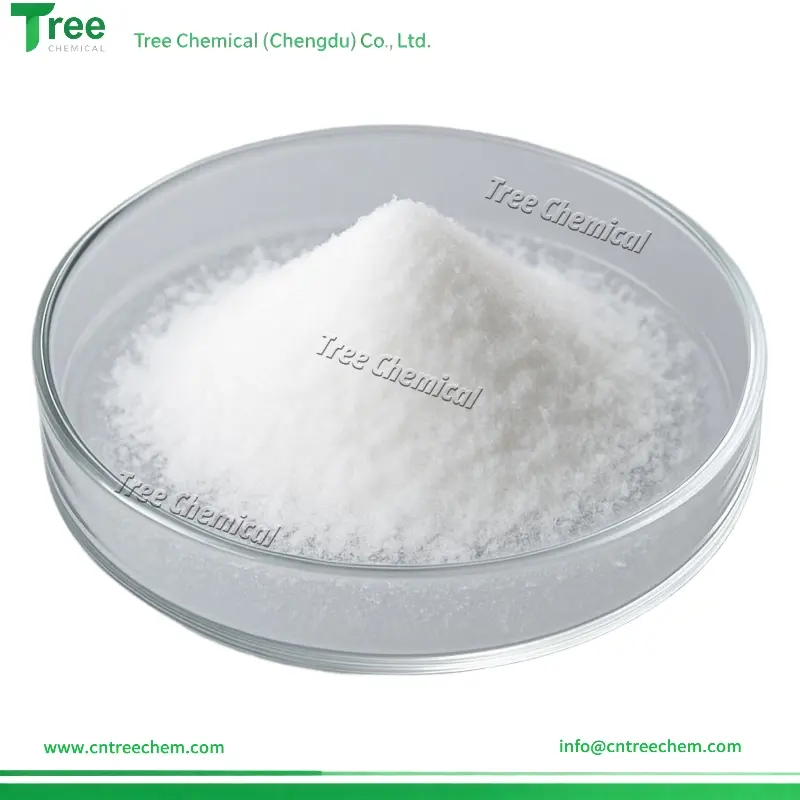


Benzyltriphenylphosphonium Chloride BTPPCl CAS 1100-88-5
- CAS: 1100-88-5
- Từ đồng nghĩa: Benzyltriphenylphosphonium chloride; (Phenylmethyl)triphenylphosphonium chloride; BTPPCl
- Mã số EINECS: 214-154-3
- Công thức phân tử: C₂₅H₂₂ClP
- Cấp độ: Cấp độ công nghiệp
- Đóng gói: Thùng phuy sợi 25 kg hoặc theo yêu cầu của khách hàng.
Công ty Tree Chem cung cấp Benzyltriphenylphosphonium Chloride (CAS 1100-88-5) cho khách hàng cần mua muối phosphonium có độ tinh khiết cao để tổng hợp hữu cơ và sản xuất hóa chất chuyên dụng. Hợp chất này được sản xuất dưới dạng chất rắn kết tinh ổn định, có đặc tính dễ thao tác, bảo quản và phản ứng tốt.
Benzyltriphenylphosphonium Chloride chủ yếu được sử dụng làm tiền chất benzylidene ylide trong phản ứng Wittig và các phản ứng liên quan, cho phép xây dựng chính xác các cấu trúc anken thơm và chức năng. Tree Chem hỗ trợ khách hàng trong lĩnh vực dược phẩm, hóa chất nông nghiệp và khoa học vật liệu với nguồn cung cấp ổn định và hỗ trợ kỹ thuật. Để biết thông tin chi tiết về thông số kỹ thuật và đặt hàng, vui lòng liên hệ info@cntreechem.com.
Đặc điểm kỹ thuật
Thông tin cơ bản
| Mục | Chi tiết |
| Tên sản phẩm | Benzyltriphenylphosphonium Chloride |
| Từ đồng nghĩa | (Phenylmethyl)triphenylphosphonium chloride; Triphenyl(phenylmethyl)phosphonium chloride; BTPPCl |
| Số CAS. | 1100-88-5 |
| Công thức phân tử | C₂₅H₂₂ClP |
| Trọng lượng phân tử | 388.87 |
| Số EINECS. | 214-154-3 |
Thông số kỹ thuật
| Mục | Đặc điểm kỹ thuật |
| Vẻ bề ngoài | Bột tinh thể màu trắng đến trắng ngà |
| Định lượng (HPLC) | ≥ 99,0% |
| Điểm nóng chảy | 215–220 °C |
| Độ ẩm | ≤ 0,5% |
Ứng dụng
Xúc tác chuyển pha cho tổng hợp hóa chất tinh khiết và dược phẩm
- Benzyltriphenylphosphonium chloride (BTPPCl) được sử dụng rộng rãi như một chất xúc tác chuyển pha trong các phản ứng mà các chất nucleophile vô cơ được tạo ra trong pha nước (hoặc từ muối rắn) nhưng phải phản ứng hiệu quả với các chất nền hữu cơ trong pha hữu cơ. Cation phosphonium ưa lipid của nó tạo thành các cặp ion với các anion phản ứng, giúp di chuyển chúng vào lớp hữu cơ và cải thiện sự truyền khối, điều này thường dẫn đến hiệu suất chuyển hóa cao hơn và động học phản ứng ổn định hơn trong các hệ hai pha.
- Trong các quy trình O-alkyl hóa, BTPPCl được sử dụng để tăng tốc quá trình alkyl hóa phenol trong điều kiện hai pha kiềm, cho phép tạo ete hiệu quả với khuấy trộn thực tế và nhiệt độ vừa phải. Vai trò này rất có giá trị trong sản xuất, nơi cần chuyển hóa mạnh mẽ và quy trình xử lý dễ quản lý, và nơi có thể tích hợp việc thu hồi chất xúc tác bằng phương pháp chiết tách vào thiết kế quy trình.
- BTPPCl cũng được sử dụng trong phản ứng azit hóa các ankyl halogenua để điều chế các chất trung gian chứa nhóm azit được sử dụng trong các quy trình hóa học dược phẩm hoặc hóa học phối hợp. Trong các hệ thống như vậy, BTPPCl giúp natri azit hoạt động hiệu quả hơn với các chất nền hữu cơ ở nhiệt độ ôn hòa, cải thiện hiệu suất trong khi vẫn giữ cho toàn bộ hệ thống tương thích với các thao tác dung môi/nước tiêu chuẩn.
Tiền chất thuốc thử Wittig để tổng hợp anken.
- BTPPCl đóng vai trò là tiền chất quan trọng của các ylide phốt pho được sử dụng trong phản ứng Wittig, cho phép chuyển đổi aldehyd thành anken như các sản phẩm kiểu stilbene. Chức năng này được sử dụng rộng rãi để tạo liên kết đôi carbon-carbon trong các lộ trình tổng hợp yêu cầu hình học anken và hiệu suất chuyển hóa đáng tin cậy.
- Một ưu điểm đáng chú ý được nhấn mạnh là tính khả thi của các quy trình không dùng dung môi hoặc dùng ít dung môi, trong đó kích hoạt cơ học và gia nhiệt vừa phải có thể thúc đẩy phản ứng tạo olefin mà không cần phụ thuộc nhiều vào dung môi hữu cơ. Điều này giúp BTPPCl trở thành tiền chất ylide thiết thực không chỉ cho hóa học dung dịch cổ điển mà còn cho các khái niệm xử lý thân thiện với môi trường hơn, ưu tiên sử dụng ít dung môi hơn trong khi vẫn duy trì hiệu suất cao và tính chọn lọc sản phẩm tốt.
- Do nhiều cấu trúc anken đóng vai trò là chất trung gian đa năng, phản ứng hóa học ylide được thực hiện nhờ BTPPCl có thể được tích hợp vào trước các bước chức năng hóa bổ sung như hydro hóa, epoxid hóa hoặc ghép nối chéo, hỗ trợ thiết kế lộ trình linh hoạt trong phát triển hóa chất tinh chế.
Tổng hợp chất trung gian dược phẩm và hoạt tính sinh học
- BTPPCl được sử dụng trong quá trình điều chế chất trung gian dược phẩm, nơi cần xúc tác chuyển pha để tạo điều kiện thuận lợi cho quá trình acyl hóa và các biến đổi liên quan trong phạm vi nhiệt độ được kiểm soát. Trong các quy trình này, BTPPCl hỗ trợ các phản ứng giữa các chất phản ứng phân cực/ion và các chất nền hữu cơ, cải thiện khả năng phản ứng đồng thời cho phép lựa chọn dung môi thực tế và các bước làm nguội/xử lý dễ quản lý.
- Tài liệu này nhấn mạnh tầm quan trọng của nó trong việc điều chế các nhóm hợp chất hoạt tính sinh học (bao gồm các cấu trúc kiểu chất ức chế và các dẫn xuất stilbene được thay thế) nơi mà hiệu suất chuyển hóa và tính chọn lọc ổn định là rất quan trọng. Trong bối cảnh này, BTPPCl không được coi là một chất phụ gia chuyên dụng, mà là một lựa chọn chất xúc tác chức năng có thể đơn giản hóa thiết kế phản ứng bằng cách cải thiện sự vận chuyển giữa các pha thay vì buộc phải sử dụng các điều kiện đơn pha chuyên biệt.
Nhựa Epoxy và chất xúc tiến đóng rắn một thành phần
- BTPPCl hoạt động như một chất xúc tiến đóng rắn cho nhựa epoxy, cải thiện hiệu quả liên kết ngang và hỗ trợ nâng cao hiệu suất cơ học của hệ thống đã đóng rắn. Đặc tính tiềm ẩn của nó làm cho nó phù hợp với các thiết kế epoxy một thành phần, nơi cần sự ổn định khi bảo quản trước khi đóng rắn bằng nhiệt.
- Trong các lớp phủ epoxy, BTPPCl được thêm vào ở nồng độ phr thấp để thúc đẩy quá trình hình thành mạng lưới hiệu quả khi kết hợp với các chất đóng rắn anhydrit. Cách tiếp cận này đáp ứng các yêu cầu công nghiệp như độ bền màng sau khi đóng rắn cao, độ cứng phát triển và độ bóng ổn định, đồng thời giữ cho công thức tương thích với các chất màu, chất tạo độ nhớt và hệ dung môi thông thường được sử dụng trong quá trình thi công và xử lý.
Lớp phủ dạng bột chịu nhiệt và đóng rắn hiệu quả
- BTPPCl được sử dụng làm chất xúc tác đóng rắn trong sơn bột, đặc biệt là trong các hệ polyester chịu nhiệt. Ở liều lượng thấp, nó cải thiện hiệu quả đóng rắn trong quá trình nung, hỗ trợ hình thành màng ổn định và giảm các vấn đề trong quá trình xử lý liên quan đến việc đóng rắn không hoàn toàn hoặc sự phát triển liên kết ngang không nhất quán.
- Trong các loại sơn phủ bột chịu nhiệt, BTPPCl được sử dụng cùng với nhựa polyester có nhóm hydroxyl và chất đóng rắn uretdione, có thêm các chất độn chịu nhiệt như mica để duy trì hiệu suất dưới nhiệt độ cao kéo dài. Ứng dụng này hướng đến các bộ phận được phủ sơn và chịu tác động của nhiệt, nơi lớp phủ phải giữ được tính toàn vẹn và vẻ ngoài trong khi vẫn đảm bảo độ bền lâu dài.
Pha chế và tăng tốc quá trình đóng rắn chất đàn hồi flo
- BTPPCl được sử dụng như một chất xúc tiến lưu hóa trong các công thức fluoroelastomer (FKM), thường được kết hợp với hệ thống lưu hóa bisphenol AF. Trong quá trình pha chế cao su, BTPPCl hỗ trợ quá trình lưu hóa hiệu quả và có thể cải thiện hiệu suất bám dính đồng thời giúp giảm biến dạng nén dưới điều kiện nhiệt độ cao.
- Trọng tâm sản xuất thực tiễn bao gồm hành vi xử lý ổn định trong quá trình trộn và tạo hình, cùng với khả năng duy trì hiệu suất sau khi xử lý nhiệt. Điều này làm cho BTPPCl phù hợp với các loại gioăng, vòng đệm và các bộ phận đúc cần khả năng chịu nhiệt và kháng hóa chất với các đặc tính cơ học ổn định.
Vật liệu tiên tiến: Tinh thể quang học phi tuyến và tiềm năng quang tử
- BTPPCl được mô tả trong lĩnh vực phát triển vật liệu tiên tiến, nơi các dạng tinh thể (bao gồm tinh thể hydrat/monohydrat) thể hiện hành vi quang học phi tuyến tính và khả năng truyền dẫn rộng trong vùng ánh sáng nhìn thấy. Điều này đưa BTPPCl vượt ra ngoài phạm vi tổng hợp thông thường và polyme, tiến vào nghiên cứu quang điện tử và quang tử học, nơi sự phát triển tinh thể, độ ổn định nhiệt và đặc tính quang học là những yếu tố trọng tâm.
- Trường hợp ứng dụng này nhấn mạnh vào việc kiểm soát sự phát triển tinh thể thông qua các phương pháp dựa trên dung dịch, cho phép hình thành các tinh thể chức năng phù hợp để nghiên cứu trong chuyển đổi tần số và các khái niệm chuyển mạch quang tử liên quan. Trong lĩnh vực này, độ tinh khiết của vật liệu, điều kiện tăng trưởng và khả năng tái tạo trở thành yếu tố then chốt để đạt được hiệu suất quang học ổn định.
Hóa học mạng lưới và chất kích hoạt polymer (Hệ thống PCL đóng rắn kép)
- BTPPCl được sử dụng làm chất xúc tác trong tổng hợp mạng polymer cho các vật liệu định hình, đặc biệt là trong các hệ poly(ε-caprolactone) (PCL) đóng rắn kép. Nó thúc đẩy các phản ứng kiểu cộng Michael (như cộng thiol-acrylate), cho phép tạo ra các mạng liên kết chéo với các tính chất cơ học có thể điều chỉnh được.
- Ứng dụng này phù hợp với thiết kế polyme chức năng, trong đó chất xúc tác được lựa chọn để kiểm soát tốc độ phản ứng và cấu trúc mạng lưới, hỗ trợ các vật liệu phản ứng với các tác nhân kích thích thông qua sự thay đổi hình dạng được lập trình. Ở đây, vai trò của BTPPCl gắn liền với việc cho phép hình thành liên kết ngang đáng tin cậy trong điều kiện xử lý thực tế.
Các lưu ý về an toàn, xử lý và vận chuyển trong sử dụng công nghiệp
- BTPPCl được mô tả là chất hút ẩm và cần được bảo quản trong môi trường kiểm soát độ ẩm, trong các thùng chứa kín để ngăn ngừa sự hấp thụ nước và duy trì tính ổn định khi sử dụng. Nó cũng được xác định là chất có tính nguy hiểm cao, do đó việc sử dụng trong công nghiệp và phòng thí nghiệm cần chú trọng đến việc kiểm soát bụi, thông gió tốt, trang bị bảo hộ cá nhân phù hợp và các quy trình ứng phó khẩn cấp bài bản.
- Hướng dẫn bảo quản bao gồm điều kiện khô ráo, thoáng mát, có khóa và tách biệt với các chất oxy hóa, cùng với chi tiết phân loại vận chuyển để hỗ trợ lập kế hoạch hậu cần tuân thủ quy định. Trên thực tế, các yêu cầu này ảnh hưởng đến việc lựa chọn bao bì, kiểm soát kho và thiết kế quy trình vận hành tiêu chuẩn (SOP) để xử lý hàng hóa an toàn thường xuyên.
Lưu trữ & Xử lý
- Bảo quản trong hộp kín ở nơi khô ráo, thoáng mát và tránh ánh nắng trực tiếp.
- Tránh ẩm và ánh nắng trực tiếp.
- Tránh tiếp xúc với các chất oxy hóa mạnh và axit.
- Hãy sử dụng dụng cụ và vật chứa sạch sẽ, khô ráo trong quá trình thao tác.
- Nối đất các thùng chứa và thiết bị trong quá trình vận chuyển để ngăn ngừa hiện tượng phóng tĩnh điện.
Thông báo sử dụng
- Chỉ dành cho mục đích tổng hợp hóa học và nghiên cứu chuyên nghiệp.
- Kiểm tra khả năng tương thích với dung môi và thuốc thử trước khi sử dụng.
- Tránh hít phải bụi và tránh để bụi tiếp xúc với da hoặc mắt.
- Khi thao tác, hãy đeo trang thiết bị bảo hộ phù hợp.
- Xử lý chất thải theo quy định về hóa chất của địa phương.
- Hệ thống O-alkyl hóa phenol có thể sử dụng 10 mmol phenol với 0,3 mmol BTPPCl (3 mol/TP3T), 12 mmol halogenua alkyl, 20 mL dung dịch NaOH (50 wt/TP3T) và 30 mL toluen ở khoảng 60°C trong khoảng 4 giờ để sử dụng BTPPCl làm chất xúc tác chuyển pha cho quá trình tạo ete với hiệu suất chuyển hóa cao.
- Một quy trình azit hóa cho các chất trung gian dược phẩm có thể kết hợp 5 mmol 1-bromobutane với 0,25 mmol BTPPCl (5 mol%), 7,5 mmol natri azit, 25 mL diclorometan và 15 mL nước khử ion ở nhiệt độ phòng trong khoảng 8 giờ dưới khí nitơ để sử dụng BTPPCl chuyển azit vào pha hữu cơ.
- Phản ứng Wittig không dùng dung môi có thể sử dụng 2 mmol BTPPCl với 2,4 mmol kali photphat (K₃PO₄) và 1,8 mmol 4-bromobenzaldehyde ở khoảng 60°C trong khoảng 3 giờ dưới tác động nghiền/hoạt hóa cơ học để tạo ra ylide tại chỗ và hình thành sản phẩm anken kiểu stilbene.
- Phản ứng acyl hóa chuyển pha đối với các chất trung gian dạng chất ức chế có thể sử dụng 1 mmol N-hydroxyformamide với 0,1 mmol BTPPCl (10 mol%), 1,2 mmol acyl clorua, 10 mL dung dịch K₂CO₃ (10 wt%) và 20 mL THF ở nhiệt độ từ 0°C đến nhiệt độ phòng trong khoảng 2 giờ để sử dụng BTPPCl làm chất xúc tác chuyển pha (PTC) giúp cải thiện hiệu quả phản ứng.
- Công thức sơn phủ epoxy đa dụng có thể sử dụng nhựa epoxy bisphenol A (EEW 185–192) 100 phr với BTPPCl 0,8–1,5 phr, chất đóng rắn anhydrit 85–90 phr, silica khói 3–5 phr, TiO₂ 20–30 phr và xylene/butanol (1:1) 15–20 phr, đóng rắn ở 80°C trong 2 giờ cộng với 120°C trong 1 giờ để sử dụng BTPPCl như một chất xúc tiến đóng rắn tiềm ẩn.
- Lớp phủ bột polyester chịu nhiệt có thể được tạo thành bằng cách kết hợp 72 phần nhựa polyester chức năng hydroxyl với 28 phần chất đóng rắn uretdione, 0,5–2,0 phần BTPPCl, 35 phần mica, 1,2 phần chất điều chỉnh độ chảy và 0,3 phần benzoin, được xử lý bằng phương pháp ép đùn nóng chảy ở khoảng 100–110°C và đóng rắn ở khoảng 200°C trong khoảng 15 phút, sử dụng BTPPCl làm chất xúc tác đóng rắn.
- Hệ hỗn hợp FKM có thể sử dụng 100 phr nhựa FKM với 30 phr muội than, 4 phr magie oxit, 3 phr bisphenol AF, 0,5–1,5 phr BTPPCl và 0,8 phr axit stearic, sau đó tiến hành đóng rắn sơ bộ ở khoảng 175°C trong khoảng 15 phút và đóng rắn sau ở khoảng 230°C trong khoảng 24 giờ để sử dụng BTPPCl làm chất xúc tiến giúp cải thiện hiệu quả đóng rắn và khả năng chịu nén.
- Một hệ thống nuôi cấy tinh thể quang học phi tuyến tính có thể chuẩn bị dung dịch nước BTPPCl ở nồng độ khoảng 0,1 M (khoảng 38,89 g/L) và cho phép bay hơi chậm ở khoảng 25°C trong khoảng 7–10 ngày để thu được các tinh thể thích hợp cho việc đánh giá tính chất quang học.
- Phương pháp điều chế mạng PCL đóng rắn kép có thể kết hợp BTPPCl làm chất xúc tác cho phản ứng cộng Michael thiol-acrylate trong quá trình hình thành mạng, sử dụng quá trình chuyển đổi được kiểm soát bằng chất xúc tác để tạo ra vật liệu truyền động liên kết chéo với phản ứng cơ học có thể điều chỉnh được.
- Chương trình lưu trữ và hậu cần có thể giữ BTPPCl được niêm phong và chống ẩm ở nhiệt độ ≤20°C, tách biệt khỏi chất oxy hóa, và được quản lý bằng biện pháp kiểm soát bụi và trang bị bảo hộ cá nhân do tính độc hại cao và nguy cơ gây hại cho môi trường nước, đảm bảo hiệu suất ổn định và xử lý tuân thủ quy định trong suốt quá trình sản xuất và vận chuyển.
Bao bì
- Thùng sợi 25 kg (tiêu chuẩn)
- Có thể cung cấp bao bì xuất khẩu theo yêu cầu của khách hàng.